j. Soc. Cosmet. Chem., 38, 1-9 (January/February 1987) An ESR technique for measurino fluidity in semisolids JYOTSNA N. DALAL, NAR S. DALAL, and JAMES K. LIM, School of Medicine (J. N. D. ), Department of Chemistry (N.S.D.), and School of Pharmacy (J. K. L. ), West Virginia University, Morgantown, WV 26506. Received June 30, 1986. Synopsis An electron spin resonance (ESR) technique, basically devoid of external mechanical stress force was inves- tigated as a possible method for measuring phase fluidity in semisolid systems. The stable free radical di-t-butylnitroxide, DBNO, was used as a probe for producing the ESR signals at temperatures between -50 and 100øC in petrolatum and selected polyethylene glycol (PEG) bases. The intensity ratio, It/I3, derived from the ESR triplet spectrum of DBNO, reflecting the rotational diffusion of the probe, was shown to provide a highly sensitive measure for phase fluidity. Curves plotted for I1/I 3 ratios against temper- ature indicate lower It/I 3 values corresponding to increased phase fluidity with elevated temperatures. Extrapolations of the linear portions of the steeply rising curves intersect the ordinate at It/I 3 = 1 to yield the intersection temperature, which theoretically represents the point of transition from rigid to fluid motion. A linear relationship was observed when the intersection temperatures were plotted as a function of the reported melting-point temperatures for homologous PEGs 1500, 1540, and 6000. Since the intersec- tion temperatures, in turn, parallel in rank order reported Kinematic viscosities of PEGs, the It/I 3 plots can thus provide a relative measure of the zero-stress-obtained viscosities for a homologous series of semisolids. INTRODUCTION Fluidity or "viscosity" of semisolid systems determined by present methods is largely arbitrary, yielding variable results depending on the mode and level of applied stress during measurements. For practical applications, fluidity characteristics at zero-applied stress seem to provide the most desired data. This paper outlines a spectroscopic tech- nique based on electron spin resonance, ESR, for these measurements, avoiding physical or mechanical disturbance of the sample under investigation. The ESR technique is shown to potentially provide a useful tool for characterizing fluidity or, inversely, "vis- cosity" in a rapid, sensitive, reproducible, and most importantly, a "non-destructive" manner, exemplified by preliminary tests with two commonly used pharmaceutical ointment bases. The term "viscosity" used in the context of this paper refers to the "rheological ground state" as discussed by Barry (1). In other words, it is that funda- mental rheological parameter of semisolids which is independent of variables as a result of operating and continuous shear test methods. The ESR technique is, in fact, rheolog- ically non-destructive and is presumed to test a semisolid without disrupting orga-

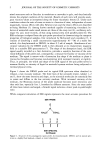
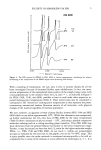
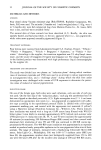
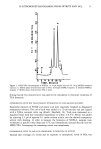
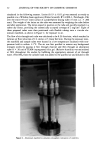
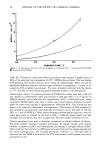
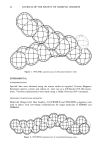
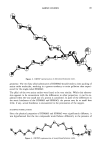
2 JOURNAL OF THE SOCIETY OF COSMETIC CHEMISTS nized structures such as floccules in emulsions or networks in gels, and thus basically retains the original condition of the material. Results of such tests will provide analo- gous viscosity values as interpreted along the linear viscoelastic theory (2). Under such conditions where the ratio of stress to strain is a function of time, independent of stress magnitude, viscous effects will obey Newton's law and the elastic effects are described as being Hookean (3). Among known methods capable of examining viscoelastic be- havior of semisolids under small strains are those of the creep test (4), oscillatory tech- nique (5), and, more recently, of that using normal stress with parallel plates (6). The ESR technique is adapted from the spin probe procedure for characterizing the transport properties of biological samples, first introduced by McConnell and coworkers (7). It consists of dissolving a small concentration (approximately 10 -4 M) of a stable free radical, di-t-butylnitroxide or DBNO, in about 0.5 mL of sample. Absorbance of mi- crowave radiation by the DBNO probe is then obtained at its characteristic magnetic field in a suitable ESR spectrometer (7). The shape of the absorption band, the ESR signal usually recorded as a first derivative, provides a sensitive function of the rota- tional diffusion of the probe and, consequently, a measure for fluidity or viscosity of the medium. The signal is narrow with a Lorentzian line shape if the medium or phase is viscous but broadens and becomes non-Lorentzian with increased viscosity or rigidity. Thus, in principle, the width and shape of the ESR signal of the spin probe serves to measure fluidity or viscosity of liquid or semisolid systems without being subjected to external physical stress. Figure 1 shows the DBNO probe and its typical ESR spectrum when dissolved in ethanol, a low viscosity medium. The three lines of the nitroxide triplet, labeled 1, 2 and 3, show the same intensity and shape, as the nitroxide molecules are essentially free to rotate and diffuse in the low viscosity medium. With increased viscosity of the medium, the Brownian motion of the probe molecule becomes more restricted, and thus each line, especially line 3, broadens by different amounts. Since the areas under all three lines remain unchanged, a broader signal indicates a lower peak-to-peak height ratio. While computer simulation of ESR signals represents the most accurate procedure for ESR PROBE I ICHalaC I 2 3 ESR SPECTRA IIn Ethanoil Figure 1. Structure of the paramagnetic (spin) probe, di-t-butylnitroxide, DBNO, and its typical spec- trum in a highly fluid medium, ethanol at room temperature.
Purchased for the exclusive use of nofirst nolast (unknown)
From: SCC Media Library & Resource Center (library.scconline.org)