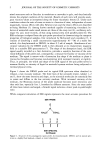
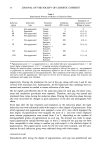
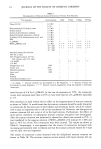
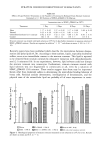
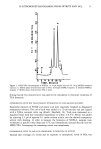
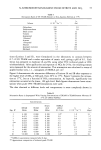
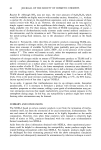
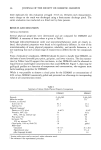
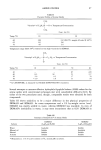
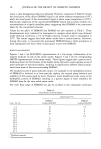
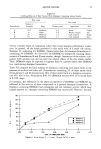
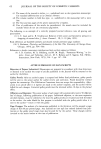
14 JOURNAL OF THE SOCIETY OF COSMETIC CHEMISTS Table I Experimental Protocol and Results of Induction Phase Induction Initial skin Treatment Irradiation group type material (RB counts) Summation of pigmentation scores* (Range of scores) I Non-pigmented Vehicle II Pigmented Vehicle III Non-pigmented Vehicle IV Non-pigmented Vehicle + Bergapten V Non-pigmented Vehicle + Sunscreen VI Non-pigmented Vehicle + Bergapten Sunscreen VII Non-pigmented Vehicle + Sunscreen VIII Non-pigmented Vehicle + Bergapten Sunscreen 0 0 0 15 (2-5) 200 15 (2-5) 200 15 (2-5) 200 4 (0-1) 200 13 (2-4) 400 7 (1-2) 400 11 (1-4) * Pigmentation scores: 0 = no pigmentation (i.e., skin looked like naive non-pigmented skin) 1 = the lowest degree of pigmentation 2 to 5 = increasing intensities of pigmentation. During the induction phase, treatment materials were applied to selected skin types (i.e., non-pigmented or pigmented) on miniature pigs and subsequently exposed to one of three levels of irradiation in an attempt to elicit pigmentation in non-pigmented skin. After completion of the induction phase, induction sites were scored for pigmentation. The scores for the five sets of induction groups were summed, and summations and ranges were tabulated. respectively. During the irradiation the rest of the pig, along with sites I and II, was covered with aluminum foil. Subsequently, all felt-tipped pen skin markings were ex- amined and renewed as needed to ensure relocation of the sites. On the eighth and fifteenth day of the induction phase for each pig, the above treat- ment and irradiation procedures were repeated. Therefore, each pig was treated and irradiated three times during the induction phase. During the induction phase the pigs also were monitored for changes in gross appearance of the skin and photographs were taken. Seven days after the last treatment and irradiation in the induction phase, the eight induction sites were arbitrarily rated with respect to their degree of pigmentation. Sites which appeared non-pigmented were assigned a score of 0, sites which displayed the least degree of pigmentation were assigned the score of 1, and sites which displayed more intense pigmentation were scored from 2 to 5, depending on the number of distinguishable grades of pigmentation on each pig. No attempt was made to assign equal pigmentation ratings between pigs, so that a 2 rating for one pig may not have been comparable to that rating in another pig with respect to the absolute degree of pigmentation. The pigmentation scores for the five sites were summed, and the sum- mations for each induction group were tabulated along with their ranges. CHALLENGE PHASE Immediately after rating the degree of pigmentation, each pig was anesthetized and

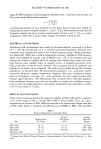
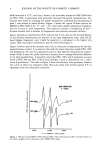
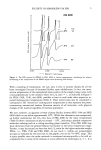
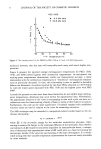
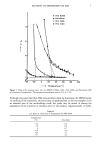
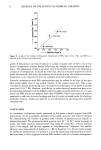
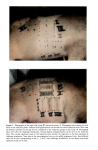
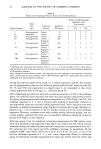
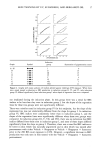
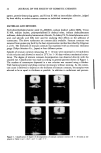
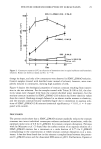
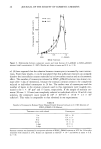
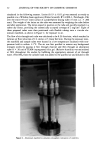
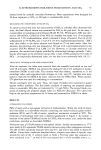
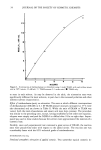
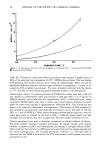
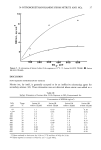
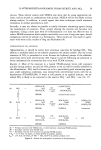
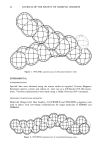
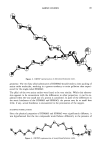
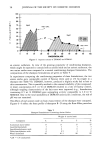
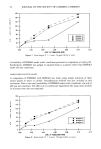
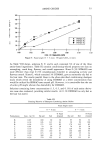
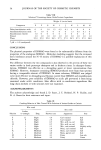
SKIN TANNING BY UV, SUNSCREEN, AND BERGAMOT OIL 17 induction sites were challenge irradiated. Four circular areas (1 cm in diameter) were irradiated in each of the eight induction sites with a xenon short-arc solar simulator with a WG320 Schott glass filter (l-ram thick). The spectral distribution of the emis- sion of this source is such that approximately 70% of it is between 290 and 400 nm (9). The output was checked for consistency at regular intervals with the RB meter. Each circular area was irradiated for one of the following durations (min): 1, 2, 3, 4. The exposure needed to elicit a barely perceptible erythema in naive non-pigmented skin was approximately 1.7 rain (0.92 SBU). The four areas within each induction site were demarcated with aluminJure foil and white adhesive labeling. After completion of the irradiation, the areas were marked with a felt-tipped pen and labeled for future identifi- cation. Twenty-four hours after the challenge irradiations, each pig was anesthetized and all challenge areas were observed for erythema. For each induction site on each pig, the lowest irradiation exposure which produced erythema at 24 h post-irradiation was tabu- lated. The erythema scores in the tabulation represented the shortest duration of irra- diation exposure (1, 2, 3, or 4 rain) which resulted in perceptible erythema. If none of the exposures resulted in erythema, an erythema score of 5 was assigned to the induc- tion group for that challenge site on the pig. These scores were ranked and compared statistically via the Friedman Test (10). Immediately after the erythema scoring, biopsy specimens (6 mm diameter disposable punch Chester A Baker Laboratories, Inc. Miami, FL) were taken from all challenge areas. Biopsies were processed and SBC indices were determined as described previously (4,5,11). Briefly, the number of epidermal cells per millimeter of inteffollicular epi- dermis (IFE) and the number of SBC per millimeter of IFE were determined, and the SBC index was determined from the formula: Number of SBC/mm x 100. total number of epidermal cells/mm Each mean SBC index was determined from fifty estimates (10 from each challenge site on each animal side) except for one mean which was determined from 40 estimates because one biopsy specimen was accidentally destroyed (induction group III exposed for 4 minutes). SBC indices were plotted against the exposures to challenge irradiation. Slopes of the regression lines, residual variance, and standard error of estimate of these slopes were calculated. To compare these slopes statistically, a two-tailed Student's t test was used (12). RESULTS During the induction phase of the study some of the initially non-pigmented induction sites tanned gradually, and they were markedly pigmented at the end of this phase (Figure 1). Occasionally, uneven erythema without distinct borders was seen in induc- tion sites VII and VIII, where exposures to 400 RB counts were used. None of the induction sites displayed erythema at the end of the induction phase (i.e., at the start of challenge), and none of the test articles elicited responses indicative of phototoxicity where suberythemic exposures to UVR were used. No change in the appearance of skin was seen in sites treated only with the vehicle
Purchased for the exclusive use of nofirst nolast (unknown)
From: SCC Media Library & Resource Center (library.scconline.org)