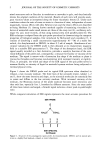
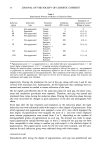
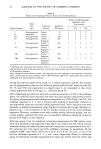
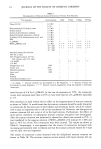
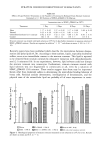
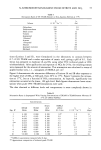
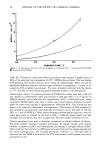
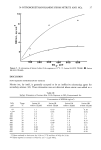
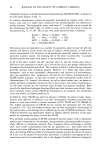
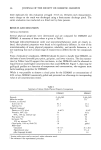
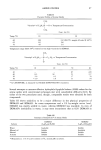
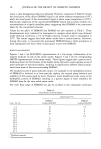
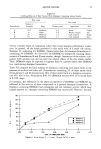
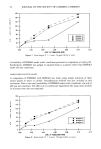
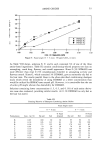
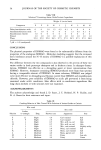
12 JOURNAL OF THE SOCIETY OF COSMETIC CHEMISTS MATERIALS AND METHODS ANIMALS Four closed colony Yucatan miniature pigs [Buk:(TRF)YS, Buckshire Corporation, Per- kasie, PAl were used. The animals (3 females and 1 male) weighed about 15 Kg, were 4 to 5 months old, were fed commercial hog chow (Ralston Purina Co., St. Louis, MO) once a day, and had water available freely. The normal skin of these animals has been described (4,5). Briefly, the skin was sparsely haired, and had areas which, to the eye, appeared white (i.e., non-pigmented), while other areas appeared naturally pigmented (Figure 1). TREATMENT MATERIALS Four lotions were received from Laboratoires Goupil S.A. (Cachan, France). "Vehicle," "Vehicle + Bergapten," "Vehicle q- Bergapten q- Sunscreen," or "Vehicle q- Sun- screen." According to the supplier, the sunscreen ingredient was 5 % ethyl hexyl cinna- mate, and the source of bergapten (30 ppm) was bergamot oil. The dosage of bergapten in the finished product was determined with high performance liquid chromatography by the supplier (6). TREATMENT AND IRRADIATION The study was divided into two phases: an "induction phase" during which combina- tions of treatment materials and UVR were used in an attempt to induce pigmentation in non-pigmented skin, and a "challenge phase" during which the skin sites under investigation were challenged with a series of UVR exposures to determine the protec- tive value of induced or natural pigmentation. INDUCTION PHASE On one of the female pigs, both sides were used otherwise, only one side of each pig was used. On the first day of the "induction phase," each pig was anesthetized and its hair was clipped as described previously (4, 5). Eight rectangular sites (2 X 6 cm) were demarcated on appropriate skin types (i.e., non-pigmented or pigmented) with adhe- sive tape according to the experimental protocol (Table I), labeled with a felt-tipped permanent marking pen, and treated with the appropriate test materials (2 }xl/cm 2) using a Hamilton syringe (Hamilton Company Inc., Whittier, CA). Thirty minutes later irradiation was started with a long-arc 6 kW xenon lamp filtered with WG320 Schott glass (1-mm thick) to simulate approximately 30øN latitude mid-summer solar UVR spectrum (7). Induction sites III, IV, V, and VI were irradiated for approximately 40 minutes [accumulating 200 Robertson-Berger (RB) counts] and then covered with aluminum foil irradiation of sites VII and VIII was continued to 400 RB counts (ap- proximately 80 minutes). The 400-RB-count irradiation was approximately an exposure needed to produce barely perceptible erythema in the non-pigmented skin sites of these animals. The range of intensity, measured with a Sunburning Ultraviolet Meter (RB meter, Solar Light Co., Philadelphia, PA) was 0.68-0.73 sunburn units (SBU) per hour (8) the approximate incident doses (not biologically weighted) from 250 to 400 nm were 640 and 1280 J/m 2 for the incident dose analogs of 200 and 400 RB counts,

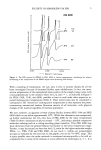
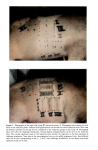
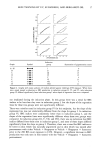
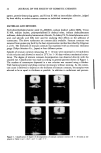
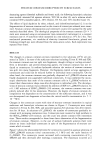
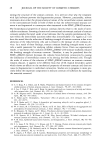
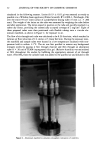
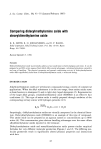
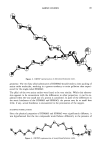
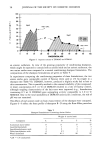
A Figure 1. Photographs of the right side of pig #3 during the study. A. Photograph taken during the first week of the induction phase. Induced mild pigmentation can be seen in several induction sites. Note that the Roman numerals on the pig do not correspond to the induction groups in the study. B. Photograph taken 24 h after the challenge irradiations. Various degrees of pigmentation can be seen in the induction sites. The circular erythemic areas in the induction sites indicate the responses to the four exposures of challenge irradiation. Note that in the non-pigmented sites or the mildly pigmented sites, three affected areas can be seen corresponding to the 2, 3, and 4 min challenge irradiations. In the darker sites fewer erythemic areas can be seen.
Purchased for the exclusive use of nofirst nolast (unknown)
From: SCC Media Library & Resource Center (library.scconline.org)