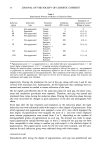
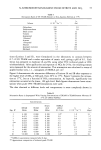
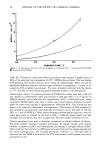
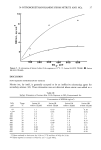
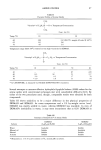
j. Soc. Cosmet. Chem., 38, 21-28 (January/February 1987) Effects of surface active agents on stratum corneum cell cohesion MOTOJI TAKAHASHI, MASAMI AIZAWA, KIYOSHI MIYAZAWA, and YASUHIKO MACHIDA, Shiseido Laboratories, 1050 Nippa-Cho, Kohoku-Ku, Yokohama, Japan 223. Received August 20, 1986. Synopsis Stratum comeurn was completely disrupted to intact individual corneocytes by immersion in a solution of sodium dodecylsulfate (SDS)/N,N-dimerhyldodecylamine oxide (C12DMAO) (2:8) mixture without me- chanical or ultrasonic stimulation. On the other hand, stratum comeurn immersed in solutions of Triton X-100, lipid solvents, keratolytic agents, or protein-denaturing agents was not split into any fragments, and individual corneocytes were few. Furthermore, the stratum comeurn became less dispersable after methanol, ether, or chloroform/methanol (2:1) treatment. It was also found that the solution of SDS/C12 DMAO mixture markedly reduced the breaking strength of stratum comeurn. The solution of SDS/C12DMAO (2:8) mixture appears to dissolve the intercellular cement materials probably because of its low surface tension and electrostatic properties. This may induce the reduction of stratum comeurn to individual corneocytes. INTRODUCTION The intercellular region of the stratum corneum and the adhesion between corneocytes are of great interest as they are closely related to desquamation and disease states such as ichthiosis. The combination of nonionic detergent, Triton X-100, and mechanical stimulation has been widely used to reduce stratum corneum to individual cells and to study the morphology of corneocytes or what components play important roles in cell- to-cell adhesion (1,2). Generally, mechanical stimulation is a necessary step and con- sists of scrubbing the skin surface vigorously with a rough implement in vivo or of grinding with a homogenizer in vitro. This technique, however, seems to force the stratum corneum to desquamate, and it would be impossible to completely solubilize the truly important components of cell-to-cell adhesion. Having investigated the effect of detergents on corneocyte adhesion, we found that stratum corneum was dissolved into intact individual cells only by immersion in aqueous solutions containing sodium dodecylsulfate and N,N-dimethyldodecylamine oxide without such mechanical stimu- lation. The purpose of this study is to compare the effect of detergents with those of keratolytic 21

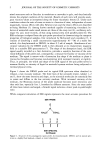
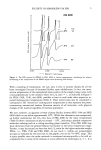
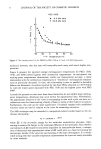
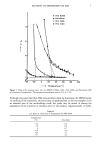
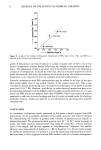
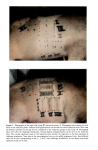
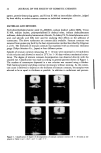
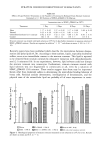
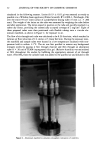
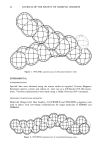
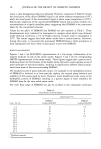
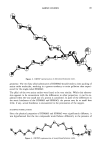
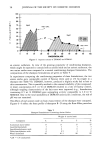
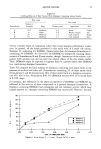
22 JOURNAL OF THE SOCIETY OF COSMETIC CHEMISTS agents, protein-denaturing agents, and Triton X-100 on intercellular adhesion, judged by their ability to reduce stratum corneum to individual corneocytes. MATERIALS AND METHODS N,N-dimethyldodecylamine oxide (CuDMAO), sodium dodecyl sulfate (SDS), Triton X-100, sodium laurate, polyoxyethylene(15) dodecyl ether, sodium dodecylbenzene sulfonate, dodecyltrimethyl ammonium chloride, N-dodecyl N,N-dimethylamino acetic acid, and salicylic acid (SA) were used for studying their effects on the adhesion of corneocytes. The above surfactants are commercially available. Stratum corneum was removed from guinea pig back by the heat-trypsinization method described by Kligman et al (3). The thickness of stratum corneum was examined with an electronic thickness gauge (Tokyo Seimitsu Co., Japan) at four different points. Samples of stratum corneum measuring 10 x 10 mm were immersed in 10 milliliters of test solution and allowed to stand at 25øC for 1-30 days without mechanical stimu- lation. The degree of stratum corneum decomposition was observed directly with the unaided eye. Classification was made according to general patterns shown in Figure 1. The number of corneocytes dispersed in a test solution was counted using a Biirker- Tiirk haemocytometer and phase-contrast microscopy without staining. As the corneo- cyte count is believed to depend on the thickness of stratum corneum, the samples were selected to be as equal in thickness as possible. In addition to surfactants and protein- a b c d Figure 1. Classification of degree of decomposition of stratum corneum section (10 x 10 ram) as em- ployed in Table I. (a)-' (b)+' (c)+ + (d)+ + +.
Purchased for the exclusive use of nofirst nolast (unknown)
From: SCC Media Library & Resource Center (library.scconline.org)