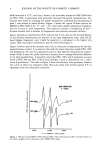
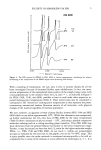
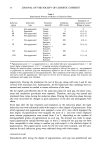
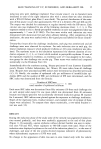
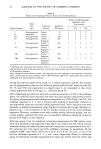
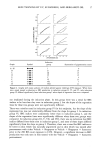
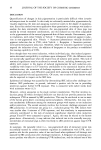
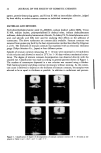
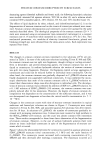
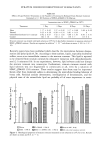
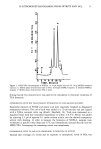
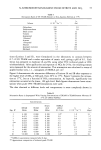
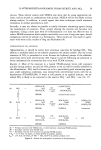
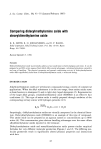
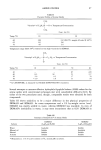
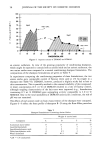
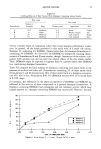
N-NITROSODIETHANOLAMINE FROM NITRITE AND NO 2 31 o 01 o o o o o TIME, Minutee Figure 1. HPLC/TEA chromatogram of NDELA, A: 50 Ftl sample injection. B: 10 ng NDELA standard injection. C: Mobile phase diverted from waste to TEA. D: Sample NDELA response. E: Standard NDELA response. F: Mobile phase diverted from TEA to waste. eluting exactly two minutes later, was used in the calculation to minimize variations of TEA detection. EXPERIMENTAL SETUP FOR TEAM-STEARATE NITROSATION IN NON-AQUEOUS SOLVENTS Equimolar amounts of TEAM and stearic acid were separately weighed in designated nonaqueous solvents. Five ml of each were added to a 10 ml reaction vial and capped with a Teflon mininert valve cap (Altech, Deerfield, IL). Vials were immersed in a regulated water bath that controlled temperature to within ___ 0.5øC. Nitrite was added by injecting 2.5 !xl of aqueous 0.1 molar sodium nitrite into the desired nonaqueous solvent with shaking. In order to measure the formation of NDELA, samples were withdrawn at specific times (kept near 15øC) and immediately injected directly into the HPLC/TEA. Scavenging the remaining nitrite was unnecessary. EXPERIMENTAL SETUP TO SIMULATE ATMOSPHERIC NITROSATION OF LOTIONS Normal skin coverage of a lotion and its exposure to atmospheric levels of NO2 was

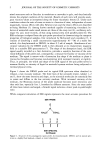
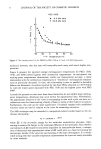
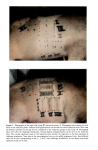
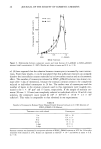
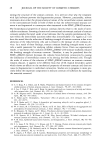
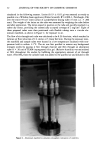
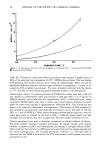
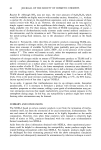
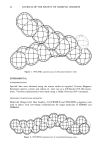
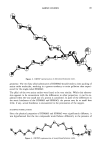
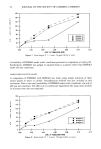
32 JOURNAL OF THE SOCIETY OF COSMETIC CHEMISTS simulated in the following manner. Lotion (0.19 + 0.01 g) was smeared as evenly as possible via a Wilshire foam applicator (Fisher Scientific # 14-900-2, Pittsburgh, PA) over the entire 95-cm 2 inner surface of a polyethylene drying tube (15 mm i.d. X 200 mm). The weight of the lotion on the tube was measured by weighing the tube before and after application. The lotion stayed in position in the tube and quickly resulted in a rather dry smear, providing the cosmetically accepted coverage of 2 mg/cm 2. Eight of these prepared tubes were then positioned with flexible tubing onto a circular alu- minum manifold, as shown in Figure 2, for exposure to air. The flow of air through each tube was calculated to be 0.26 liter/min, which resulted in laminar air flow velocities of 2.4 cm/sec or 5 linear feet/min. During the exposure tests, the manifold and sample tubes were housed in a low temperature incubator with tem- perature held to within + IøC. The air was first purified to remove any background nitrogen oxides by passing it first through charcoal and then through an adsorption tube (4 X 30 cm) of TEAM-impregnated silica gel. (Relative humidity was maintained at 50% throughout the studies by bubbling the appropriate amount of air through water.) The NO 2 from the cylinder tank was added to the purified air and diluted to the Figure 2. Aluminum manifold to simulate atmospheric nitrosation of cosmetics.
Purchased for the exclusive use of nofirst nolast (unknown)
From: SCC Media Library & Resource Center (library.scconline.org)