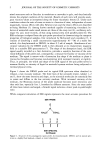
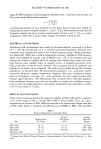
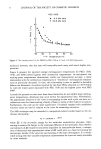
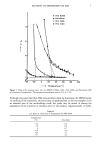
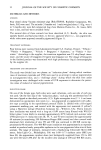
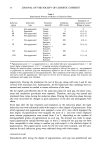
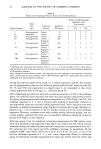
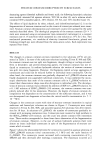
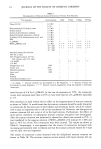
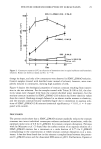
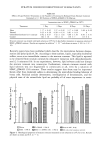
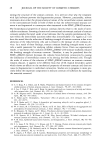
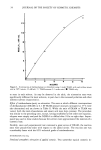
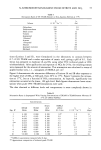
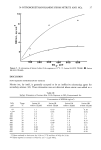
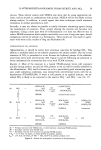
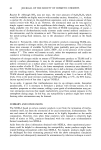
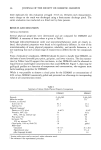
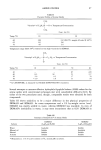
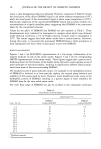
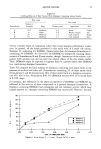
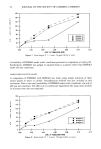
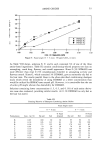
16 JOURNAL OF THE SOCIETY OF COSMETIC CHEMISTS Table II Results of the Challenge Phase in Terms of the Erythema Scores Induction group Initial skin Treatment Irradiation type material (RB counts) Results of challenge phase Erythema score* (Pig number) ! 2(ls) 3 2(rs) 4 I Non-pigmented Vehicle II Pigmented Vehicle III Non-pigmented Vehicle IV Non-pigmented Vehicle q- Bergapten V Non-pigmented Vehicle + Sunscreen VI Non-pigmented Vehicle q- Bergapten Sunscreen VII Non-pigmented Vehicle + Sunscreen VIII Non-pigmented Vehicle q- Bergapten Sunscreen 0 2 2 2 2 2 0 2 3 3 2 3 2OO 2 2 5 2 4 2OO 2 3 5 2 4 200 2 2 2 2 3 2OO 2 2 4 2 4 4OO 3 2 3 2 2 4OO 2 4 3 2 4 * Erythema score represented the exposure time (i.e., 1, 2, 3, or 4 min) needed to elicit a barely percep- tible erythema in each of the induction sites. A score of 5 indicated that none of the challenge exposures of UVR produced erythema. After completion of the induction phase, all induction sites were challenged with exposures to radiation from a xenon short-arc solar simulator with a WG320 Schott glass filter. Twenty-four hours later the challenged sites were assessed for erythema. during the induction phase of the study (i.e., induction groups I and IT). The summa- tion of pigmentation scores for the induction groups indicated that induction sites III, IV, VI, and VIII were pigmented to a degree equal to or comparable to that of the normal pigmented skin of the pig (i.e., induction group TI). After challenging the induction sites with increasing exposures to UVR in the challenge phase, the erythema scores indicated that there was some apparent relationship between the degree of pigmentation and subsequent susceptibility to UVR (Tables ! and TT). The challenge exposures of 2, 3, and 4 minutes often resulted in perceptible erythema in non-pigmented induction sites and mildly pigmented sites, while induction sites with moderate or marked pigmentation either displayed erythema after longer challenge ex- posures (e.g., 3 and 4 minutes) or did not display erythema after any of the challenge exposures. However, erythema scores were variable within induction groups, and sta- tistical analysis indicated that there was no significant difference among the induction groups with respect to this endpoint. Induction group I may be considered as baseline responsiveness for SBC indices, since these sites represented non-pigmented skin which was treated with the vehicle and not irradiated during the induction phase and had a summation of pigmentation score of 0. For induction site I the means and 95% confidence intervals, in parenthesis, for the endpoint of SBC index were 0.18 (0.07), 0.54 (0.10), 0.87 (0.14), and 1.21 (0.17) for the four challenge exposures of 1, 2, 3, and 4 min, respectively (Figure 2). Induction group II represented naturally pigmented skin which was treated with the vehicle and

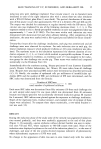
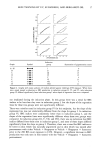
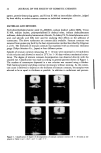
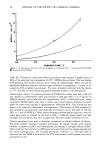
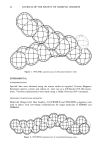
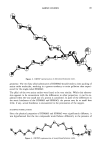
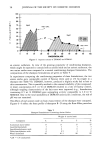
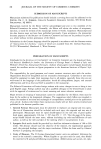
SKIN TANNING BY UV, SUNSCREEN, AND BERGAMOT OIL 17 1.0fA 0.5 1.0 o.5 Z• 0.5 E G 1.(• 0.5 UVR EXPOSURE (rain) Induction Graph Symbol group Summation of pigmentation scores A-H -• -• I 0 B 0 iii o II 15 c o iii o III 15 D 0 iii o IV 15 E 0 III 0 V 4 F 0 III 0 VI 13 G 0 III 0 VII 7 H 0 III 0 VIII 11 Figure 2. Graphs with mean sunburn cell indices plotted against challenge-UVR exposure. While there was a trend toward a reduction in SBC production in induction groups II, IV, and VI, only induction group VI differed significantly from induction group I when slopes of regression lines were compared. not irradiated during the induction phase. In this group there was a trend for SBC indices to be less than they were in induction group I, but the slopes of the regression lines for these two groups were not significantly different. There was a similar trend in induction group IV for this endpoint, but the slope of the regression line was not statistically different from the slope for group I. In induction group VI, SBC indices were consistently lower than in induction group I, and the slopes of the regression lines were significantly different when these two groups were compared. In induction groups III, V, VII, and VIII, there was no indication that SBC indices differed from those seen in induction group I, and none of these slopes differed significantly from the slope in group I. Therefore, there was a trend for SBC indices to be lower in skin which was naturally pigmented and in skin which was tanned after pretreatment with either Vehicle + Bergapten or Vehicle q- Bergapten q- Sunscreen prior to the 200 RB count exposure to UVR. However, a significant decrease in SBC production was only seen in skin tanned with the Vehicle q- Bergapten q- Sunscreen pretreatment.
Purchased for the exclusive use of nofirst nolast (unknown)
From: SCC Media Library & Resource Center (library.scconline.org)