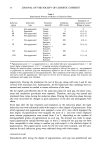
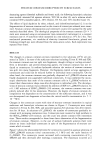
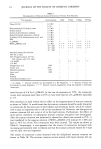
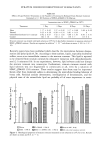
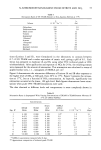
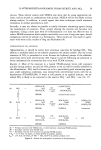
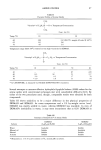
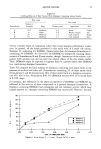
AMINE OXIDES 47 Table II Viscosity Profiles of Amine Oxides CH 3 Viscosity* of C18H37N '• O vs Temperature/Concentration CH 3 Conc. (wt %) Temp (øC) 10 20 60 248 65 141 70 85 242 (@61øC sample off-scale @ 60øC) 156 131 Temperature range below 60øC resulted in very high viscosities for SDMAO. C H 3 I Viscosity* of CloH2•--N--C•o H2• vs Temperature/Concentration O Conc. (wt %) Temp (øC) 10 20 70 82 30 - - 87 229 40 8.3 38 51 117 50 2.6 4.5 37 70 50 1.0 3.0 31 54 * In CENTIPOISE, as measured via HAAKE ROTOVISCO-RV viscometer. Several attempts to measure effective hydrophile-lipophile balance (HLB) values for the amine oxides with conventional techniques met with considerable difficulty (8,9). By either of the two procedures used, though, comparable results were obtained for both compounds. Table III shows solubility to be a major difference in the physical properties of DDMAO and SDMAO. At room temperature and a 1% by-weight active level, SDMAO was readily soluble in water, whereas DDMAO was insoluble. In view of DDMAO's insolubility in water, it may seem inconsistent that at 82% DDMAO in Table III Summary of Solubilities* of Amine Oxide DDMAO SDMAO Solvent (CloH21)2CH3NO CtsH37(CH3)2NO Water Insoluble Soluble Mineral oil Soluble Insoluble Ethanol Soluble Soluble Acetone Soluble Soluble * Measured as a 1 wt % active solution (23øC, neutral pH) in solvent.

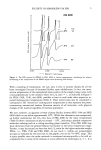
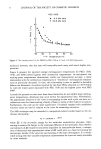
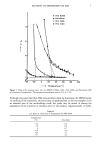
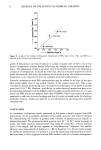
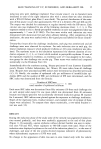
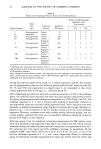
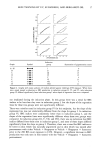
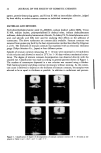
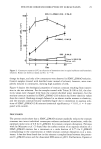
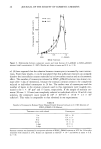
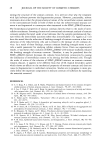
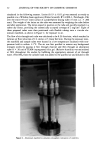
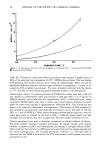
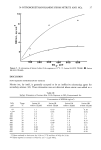
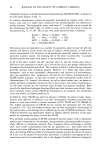
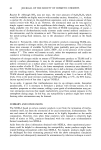
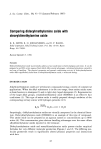
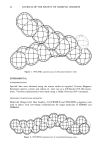
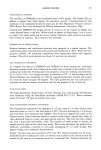
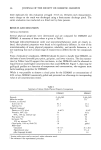
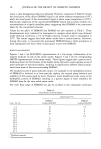
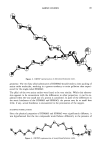
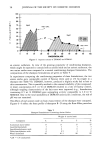
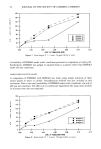
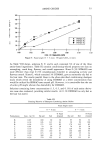
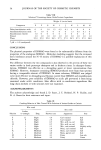
•8 JOURNAL OF THE SOCIETY OF COSMETIC CHEMISTS water, a clear homogeneous fluid was obtained. However, inspection of Table IV reveals the cloud point of the dilute DDMAO liquid to be below ambient temperature (10øC) while the cloud point of the concentrated liquid is above room temperature (65øC). Microscopic inspection of the concentrated DDMAO system did not show evidence of a microemulsion or a liquid crystalline phase, suggesting that DDMAO is the continuous phase for the concentrated solution. Values for the pKa's of DDMAO and SDMAO are also reported in Table I. These determinations were conducted in isopropanol to compare values which were obtained under identical conditions: a 1% by-weight solution of amine oxide in isopropanol at 23øC. The results suggest that both amine oxides have a similar basicity. However, during this study, it was noted that protonated DDMAO forms a white precipitate in both isopropanol and water while no precipitate occurs with SDMAO. MOLECULAR GEOMETRY Figures 1 and 2 are SPACEFILL representations of a low-energy conformation of an isolated molecule of each of the amine oxides. Figures 3 and 4 are the corresponding ORTEP representations of the amine oxides. These figures suggest that a greater steric hindrance about the N-O moiety of the dialkyl amine derivative could suppress access of polar molecules to that functionality, resulting in significantly different physical prop- erties from those of the structural analog SDMAO. The hindered access of polar molecules (water, for example) to the hydrophilic portion of DDMAO is believed to at least partially explain the unusual phase behavior and solubility of this amine oxide in water. However, water should have ready access to the hydrophilic portion of SDMAO, resulting in a greater degree of water solubility for SDMAO than for the twin-tailed amine oxide. The wide fluid range of DDMAO can also be ascribed to the compound's molecular Table IV Cloud Points of Amine Oxides Cloud points (øC) DDMAO SDMAO Cone. (wt %) (CloH2•)2CH3NO C•sH37(CH3)2NO 1.0 10 10.0 10 b 15.0 10 b 20.0 10 b 23.4 - a,b 30.0 12 - 40.0 23 - 50.0 b - 55.0 b - 60.0 b - 70.0 65 - 82.3 65 • - Undiluted material. Gel prevented measurement.
Purchased for the exclusive use of nofirst nolast (unknown)
From: SCC Media Library & Resource Center (library.scconline.org)