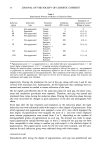
j. Soc. Cosmet. Chem., 38, 29-42 (January/February 1987) Minimizing N-nitrosodiethanolamine formation from nitrite and NO= in nonaqueous triethanolamine systems JIMMY B. POWELL, Maybelline, P.O. Box 3392, North Little Rock, AR 72117. Received June 24, 1986. Synopsis The N-nitrosation of diethanolamine, an impurity in triethanolamine systems, was studied under non- aqueous and slightly alkaline conditions. On addition of stearic acid, nitrite was shown to react with chloroform mixtures of triethanolamine/diethanolamine (TEAM/DEAM) at 37øC. The rates at which these TEAM-stearate mixtures nitrosated in various other solvents were also measured and were observed to be affected by the solvent type. In general, nonpolar solvents facilitated nitrosation at higher rates than polar solvents. In addition, the mixtures using 99% TEAM nitrosated more slowly than those with the 85% grade. All reaction rate constants were found to be pseudo-first-order with respect to nitrite, as DEAM was always present in excess. Studies were also conducted to simulate the maximum amount of nitrosation that could occur from air during regular consumer use of a cosmetic. A method is described whereby a lotion containing TEAM-stea- rate was uniformly spread over a surface at 2 mg/cm 2 and exposed to concentrations of NO 2 from 100 ppb to 600 ppb for 24 hours at 20, 30, and 37øC. Under these relatively anhydrous conditions, the lotion was then measured for N-nitrosodiethanolamine (NDELA) in ng/cm 2 by high performance liquid chromatog- raphy/thermal energy analyzer (HPLC/TEA). This type of nitrosation, described as atmospheric nitrosation, was shown to be less in a TEAM-stearate lotion when 99% TEAM was substituted in place of the 85% grade. INTRODUCTION Several studies have documented the presence of trace levels of nitrosamines in certain cosmetics products (1, 2). Nitrosamines result from the nitrosation of secondary amines according to the following accepted and general reaction: R2NH + Y-NO-- R2NNO + HY The formation of these nitrosamines has reportedly occurred after manufacture, pri- marily due to nitrosating agents within the formulations. Recently, though, lower nitrosamine levels have been reported (3), and have likely resulted from companies emphasizing the use of purer raw materials and probably avoiding those nitrite-re- leasing compounds (4). Cosmetics studies concerning N-nitrosation have largely dealt with aqueous, slightly acidic emulsions (5). However, nitrosation can be relatively faster and considerably 29

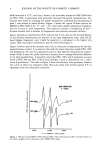
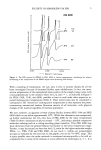
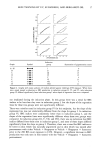
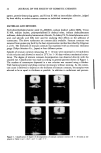
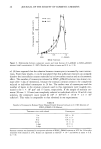
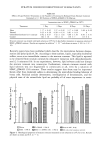
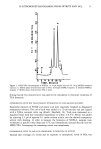
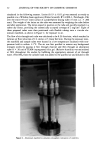
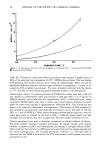
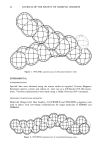
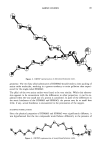
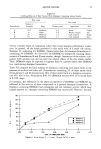
30 JOURNAL OF THE SOCIETY OF COSMETIC CHEMISTS more difficult to inhibit under nonaqueous, slightly alkaline conditions (6). Cosmetics formulated with triethanolamine (TEAM), which itself is not nitrosatable, unfortu- nately contain significant amounts of the diethanolamine (DEAM), which is nitrosat- able. In efforts to further understand and minimize this nitrosation, the following re- suits are presented. The first study involves nonaqueous solvent mixtures with triethanolamine/diethanol- amine and stearic acid, using nitrite (NO2-) as the nitrosating agent. The second study involves the effects low levels of NO2 have on TEAM-stearate lotions under conditions simulating normal cosmetic usage. When a lotion is spread thinly over a surface, an essentially nonaqueous matrix forms as the water evaporates. There has been speculation that N-nitrosations might also occur during actual product use (7). To determine the significance of this concern, product use of lotions is simulated by exposing thin films to atmospheric levels of nitrogen dioxide and subsequently analyzing for nitrosamines. Reactions leading up to this ni- trosation and ways to further minimize its occurrence in cosmetic products are dis- cussed. Additional evidence is given that increased purity of triethanolarnine helps to minimize its occurrence (8). The ramifications of these studies to other nitrosamine studies are also considered. MATERIALS AND METHODS CHEMICALS N-Nitrosodiethanolamine (NDELA) was purchased from Thermo Electron Corp. (Waltham, MA). Technical grade (85%) and 99% triethanolamine (TEAM) are grades commonly used in cosmetic products. Both were analyzed by high performance liquid chromatography/refractive index detection (HPLC/RID) to contain diethanolamine (DEAM) as the primary remaining ingredient. Technical grade stearic acid was used except where specified. All additional chemicals were reagent grade. The solvents were purchased from Burdick and Jackson, except for uninhibited Omnisolv chloroform of MCB (Cincinnati, OH). Nitrogen dioxide (100 ppm in air) was obtained from Union Carbide. ANALYTICAL PROCEDURE FOR NDELA BY HPLC/TEA A Beckman 114M liquid chromatograph was interfaced to a Model 502 thermal energy analyzer (TEA) of Thermo Electron. The TEA was operated at 500øC with an acetone/ dry ice cold trap and a pressure of 0.3 Torr. A mobile phase of iso-octane, dichloro- methane (DCM), methanol of approximately 60:30:10 composition was pumped at 1.5 ml/min and ambient temperature through a 3.9 mm (i.d.) x 30 cm u Bondapak NH 2 column (P/N 84040) of Waters Associates (Milford, MA). NDELA eluted at 8 - 1 minutes. Prepared samples were injected via a Rheodyne 7105 valve. Exactly two minutes after a 10-50 •1 sample injection, a 0.2 or 1.0 ppm NDELA standard was injected. An auto- matic switching value was used to change the LC stream from waste to the TEA after six minutes. As shown in Figure 1, the peak ratio of sample NDELA to standard NDELA,
Purchased for the exclusive use of nofirst nolast (unknown)
From: SCC Media Library & Resource Center (library.scconline.org)