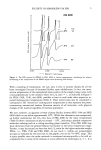
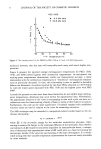
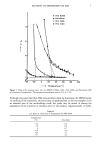
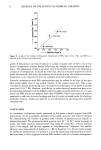
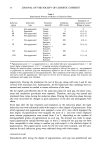
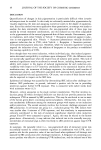
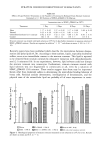
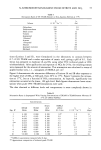
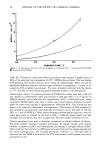
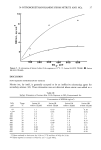
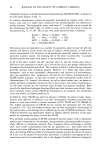
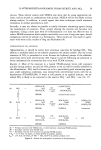
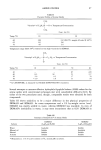
N-NITROSODIETHANOLAMINE FROM NITRITE AND NO2 39 process. These solvent studies with NDELA also show that by using appropriate sol- vents, such as alcohol or combinations with alcohol, NDELA will be less likely to form during analysis. In addition, it would appear that these techniques would minimize nitrosation in similar procedures as well. Secondly, it may not always be possible to totally eliminate nitrosating agents during the manufacture of cosmetics. Thus, simply slowing the reaction rate becomes very important. Using a more pure form of triethanolamine is at least one effective way to reduce DEAM nitrosation which might conceivably occur over a long time span, should endogenous nitrites be present in a formulation. These results are very much in agree- ment with those acidic studies of Ong and Rutherford (8). NITROSATION BY NO 2 EXPOSURE Alkanolamines, it should be noted, have enormous capacities for holding NO 2. This affinity is probably based on the alkaline properties the amines exhibit. But the actual retention of NO2 is postulated to occur because the hydroxyl groups of the alkanola- mine form esters with nitrite/nitrate (20). Figure 6 and the following are presented to better understand the nitrosations that occur with TEAM mixtures. Reaction A. Most of the moisture in a typical TEAM-stearate lotion will evaporate quickly during product use and the NO2 present in the air will be readily adsorbed by the alkanolamine. NO2 itself is known not to be a particularly good nitrosating agent, and, under anhydrous conditions, may instead form nitrite/nitrate esters with the al- kanolamines (TEAM/DEAM). If water is still present in an applied mixture, the ad- sorbed NO 2 is likely to be converted to the inactive NO 2- and NO 3- ions (16, 17). (A) NO 2 (B) N204 (C) NOY + HOCH2CH 2 O2NOCH2CH 2 NH RT NH HOCH2CH 2 _ H20" ONOCH2CH 2 (DEAM) (nitrite/nitrate esters) HOCH2CH 2 HOCH2CH 2 NH RT NNO HOCH2CH 2 _ H20 HOCH2CH2 HOCH2CH 2 NNO2 HOCH2CH 2 (DEAM) (NDELA) (nitramine) HOCH2CH 2 37øC HOCH2CH 2 NH • NNO HOCH2CH2 HOCH2CH 2 (DEAM) (NDELA) HY (A) = Primary reaction with TEAM only, or with mixtures containing TEAM-stearate. (B) = Secondary reaction with TEAM only. (C) = Secondary reaction with mixtures containing TEAM-stearate. * k•q = 0.15 Atm. for N204 • 2NO2 @25øC & ambient pressure. lgq = 1.91 Atm. for N203 • NO + NO2 @25øC & ambient pressure (23). Figure 6. Scheme for atmospheric nitrosation of diethanolamine.

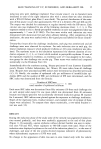
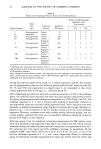
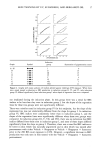
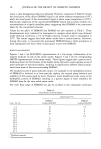
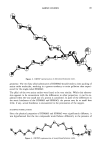
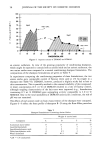
40 JOURNAL OF THE SOCIETY OF COSMETIC CHEMISTS Reaction B. Although NO2 may not react, the trace amounts of N203/N204 which would be available are highly reactive with secondary amines, themselves, i.e., without a catalyst (6). As shown in the equilibrium expression, only a minute amount of these oxides co-exist with NO 2 in air. However, the nitrosation rates can be very rapid in simple organic matrices, as the equilibrium shifts sharply, making even more N203/ N204 available (12). For these reasons, thin films of TEAM (containing, of course, a small fraction of diethanolamine) easily nitrosate under normal ambient conditions to the nitrosamine, and the nitramine as well. This reaction is particularly important in the metal-cutting fluid industry, due to the abundance of free amines in the fluids (21, 22). Reaction C. Fortunately, when thin films of cosmetic products containing TEAM-stea- rate are exposed to nitrogen oxides, the reactions are less spontaneous. This is because those trace amounts of available N203/N204 gases (probably parts per trillion) first form the intermediate nitrosonium carrier, NOY, due to the presence of the stearate catalyst Y-. This carrier will remain as such, unless the temperature and media are conducive to forming a nitrosamine, as shown above. Adsorption of nitrogen oxides on smears of TEAM-stearate products or TEAM itself is strictly a surface phenomenon. It may be the amount of DEAM available for atmo- spheric nitrosation on a surface plays a more significant role than occurred with the nitrite studies of table II. That is, the lower atmospheric nitrosation rates observed in the above 99% TEAM formulations are likely due to both a decrease of available DEAM ',and the resulting matrix. Nevertheless, formulations prepared with a purer form of TEAM showed significantly lower nitrosation, normally at least V3 or less at all NO 2 levels. Even at the more extreme conditions of 600 ppb NO 2 at 37øC, the 99% formu- lations aquired levels of less than 3 ng/cm 2 NDELA. As an aside, it appears that triethanolamine may tie up nitrogen oxides. Somewhat paradoxically, if it is necessary to formulate a product with tertiary amines, for its emulsive properties or other reasons, adding a pure grade of triethanolamine may pre- vent nitrosation reactions that might inadvertently occur from normal exposure to the atmosphere during usage. In this way, any susceptibility a product might have toward forming other nitrosamines may be lowered. SUMMARY AND CONCLUSIONS The NDELA found in certain cosmetic products is not from the nitrosation of trietha- nolamine itself, but from the nitrosation of its usual contaminate, diethanolamine. The rate and extent of this nitrosation was shown to be highly dependent on the media composition. However, even when these cosmetics were exposed to relatively high levels of nitrite or NO2, products formulated with the more pure triethanolamine formed considerably less NDELA. Aside from the direct information obtained with NDELA, these experimental proce- dures could be helpful in determining the susceptibility amine products might have toward forming nitrosamines other than NDELA. For example, products might easily be challenged for their nitrosating potential with the above atmospheric simulation proced. ures and subsequently measured for nitrosamines by whatever technique is avail-
Purchased for the exclusive use of nofirst nolast (unknown)
From: SCC Media Library & Resource Center (library.scconline.org)