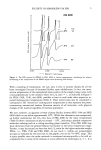
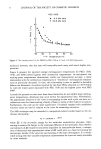
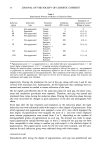
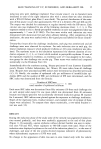
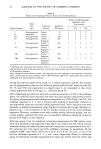
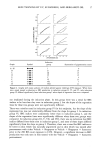
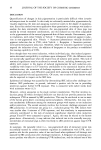
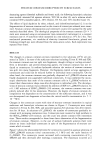
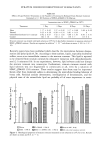
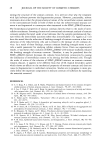
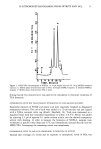
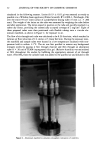
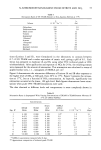
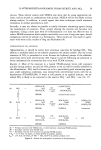
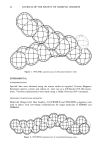
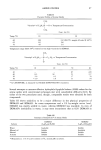
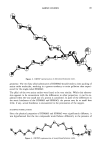
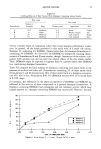
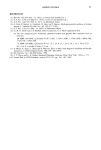
AMINE OXIDES 49 Figure 3. ORTEP representation of didecylmethylamine oxide. geometry. The two fatty alkyl substituents of DDMAO should hinder a close packing of amine oxide molecules, resulting in a greater tendency to resist gellation than experi- enced for the single-tailed SDMAO. The pKa's of the two amine oxides were found to be very similar. While this observa- tion appears to be inconsistent with the differences in other properties, it can be ex- plained when the very small size of a proton is considered. In spite of the differences in the steric hindrance of the DDMAO and SDMAO, the proton may be so small that little, if any, actual hindrance is encountered in the protonation of the oxygen. SHAMPOO FORMULATIONS Since the physical properties of DDMAO and SDMAO were significantly different, it was hypothesized that the two compounds would behave differently in the presence of Figure 4. ORTEP representation of stearyldimethylamine oxide.

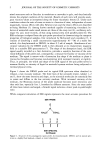
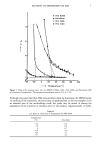
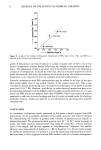
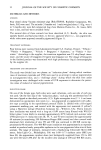
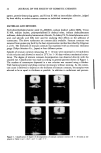
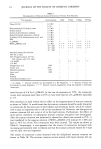
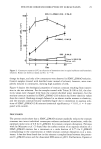
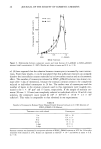
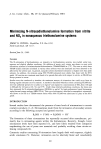
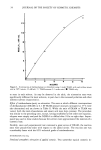
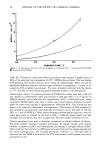
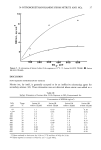
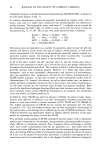
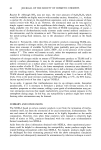
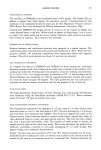
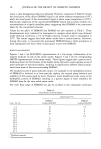
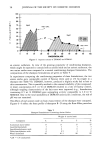
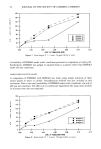
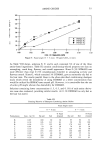
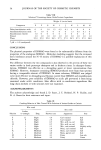
50 JOURNAL OF THE SOCIETY OF COSMETIC CHEMISTS lOO 90- 80- 70- 60-- 50- 40- 3o- 20- 10- D 0 - liquid max. conc. - ,i,ui I I I I I I I I I 10 20 30 40 50 60 70 80 90 COHCENT•TION, Figure 5. Aqueous systems of DDMAO and SDMAO. lOO an anionic surfactant. In view of the growing popularity of conditioning shampoos, which might be expected to contain both an amide oxide and an anionic surfactant, the two amine oxides were compared in a neutral conditioning shampoo formulation. The compositions of the shampoo formulations are given in Table V. In experiments comparing the conditioning properties of these formulations, the two amine oxides gave comparable control of flyaway when used at 2% by-weight in a shampoo (see Table VI). DDMAO, however, produced a slightly sticky feel to hair at this concentration. This is partially ascribed to the unusual solubility of this compound. A lower concentration (0.5 wt %) of DDMAO resulted in a loss of flyaway control, although tangling characteristics of the hair tress were improved (e.g., formulations containing 0.5 wt % DDMAO gave untangling activity comparable to 2.0 wt % SDMAO). Due to the total insolubility of DDMAO under acidic conditions, the role of pH was not examined. The effects of each amine oxide on foam characteristics of the shampoo were compared. Figures 6-9 reflect the foam profile of shampoos B-D using the Ross-Miles procedure Table V Shampoo Formulations* Containing Amine Oxides Weight % (active basis) Component A B C D Ammonium lauryl sulfate 15 15 15 15 Lauryldiethanolamide 3 3 3 3 Stearyldimethylamine oxide 0 0 0 2 Didecylmethylamine oxide 0 0.5 2 0 Water (deionized) 82 81.5 80 80 * pH = 6.9 (unadjusted).
Purchased for the exclusive use of nofirst nolast (unknown)
From: SCC Media Library & Resource Center (library.scconline.org)