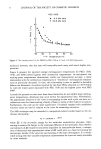
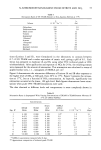
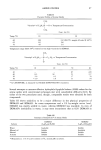
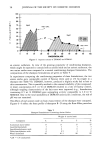
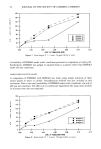
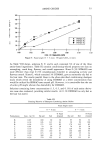
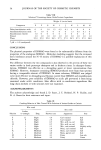
AMINE OXIDES 45 TOXICOLOGICAL SUMMARY The oral LD5o of DDMAO in rats (combined sexes) is 894 mg/kg. The dermal LD5o on rabbits is greater than 2000 mg/kg. No genotoxic activity is demonstrated by this chemical in the Salmonella/microsome assay and the Rat Hepatocyte Primary Culture/ DNA Repair Test: Test performed by Hilltop Laboratories, Cincinnati, Ohio. Concentrated DDMAO (80 weight percent in water) is an eye irritant in rabbits and causes delayed burns to the skin. When tested on rabbits in dilute form (1 wt % active in water), this amine oxide was not an eye irritant. However, skin irritation was noted after 4 hours of exposure. This irritation was reversible. PREPARATION OF FORMULATIONS Skeleton shampoo and conditioner solutions were prepared in a similar manner: The conditioning agent was dissolved in deionized water preheated to 40øC. With the tem- perature constant, the remaining components were sequentially added with vigorous stirring. The pH of each solution was about 6.9 and was not adjusted. SOIL TOLERANCE OF SHAMPOOS To compare the effects of DDMAO and SDMAO on foam production, prototype shampoos prepared with each of these amine oxides were evaluated in the presence of an artificial soil (olive oil). Formulations were prepared, diluted to working concentrations (0.01, 0.025, 0.05, 0.10 weight percent), and heated to 49øC. A 100-ml aliquot of the diluted shampoo was transferred to a 500-ml stoppered graduated cylinder and rotated ten times by hand through 180 degrees. The foam generation test was replicated in triplicate in both the absence of artificial soil and the presence of 2g of olive oil. FOAM EVALUATION The foam-generating characteristics of both shampoo and conditioning formulations were measured using the Ross-Miles procedure (ASTM Dl173-53). Water hardness levels of 50 and 150 ppm (as CaCO3) were used. HAIR CONDITIONING PROPERTY COMPARISON The formulations represented by shampoos A-D and rinses E-N were diluted with deionized water to 5 wt %, and then heated to 40øC. For each formulation, a 4-g brown hair tress from 10-in European hair (DeMeo, New York) was dipped fifty times in the diluted system, patted between towels to remove excess liquid, dipped fifty times in clean deionized water as a rinse, and again patted semi-dry. The tress was then combed out with a fine-tooth hard-rubber comb. The number of comb strokes to remove all tangles and the drag on the comb were noted. This entire procedure was replicated in triplicate, providing a variation in wet-comb untangling of ___2 comb strokes. The degree of drag was a subjective determination. Finally, the hair tress was air-dried at 25øC and 70% relative humidity for 24 hours. Immediately after combing the tress, its flyaway was recorded as the distance from the median of the tress to its outermost point on a horizontal line. Variation between the

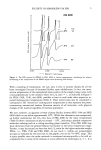
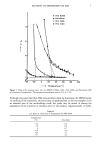
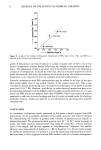
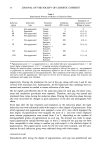
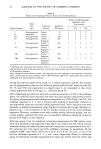
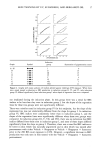
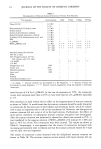
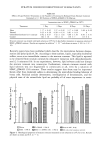
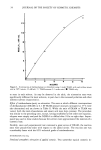
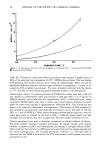
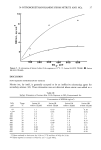
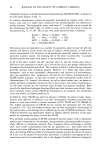
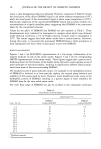
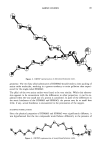
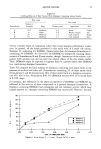
46 JOURNAL OF THE SOCIETY OF COSMETIC CHEMISTS three replicates for this evaluation averaged ___0.8 cm. Between each measurement, static charge on the comb was discharged using a Staticmaster discharge pistol. The entire evaluation was conducted as a blind test by three persons. RESULTS AND DISCUSSION PHYSICAL PROPERTIES Several physical properties were determined and are compared for DDMAO and SDMAO. A summary of these values is given in Table I. Although didecylmethylamine oxide and stearyldimethylamine oxide are closely re- lated, their physical properties were found to be significantly different. In view of the interrelationship of many physical properties, solubility, and micelle formation, it is not surprising that such a broad range of characteristics differed for the two compounds (7). From a formulator's standpoint, DDMAO should be easier to handle than SDMAO, on the basis of more favorable pour point, gel point, and lower viscosity. The data summa- rized in Tables I and II support this conclusion, in that DDMAO could be obtained in liquid form at much higher concentrations than could SDMAO. Figure 5, depicting the gel/liquid profiles as a function of temperature and concentration, also supports more facile handling properties for DDMAO. While it was possible to observe a cloud point for the DDMAO at concentrations of 40% or less, SDMAO consistently gelled and prevented our obtaining its corresponding value at all concentrations tested. Table I Summary of Amine Oxide Physical Property Comparisons DDMAO SDMAO Formula C21H45NO C20H43NO Molecular weight 327 313 Content, as received Active (wt %) 82.3 23.4 H20 (wt %) 17.7 76.6 Physical Constants* Density at 65øC (g/cc) 0.8675 0.947 Viscosity, 60øC (cp) 54 N.A. 60øC, 10% aq. mixture (cp) 1 248 Pour point (øC) 21 50 Gel point (øC) 15 59 10% aq. mixture (øC) 0 44 Cloud point, 10% aq. fluid (øC) 10 gelled HLB value b Calculated 7.8-8.3 8.3-8.8 Experimental value 6, 8 5.5-6 pKa (Isopropyl alcohol) 3.3 3.6 Amine oxides were used as received, unless otherwise noted. See reference 8 for experimental procedure.
Purchased for the exclusive use of nofirst nolast (unknown)
From: SCC Media Library & Resource Center (library.scconline.org)