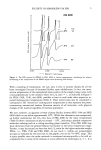
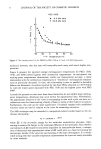
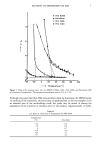
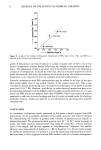
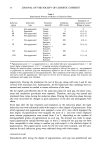
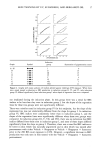
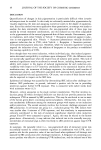
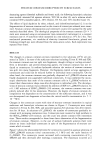
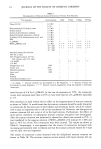
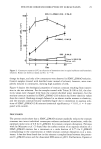
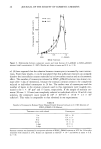
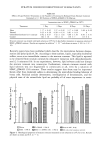
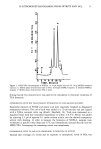
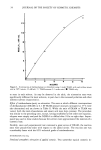
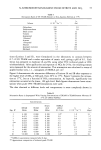
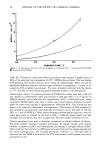
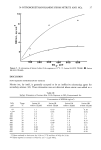
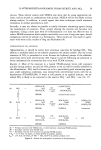
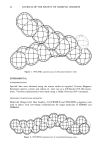
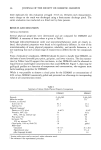
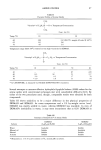
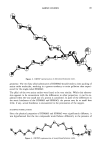
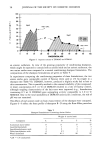
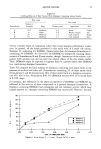
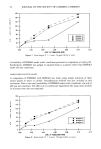
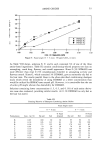
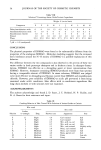
N-NITROSODIETHANOLAMINE FROM NITRITE AND NO 2 37 10 i i i I ] L 100 200 300 400 500 600 NO 2' ppb Figure 5. N-nitrosation of Lotion I after 24-hr exposure at 37øC. (5): Lotion IA (85% TEAM). I: Lotion IB (99% TEAM). DISCUSSION NON-AQUEOUS NITROSATION BY NITRITE Nitrite ion, by itself, is generally accepted to be an ineffective nitrosating agent for secondary amines (16). Thus nitrosation was not detected when nitrite was added to a Table III Surface Nitrosation of Lotions After 24-Hr Exposure to NO2-Contaminated Air Concentration of NDELA (ng/cm 2) NO2 Temp. Lotion IA Lotion IB Lotion IIA Lotion IIB ppb øC w/85% TEAM w/99% TEAM w/85% TEAM w/99% TEAM 0* 37 1.1 0.19 0.39 '0.18 2** 37 1.0 0.83 0.81 0.84 100 37 2.6 1.3 2.6 1.1 300 37 7.6 2.2 5.6 1.5 600 37 8.5 3.2 9.3 2.4 100 30 1.4 0.46 1.0 0.37 300 30 3.5 0.89 3.4 0.81 600 30 4.4 1.6 3.6 1.0 100 20 0.66 0.27 0.32 0.18 300 20 0.89 0.23 0.83 0.18 600 20 1.0 0.41 0.63 0.20 * Tubes enclosed in desiccator for 24 hr at 37øC and free of NO 2 for 24 hr. ** Tubes exposed as normal to NO2-free air (2 ppb NO2).

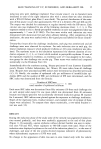
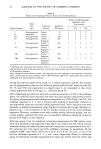
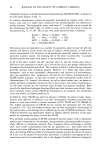
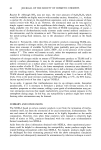
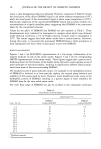
38 JOURNAL OF THE SOCIETY OF COSMETIC CHEMISTS chloroform solution of diethanolamanine/triethanolamine (DEAM/TEAM), as shown in the first study (Figure 3) (Eq. 1). In cosmetic formulations, amines are generally neutralized by organic acids, such as stearic acid, and it is under these conditions that diethanolamine was observed to readily nitrosate. The nucleophilic stearic acid anion (Y-) evidently acts as a carrier for the nitrosonium ion (NO +) (Eq. 2), which in turn, reacts with the amine to form the nitrosamine (Eq. 3) (17,18). This occurs even under neutral-to-basic conditions. R2NH q- HNO 2 • R2NH 2 +, NO 2- (1) YH + NO 2- --- NOY + OH- (2) NOY + R2NH--- R2NNO + HY (3) rate = k(R2NH)(NOY) Nitrosation rates are dependent on a number of parameters these include the pH, the amount and basicity of the amine, the type of catalytic anions present, as well as the nitrite concentration (16). However, as all parameters essentially remain constant in a particular cosmetic system, the resulting rate of the above reactions (Eq. 3) actually becomes pseudo-first-order with respect to the nitrosonium ion alone. In all of the above studies, the pH was kept above 8, and the results show that in addition to the importance of stearic acid, the reaction rate is also greatly influenced by the matrix of both solvent and solute. This is shown in Table I, where the rate constants generally decrease with increasing polarity. However, it is likely that other solvent parameters, such as their protophylic characteristics and electron rich environments, also play significant roles. Apparently, solvents do not interact mechanistically in TEAM-stearate mixtures, as may have occurred in other nitrosamine studies with di- chloromethane (19). Instead, this solvent, as well as other similar ones, are shown to simply facilitate nucleophilic nitrosation due to the solvents' own innate characteristics. At the other extreme are the relatively polar alcohols and aqueous emulsions. Both provide for significant hydrogen-bonding effects and thus nitrosate quite slowly. Since most cosmetics which contain TEAM are formulated as an emulsion, the nitrosations occur very slowly in finished products (5). In Table II, where DEAM was varied in relation to TEAM, the solute's innate charac- teristics were observed to influence it as well. Nucleophilic nitrosation reactions were shown to occur most readily in stearate mixtures of 85% TEAM and 15% DEAM. In fact, higher concentrations of DEAM did not increase the nitrosation rate over what occurred at 15%. This was further evidence that the final nucleophilic environment of the matrix plays a dominating role in influencing the rate of DEAM nitrosation. Thus NDELA formation was significantly slowed in slightly alkaline mixtures of this type, merely by increasing the purity level of the TEAM. This increased understanding of DEAM nitrosation has had impact, both in laboratory practice and in formulation. For example, during analysis, preventing artifacts is partic- ularly difficult in nitosamine research. Even if aqueous nitrite scavenging is initially used, trace nitrite contamination from the air, glassware, etc., may easily enter the solvents and cause difficulties. It was observed that the moderately high temperatures often used during different phases of nitrosamine analysis actually should not be used at all if one is to be assured of total artifact prevention. In addition, scavenging nitrite is unnecessary and not recommended, due to the dangers of artifact formation during the
Purchased for the exclusive use of nofirst nolast (unknown)
From: SCC Media Library & Resource Center (library.scconline.org)