j. Soc. Cosmet. Chem., 38, 287-293 (September/October 1987) The determination of depilatory activity using a thermomechanical analyzer FRANCIS E. BEIDEMAN, American Cyanamid Company, Shulton Research Division, 697 Route 46, Clij9on, NJ 07015. Received February 12, 1986. Synopsis A new method to determine the relative activity of depilatory preparations was developed using a thermo- mechanical analyzer. The thermomechanical analyzer was used to monitor the change in length (A1) of a bundle of five human hairs immersed in a depilatory preparation. When AI was plotted versus time, a graph consisting of two straight-line portions resulted. The intersection of these lines denotes the time at which stretching of the hair bundle begins. This time (Td) was shown to be inversely related to the efficacy of depilatory preparations. The data generated by this procedure correlate well with clinical observations based on a guinea pig model. The method uses commercially available laboratory equipment and is rapid and safe. INTRODUCTION Depilatory activity is commonly tested in our product evaluation clinic by visual and tactile examination of human subjects. Measured amounts of test product are applied to defined areas of the leg. The test area is rated for hair removal, smoothness, irritation, and time for regrowth. Comparisons can be made by rating areas to which different formulations have been applied for varying lengths of time. Panelists may also be ques- tioned concerning efficacy, irritation, and overall preference. Although testing on human subjects is certainly necessary before marketing a consumer product, it is an expensive, time-consuming, and subjective process. In addition, newly synthesized depilatory candidates with incomplete toxicology profiles cannot be tested on human subjects. The use of animal models (rabbit and guinea pig) is much more convenient in terms of time and expense. Toxicity testing requirements may also be relaxed, but the rating of efficacy is still subjective. Thioglycolate depilatories work by reducing the disulfide crosslinks present in the ker- atin fibers which give hair much of its physical structure (1,2). As these crosslinks are disrupted, the fibers become weakened, eventually allowing the hair to be wiped away. A method which can determine when the softening of the hair shaft occurs should therefore be useful in approximating depilatory efficacy. 287

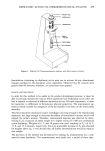
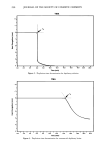
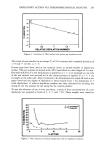
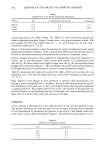
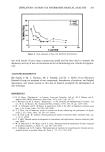
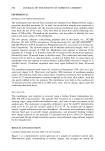
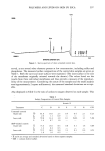
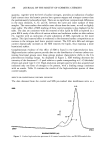
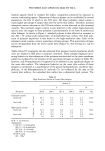
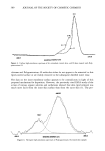
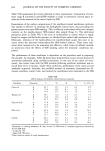
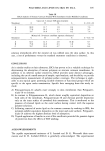
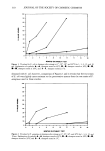
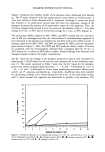
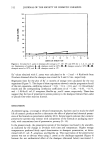
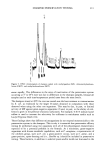
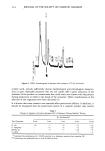
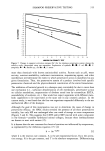
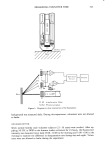
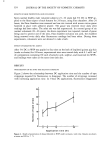
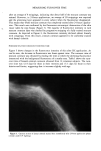
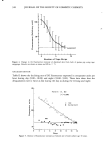
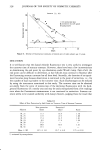
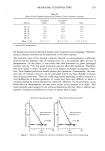
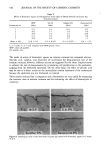
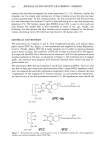
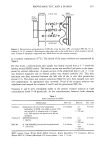
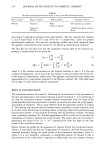
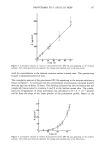
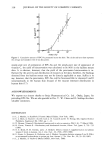
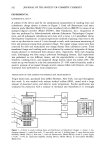
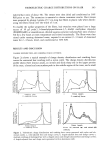
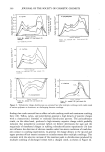
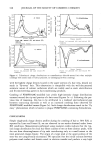
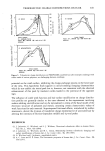
288 JOURNAL OF THE SOCIETY OF COSMETIC CHEMISTS Other researchers have taken this approach. Yablonsky and Williams (3) measured the "longitudinal swelling" of single hairs held under tension by a one-gram weight and immersed in a depilatory solution. This measurement was made by observing the posi- tion of the hair through a traveling microscope. The method, though shown to correlate well with in vivo testing, requires the constant attention of the analyst. T. J. Eliot's (4) "Depilometer" determined a depilation time by measuring the time at which a bundle of ten depilatory-treated hairs would break when stressed by a periodi- cally applied 50-g load. The method again correlated well with clinical tests. The procedure was automated through the use of a device developed and constructed in the author's laboratory. The need to test a large number of newly synthesized depilatory compounds in a variety of formulations required the development of a test method which could rapidly and precisely measure relative depilatory activity. Our approach uses the DuPont Model 943 Thermomechanical Analyzer to measure the time at which a hair bundle under constant stress, immersed in a depilatory formulation, begins to stretch. The data to be presented suggest that the method offers an objective and quantitative measurement of relative depilatory activity using commercially available equipment to automate the data collection. EXPERIMENTAL EQUIPMENT A DuPont © Model 943 Thermomechanical Analyzer interfaced to the Model 1090 Thermal Analyzer with dual floppy disc drives was used. This device, with fiber probe accessory, was designed to measure elongations and contractions of fibers under con- stant tension when exposed to thermal stress (5-8). The device works by measuring the position of the metallic shaft assembly in a magnetic field (Figure 1). The Thermal Analyzer was programmed to observe the stretching and/or breaking of a hair fiber bundle attached to the fiber tension probe accessory, immersed in a test formulation under isothermal conditions (22 -+ IøC). METHOD A hair bundle was prepared by clamping five strands of DeMeo European dark brown hair between two partially cleaved lead balls (split shot) positioned approximately 15 mm apart. A multi-strand bundle was chosen to randomize differences in depilation time due to damaged cuticle or differences in hair shaft thickness. The hair bundle was attached to the lower probe assembly and the sample holder assembly (Figure 1). A five-gram weight was placed on the weight tray to apply tension, and the instrument was electronically zeroed. The hair bundle was immersed in 20 ml of test sample, held in a 20-ml beaker, and the probe position was plotted versus time (Figures 2, 3). Depilation time (Td) was defined as that time at which stretching of the hair bundle began. This time was determined by measuring the time at the intersection of the lines extended from the baseline and from the straight portion of the plot after elongation begins. The determination of Td for each sample was repeated using at least three hair bundles. The average T• was reported to the nearest 0.1 minute. Controls consisting of
Purchased for the exclusive use of nofirst nolast (unknown)
From: SCC Media Library & Resource Center (library.scconline.org)