j. Soc. Cosmet. Chem., 38, 353-358 (September/October 1987) Abstracts The Annual Scientific Meetings and Seminars of the Society of Cosmetic Chemists are important venues for informing the participants about the state of the art and recent technical advances in the field of Cosmetic Science. To provide broader dissemination of that information, the Publi- cations Committee has decided to publish abstracts of the technical presentations made at these Meetings and Seminars in theJournaL--The Editor. Society of Cosmetic Chemists Annual Meeting December 3-4, 1987 The Waldorf-Astoria, New York Program arranged by the Society's Committee on Scientific Affairs Carl B. Felger, Ph.D., Chairman, 1987 SCIENTIFIC SESSION A HUMAN INFLAMMATORY RESPONSE Animal models of skin irritation: Perspectives on testing procedures and inflammatory mech- anisms for cosmetic formulatots Esther Patrick, Ph.D., Dept. of Dermatology, Box 0989, University of California, San Francisco, CA 94143 Animal models have been used extensively for screening cosmetic, drug, and household products for their ability to produce skin irritation. Methods, such as the Draize skin irritation test and its modi- fications, endorsed by regulatory agencies, have been used for 40 years to screen materials for the ability to produce acute skin irritation and or skin corrosion. Assays such as the guinea pig immersion test and formalin-trypan blue tests have provided information on the irritation potential of materials following repeated contact with the skin. Recent investigations in our laboratory have provided evi- dence that topically applied chemicals do not pro- duce irritant inflammation by a single common in- flammatory pathway. The existence of multiple in- flammatory pathways, the activities of the putative mediators of irritation, and the processes which reg- ulate mediator effects provide some insight into why some chemicals produce cumulative irritation while others produce skin "hardening." Informa- tion describing the inflammatory process may be useful to formulators in choosing ingredients which have low irritation potentials for cosmetics. Predic- tive irritation tests will be reviewed in terms of their evaluation of acute and cumulative irritation and relevance for materials to be applied to dam- aged skin. SCIENTIFIC SESSION C GENERAL PAPERS Antimicrobial optimization in anionic skin cleansers Linda J. Bartelme and Connie J. Callander, Minne- tonka Corp., P.O. Box 1A, Minnetonka, MN 55343 Various cosmetic additives of experimental skin cleansers were examined for microbiological preser- vative interference. The addition of allantoin to an anionic surfactant composition resulted in reduced activity of the preservative system dependent on the concentration of allantoin. In another study, the antimicrobial activity of chloroxylenol was exam- ined in relation to the composition of a skin cleanser. The method used to demonstrate preserva- tive interference was based on the modified USP Antimicrobial Preservatives Effectiveness Test. A 353

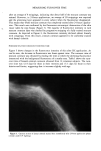
354 JOURNAL OF THE SOCIETY OF COSMETIC CHEMISTS 7-log difference in bacterial survival was found be- tween the control and a test sample containing al- lantoin when challenged with 10 7-- 10 8 colony- forming units per milliliter (CFU/ml). In addition, timed-kill testing performed on surfactant systems containing chloroxylenol exhibited a 5-log reduc- tion of CFU/ml within 30 seconds. This was only achieved with an optimal selection and concentra- tion of raw materials. It is theorized that molec- ular interaction and miceliar complexes may play a role in preservative interference in anionic skin cleansers. Stability of water-in-oil-in-water multiple emulsions Gary H. Cueman and Joel L. Zatz, Ph.D., Rutgers College of Pharmacy, P.O. Box 789, Piscataway, NJ 08854 Topically applied water-in-oil-in-water emulsions have the potential for prolonged delivery of water and/or water soluble-substances to the surface of the skin. These systems are subject to disruption of the oil layer separating the internal and external water phases. We have developed a technique of stability measurement based on the entrapment of a poly- meric, oil-insoluble dye in the internal water (W 1) phase. The analysis is carried out by introducing to the external phase a solution of an external standard having properties similar to the marker dye and measuring spectrophotometric absorbance at two wavelengths. This method, which compensates for diffusional water transfer and reflects oil film integ- rity, has been validated with simple O/W emul- sions. It is being used to explore the relationship between HLB and multiple emulsion stability. Analytical studies on shaving and irritation Harry R. Elden, Ph.D., Xienta Institute for Skin Research, Bernville, PA 19506 Shaving irritation can be defined in terms of stratum corneum debris removed by dermatomic planing of skin. Analytical measurement of irrita- tion and other shaving features were developed by modifying liquid transfer processes reported by sev- eral authors. Aqueous isopropanol was used, there- fore, to collect and separate particulates shaved from face, axillae and legs. Accumulated weights of daily collections showed seasonal variations, dependence upon settings of safety razor (adjustable), and con- ditioning of site. Acoustic method was used to record sounds of blade cutting hair and planing of skin surface. Ease of shaving was measured in terms of number of strokes, time sequence, and amounts of hair and stratum corneum removed. Irritation was determined by titration of stinging aqueous iso-propanol. Findings show that shaving can be measured analytically and, irritation still limits achieving the perfect shave. The use of computer-assisted infrared imaging in evaluating the efficacy of novel cosmetic hair treatment Stephen R. Schwartz, Richard E. Reever, and Larry D. Lundmark, International Research Services Inc., 222 Grace Church St., Port Chester, NY 10573 Electronic thermography was first used for medical purposes over thirty years ago when equipment originally developed for the military was modified for the detection of breast cancer. In more recent times, advanced electronic thermographic devices have become available which make extensive use of computer processing capabilities. This opened up a new realm of research and claim support possibili- ties for the cosmetic scientist of the 1980's. Thermography or infrared imaging is a technique which can be used to measure minute changes in skin temperature. It therefore can be used to mea- sure a product's effect on vascular and metabolically active tissues. In this paper we will describe the use of thermography as a tool for evaluating the efficacy of a novel cosmetic hair treatment. Results will be presented which demonstrate scalp stimulation properties which are postulated to play a role in the treatment of thinning hair. SESSION D SAFEGUARDING NEW PRODUCT INTRO- DUCTION-HOW TO AVOID FIRST PRO- DUCTION BATCH DISASTER The root of troubles in manufacturing cos- metics T. Joseph Lin, Ph.D., Consultant, 628 Enchanted Way, Pacific Palisades, CA 90272 Unexpected manufacturing troubles often delay or jeopardize a new product introduction. If unde- tected, hidden troubles often lead to product recall. The root of the problem often lies in inadequate or incomplete understanding of the key factors af- fecting the physical, chemical, or biological proper- ties of the products. Often neglected in consider- ation is the interaction factor. Process variables, or factors related to processing of products, are partic- ularly important in manufacturing emulsions and suspensions. A lack of understanding these variables often leads to disaster in manufacturing the first production batch.
Purchased for the exclusive use of nofirst nolast (unknown)
From: SCC Media Library & Resource Center (library.scconline.org)