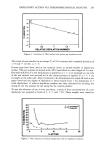
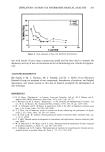
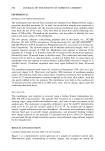
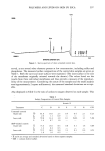
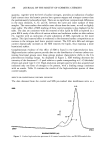
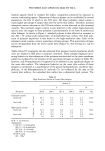
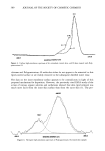
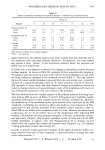
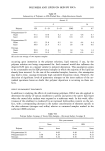
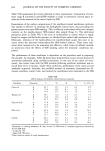
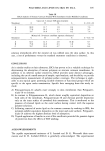
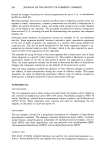
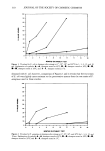
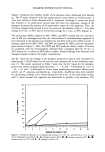
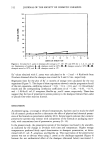
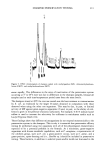
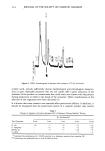
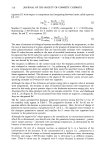
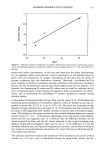
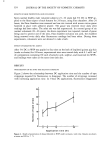
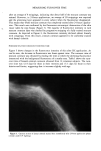
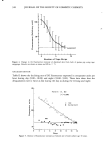
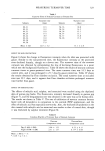
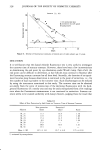
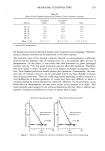
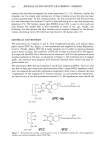
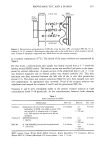
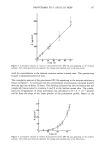
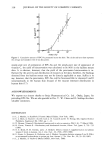
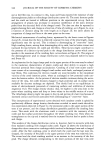
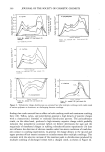
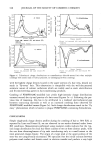
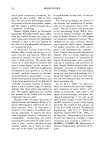
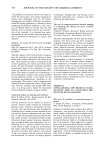
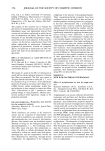
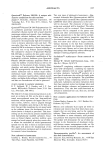
SHAMPOO PRESERVATIVE TESTING 311 Figure 3 illustrates the stability profile of the shampoo when challenged with Bacillus sp. The D-values obtained with this gram-positive spore former at several points in time were similar to those obtained with P. aeruginosa. Although S. aureus was much less resistant to the preservative system than the other test organisms, storage of the shampoo decreased the potency of the preservative system for this organism. Thus, the D-values changed from around 4 hr at the outset of the stability study to 7.6 hr after storage for 6 mo. at 49øC and to 9.8 hr after storage for 12 mo. at 38øC (Figure 4). The preliminary HPLC analyses for MP, CMIT, and MIT revealed that the concentra- tion of MP was unchanged and that the concentration of isothiazolinones appeared to have decreased in all shampoo test samples that had been used in the stability study. A shampoo spiked with MP, CMIT, and MIT and assayed by HPLC gave the chromato- gram shown in Figure 5. Here, the CMIT and MIT peaks are clearly evident. This may be contrasted with the chromatogram obtained from a shampoo aged for 18 mo. at 38øC (Figure 6), in which no MIT peak is evident. Similar findings were obtained with shampoo samples stored at the higher temperatures. The Ea' values for the change in the shampoo preservative system were calculated by substituting 2.303/D-values for the reaction rate constants (k) in the Arrhenius equa- tion (7). The results presented in Table I show that the Ea' values for the shampoo preservative system increased negatively from - 7, - 6, and - 4 Kcal/mole at 1 mo. to - 16, - 10, and -9 Kcal/mole at 12 mo. when performing preservative efficacy tests with E. coli, P. aeruginosa and Bacillus sp., respectively. Insufficient data were available for calculating a change in Ea' values during the first 6 mo. of the study when testing with S. aureus because this organism was inactivated so quickly in the shampoo. The 1 oo 8o 7o i 60 -.., 50 ! 3O 20 o o 2 4 8 8 lO 12 14 16 18 MONTHS ON STABILITY TEST 8 ø Figure 3. D-values for Bacillus sp. in shampoo after storage at 3 ø, 20 ø, 3 , and 49øC for 1, 3, 6, 12, and 18 mo. Explanation of symbols: &--&, shampoo stored at 49øC O--O, shampoo stored at 38øC I--I, shampoo stored at 20øC and }--{, shampoo stored at 3øC.

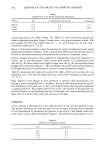
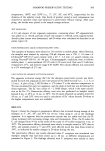
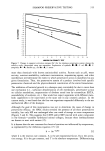
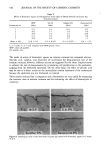
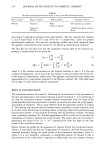
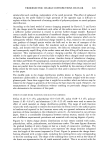
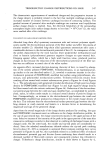
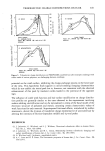
312 JOURNAL OF THE SOCIETY OF COSMETIC CHEMISTS lOO 90 80 70 60 50 40 30 20 10 0 I i I I I I I I i I i I i I i I 2 4 6 8 10 12 14 16 18 MONTHS ON STABILITY TEST Figure 4. D-values for S. aureus in shampoo after storage at 3 ø, 20 ø, 38 ø, and 49øC for 1, 3, 6, 12, and 18 ø C mo. Explanation of symbols: &--&, shampoo stored at 49øC O--O, shampoo stored at 38 I--I, shampoo stored at 20øC and }--{, shampoo stored at 3øC. Ea' values obtained with S. aureus were calculated to be -2 and -4 Kcal/mole from D-values obtained after the shampoo was stored for 6 and 12 mo. respectively. Regression lines for the plot of Ea' vs months of storage were calculated for the test organisms (Figure 7). The slopes of these regressions showed a similar progression for all of the test organisms, exhibiting values of - 0.8, - 0.4, - 0.6, and - 0.3 Kcal/mole/ month and the corresponding correlation coefficients (r) of -1.00, -0.93, -0.75, and - 1.00 for E. coli, P. aeruginosa, Bacillus sp., and S. aureus, respectively. These data suggest that the loss of preservative system potency in the shampoo followed first-order or pseudo first-order reaction kinetics. DISCUSSION Accelerated aging, or storage at elevated temperatures, has been used to study the shelf life of cosmetic products and/or to determine the effect of physical and chemical param- eters of the formula on preservative stability (8,9). Several reports indicate that cosmetic preservative systems may interact with components of the formula or packaging mate- rials, with concomitant loss of preservative potency (9-14). In the present study, the preservative system of the shampoo was found to be unstable, as indicated by the change in D-values with time and temperature. Higher storage temperatures produced fairly rapid deterioration in shampoo preservation, as deter- mined with E. coli, P. aeruginosa, and Bacillus sp. This inactivation of the preservative system was not as obvious when using S. aureus as the challenge organism (Figure 4) because the net antibacterial effect of the shampoo (discussed below) inactivated S.
Purchased for the exclusive use of nofirst nolast (unknown)
From: SCC Media Library & Resource Center (library.scconline.org)