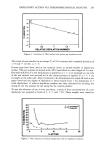
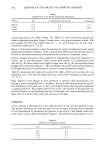
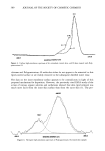
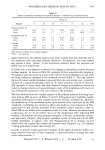
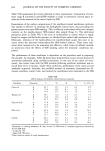
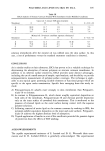
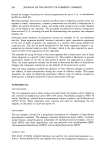
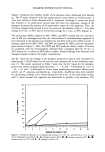
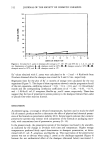
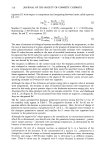
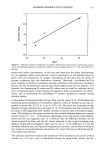
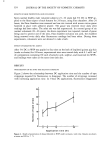
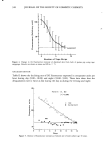
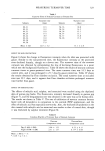
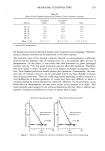
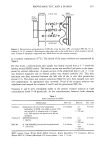
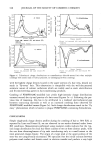
328 JOURNAL OF THE SOCIETY OF COSMETIC CHEMISTS 130 Z •00 E o Forearm (9, 21) 0 non-protected skin ß protection by soft gauze O• '•• (} backgrøund -øo%o • ...... -.. 10 15 •0 Days Figure 6. Decline of fluorescence intensity at forearm site of male subject age 21 years. DISCUSSION It is well known that the dansyl chloride fluorescence test is very useful to investigate the turnover time of stratum corneum. However, there have been a few inconveniences in determining the end point by eye observation under Wood's lamp. First of all, the end point can be difficult to determine, as hair follicles may continue to fluoresce after the fluorescing stratum corneum has all been shed. Secondly, the duration of an experi- ment becomes long because observation is continued to the point of extinction, i.e., for the number of days equivalent to the turnover time. Such disadvantages can be reduced by using the instrument mentioned in this study. The turnover time can be obtained accurately from the point of intersection of the declining fluorescence with the back- ground fluorescence of a nearby area and may be easily extrapolated from a few readings even when the fluorescence measurement is not continued to extinction. Stratum cor- neum seems to be stained uniformly with dansyl chloride, judging from the result that Table III Effect of Skin Protection by Soft Gauze on Turnover Time of Stratum Corneum Non-protection Protection • Subjects (days) (days) Ratio M, 21 11.3 16.9 1.50 M, 23 11.9 22.5 1.89 M, 24 17.4 31.5 1.81 M, 24 8.9 17.4 1.96 M, 28 17.9 -- M, 33 18.8 30.3 1.61 M, 36 15.3 -- Mean _ SD 14.5 - 3.8 23.7 -+ 6.9 1.75 - 0.19 *, estimated by extrapolation.

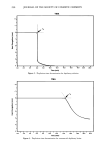
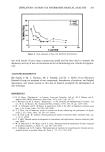
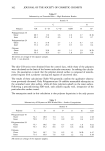
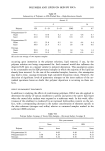
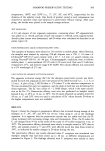
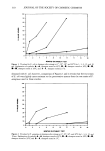
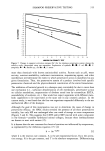
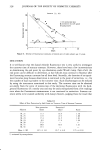
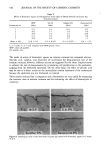
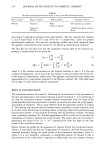
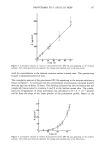
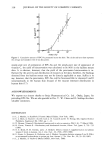
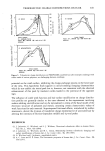
MEASURING TURNOVER TIME 329 Table IV Effect of Finn Chamber Occlusion on Turnover Time of Stratum Corneum Untreated Occlusion* Subjects (days) (days) Ratio M, 23 11.2 17.8 1.59 M, 26 11.0 19.0 1.73 M, 28 13.8 45.8 3.32 M, 34 14.5 -- -- M, 37 13.8 37.5 2.72 M, 46 15.0 25.5 1.70 Mean ___ SD 13.2 4- 1.7 29.1 4- 12.2 2.21 4- 0.77 estimated by extrapolation. the fluorescence intensity decreased linearly with progressive tape strippings. Therefore, stratum corneum turnover can be determined in the above manner. The turnover time of the stratum corneum depends on environmental conditions. Normal routines (bathing, type of clothing worn, etc.) can markedly affect the rate of desquamation. In this paper, it was shown that skin protection by gauze prolonged turnover time by 75%, but gauze protection may not affect skin hydration. Therefore, this result seems to reflect turnover time in the absence of physical stimulation. How- ever, Finn chamber protection should increase skin hydration. Consequently, the turn- over time of stratum corneum may be prolonged further by Finn chamber occlusion than by gauze protection. There are conflicting reports regarding circadian variation in cell proliferation of human epidermis. It would have been very difficult to detect a circadian rhythm by normal fluorescence extinction. However, by this procedure, it was found that the desquamation rate was twice as fast in the daytime as at night. This result provides some support to the previous observation (6) that there is relative sup- pression of epidermal proliferative activity in human skin at night. left side of guinea pig back right side of guinea pig back •100- ._ o DC application • e background • 50- Vo• lr1=0.996 •o -- la. 0- 10 20 0 Days ø ø o DC apphcation 0 background 10 20 Days Figure 7. Decline of fluorescence intensity of depilated skin from back of guinea pig.
Purchased for the exclusive use of nofirst nolast (unknown)
From: SCC Media Library & Resource Center (library.scconline.org)