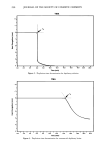
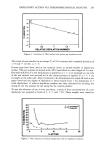
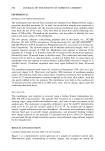
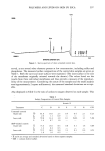
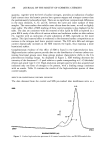
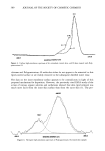
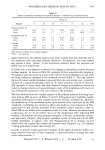
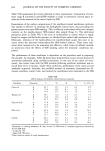
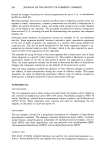
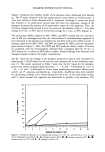
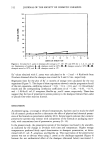
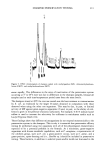
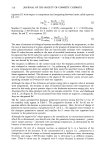
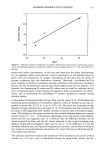
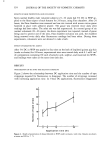
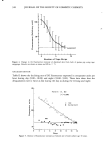
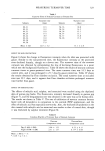
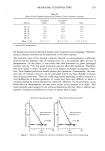
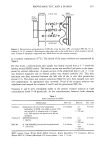
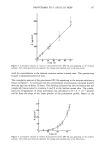
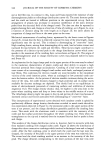
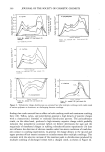
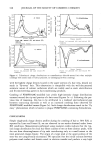
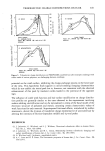
326 JOURNAL OF THE SOCIETY OF COSMETIC CHEMISTS background 0 5 10 Number of Tape Strips Figure 4. Change in the fluorescence intensity of depilated skin from back of guinea pig using tape strippings. Results are shown as mean and SD (n = 7). CIRCADIAN RHYTHM Table II shows the declining rate of DC fluorescence expressed in comparator units per hour during day (9:00-18:00) and night (18:00-9:00). These data show that the desquamation rate is twice as fast during the day as during the evening and night. 141 10( 70 0 Forearm (•, 36) Irl =0.948 0 0 0 0: test •,• ß: background O Oo• ß ee OO QQ•Q• Q QQ I I I I t I t I t I I I I I I I 6 2 4 6 8 10 12 14 1 Days Figure 5. Decline of fluorescence intensity at forearm site of male subject age 36 years.

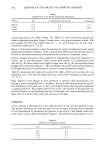
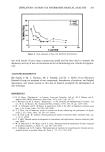
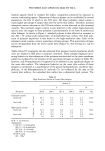
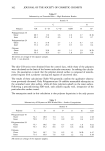
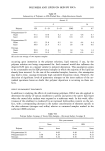
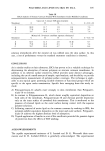
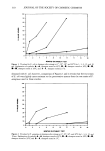
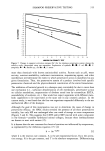
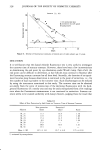
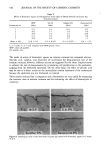
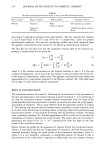
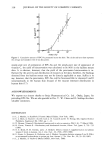
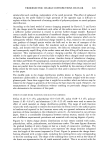
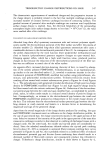
MEASURING TURNOVER TIME 327 Table I Turnover Time of Stratum Corneum at Forearm Site Turnover time Turnover time Subjects (days) Subjects (days) M, 21 11.3 M, 33 M, 23 11.2 M, 34 M, 23 11.9 M, 36 M, 24 17.4 M, 37 M, 24 8.9 M, 37 M, 26 11.0 M, 46 M, 28 13.8 M, 28 17.9 Mean ñ SD 12.9 --- 3.2 18.8 14.5 15.3 13.1 13.8 15.0 15.1 ñ 2.0 EFFECT OF SKIN PROTECTION Figure 6 shows the change in fluorescence intensity when the skin was protected with gauze. Similar to the non-protected sites, the fluorescence intensity at the protected sites declined linearly, though at a slower rate. The turnover time of the stratum corneum was obtained by extrapolating the line of declining fluorescence to a point which met the background fluorescence. Table III shows the results of stratum corneum turnover times at gauze-protected sites. The mean turnover time was 14.5 days at control sites, and it was prolonged to 23.7 days by gauze protection. Table IV shows the results obtained by Finn chamber occlusion. The mean turnover time at occluded sites was 29.1 days, and it appears that Finn chamber occlusion prolonged turnover time further than gauze. EFFECT OF KERATOLYTICS The effects of salicylic acid, sulphur, and resorcinol were studied using the depilated skin of guinea pig backs. The fluorescence intensity decreased linearly in guinea pig (Figure 7), and the desquamation rate was obtained in the same way as for human skin. The results are shown in Table V. The rate of exfoliation of stratum corneum became faster with all keratolytics in comparison to the controls (WSP application), and the effect of salicylic acid was especially noteworthy. Also, the thickness of epidermis in the skin treated with salicylic acid or resorcinol was similar to that of control skin, though it was thickened by sulphur treatment (Figure 8). Table II Circadian Rhythm of Turnover Rate of Stratum Corneum Decrease (comparator units) Decrease/hour (comparator units) Day (9 AM-6 PM) Night (6 PM-9 AM) 3.00 ñ 1.53 2.51 ñ 1.37 0.33 ñ 0.17 0.17' ñ 0.09 Mean ___ SD (n = 7). *,0.05 p0.1.
Purchased for the exclusive use of nofirst nolast (unknown)
From: SCC Media Library & Resource Center (library.scconline.org)