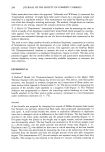
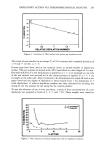
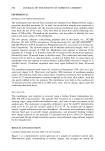
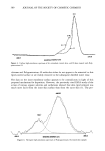
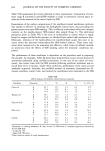
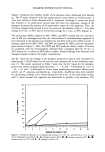
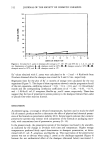
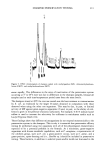
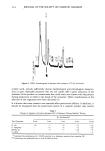
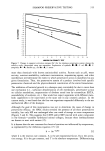
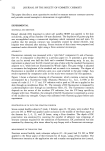
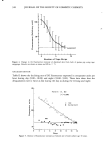
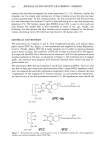
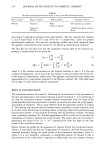
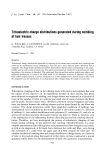
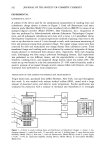
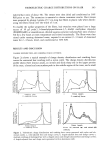
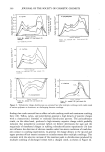
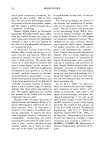
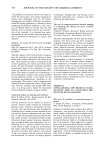
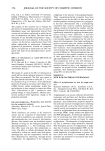
334 JOURNAL OF THE SOCIETY OF COSMETIC CHEMISTS vitamins has also been investigated by many researchers (12- 14). However, neither the dynamics nor the steady state permeation of these vitamins across the skin has been studied quantitatively. In this communication, the skin permeation and bioconversion of a new provitamin for vitamins C and E is described using an in vitro skin permeation apparatus (15). The hairless mouse skin (HRS/J strain (16)) is used in this study not only because this animal skin is well controlled in terms of sex, age, weight, and thickness, but also because the skin contains active enzymes (esterase) for the biocon- version of prodrug esters (16) which are also found in the hum'an skin (17). MATERIALS AND METHODS The provitamin for vitamins C and E, dl-c•-tocopherol-Lmscorbic acid sodium phos- phate diester (EPC-Na, Figure 1), was synthesized and supplied by Senju Pharmaceu- tical Co. (Osaka, Japan). EPC-Na is easily dissolved and is stable in aqueous solutions such as water or saline. The solubility of EPC-Na in water was found to be 384 mg/ml. It is expected that EPC-Na is bioconverted to vitamins C and E in the presence of active enzymes (esterase) in the skin, as illustrated in Figure 2. All chemicals were of reagent grade. All solutions were prepared with deionized distilled water which had been de- gassed before use. The provitamin (EPC-Na) and vitamins C and E were assayed by HPLC. Since we were not able to assay each compound simultaneously under a single HPLC separation condi- tion, we repeated the same skin permeation experiment three times to measure the rates of appearance of the compounds in receptor solution. In each permeation experiment, we used six sets of the skin permeation systems (15). All experiments were carried out ?=0 CHa C-OH H•C • -O CH• ?Ha ?•-OH •(CH2CH•,CH•, C H)a-CHa •iCi H HO I CHa CH-OH I Vt. C Vt. E Figure 1. Provitamin for ascorbic acid (vitamin C) and a-tocopherol (vitamin E), dl-a-tocopherol-L- ascorbic acid sodium phosphate diester (EPC-Na).

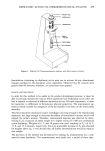
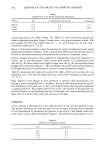
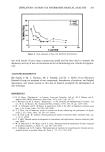
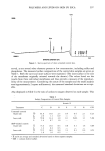
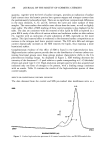
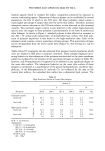
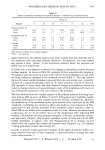
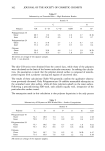
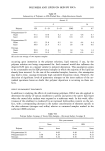
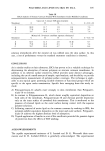
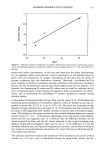
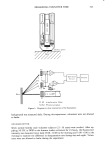
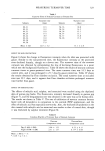
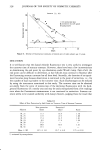
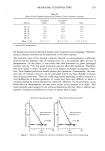
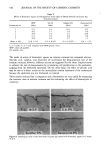
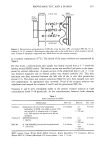
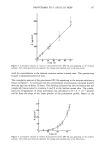
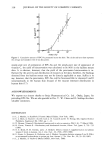
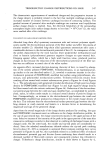
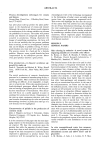
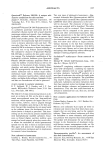
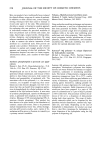
PROVITAMIN TO C AND E IN SKIN 335 icStor.•te•mm! Viable Sk'm •. •Irøcøudlatton Oru I I Delivery I • / IIII System I [ • • " • l-r vt. c l H I, III ' '1 Figure 2. Bioconversion and permeation of EPC-Na across the skin. EPC, provitamin EPC-Na Vt. C, vitamin C Vt. E, vitamin E. Bioconversion takes place only in the viable skin in which esterase is distrib- uted. Vitamin E (lipophilic compound) may diffuse back into the stratum corneum. at a constant temperature (37øC). The details of the assay condition are summarized in Table I. For this study, a full-thickness skin sample was freshly excised from a 5-7-week-old hairless mouse (HRS/J strain). The hairless mouse was sacrificed just prior to the exper- iment by cervical dislocation. A square section of the abdominal skin (3 cm x 3 cm) was removed surgically and its dermal surface was cleaned carefully (16). This skin specimen was then mounted between the half cells of the in vitro skin permeation system (15). The donor and receptor solutions (Table II) were then charged into each cell compartment. At appropriate time intervals, 30 !xl of the receptor solution was withdrawn and assayed for vitamins C and E and the provitamin EPC-Na. Vitamins C and E were remarkably stable in the present receptor solution at high concentration levels (50 !xmole/ml). At low concentrations, however, both vitamins Table I Assay Conditions for HPLC Mobile phase Flow rate Detector Ret. time Vitamin C Ammonium salt (tetra butyl ammonium 2.0 ml/min u.v. 4.8 min hydroxide), 0.002M, was added to water (700 max ml) and pH 5.0, adjusted with 1% formic = 245 nm acid. This solution was mixed with 300 ml methanol. (MeOH/chloroform) = (90/10) Vitamin E 2.0 ml/min u.v. 2.9 min max = 280 nm EPC-Na (0.12M NaH2PO4/acetonitrile/tetrahydrofuran) 2.0 ml/min u.v. 4.4 min = (15/75/10) max = 225 nm HPLC system: Pump, Waters Model 6000A Detector, Kratos Spectroflow 773 Integrator, Spectra- Physics SP4270 Column, IxBondapak C18 (reverse phase), 4 mm x 30 cm.
Purchased for the exclusive use of nofirst nolast (unknown)
From: SCC Media Library & Resource Center (library.scconline.org)