j. Soc. Cosmet. Chem., 39, 15-26 (January/February 1988) Relationship between skin permeability and corneocyte size according to anatomic site, age, and sex in man ANDRI• ROUGIER, CLAIRE LOTTE, PIERRE CORCUFF, and HOWARD I. MAIBACH, Dgpartement de Biologie (A.R., C.L. ) and Dgpartement de Biophysique ( P. C. ), Laboratoires de Recherche Fondamentale de l'Orgal, I Avenue Eugene Schueller, 93600 Aulnay sous Bois, France, and Department of Dermatology, University of Cali•brnia, San Francisco, CA 94143 (H.I.M.). Received July 8, 1987. Synopsis Postauricular and forehead stratum corneum (SC) exhibit greater permeability ehan SC of the arm, the forearm, or the abdomen. This greater permeability seems to correlate with smaller corneocyte area. The permeation of benzoic acid through arm SC of aged persons (65 to 80 years) appears reduced when compared with permeation through arm SC of younger persons. However, the permeability of water through the same membrane, measured by transepidermal water loss, does not seem to be affected by aging. INTRODUCTION In its role as barrier, the skin participates in homeostasis by limiting the inward move- ment of environmental agents and by limiting the water loss. Transepidermal water loss (TEWL) (1,2) and percutaneous absorption (3,4) are parameters related to the func- tional state of the cutaneous barrier. Apart from pathologic considerations, this func- tional state may vary considerably under physiologic conditions (1). Thus, in man, cutaneous permeability to both water and applied compounds varies according to ana- romic site (2-6). During the past two decades several functions of the stratum comeurn have been docu- menrated. However, despite the efforts of dermatologists and cosmetic scientists the stratum corneum has not yet revealed much information about its structure-function relationships. Corneocytes differ markedly from the keratinocytes that produce them. The most ob- vious difference is the disc-like shape of the corneocytes, allowing them to present a large surface area in the horizontal dimension. The surface area of corneocytes is not constant thus there exist site (7) and age (8- 10) differences. This suggests that studies 15

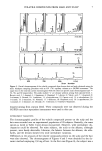
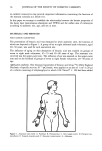
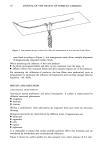
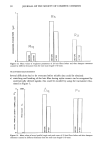
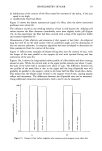
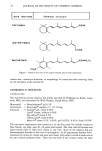
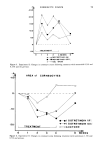
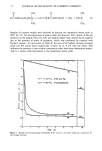
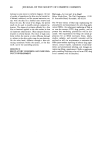
16 JOURNAL OF THE SOCIETY OF COSMETIC CHEMISTS on isolated corneocytes may provide important information concerning the function of the stratum corneum as a whole (11). In this paper we attempt to establish the relationship between the barrier properties of the horny layer (percutaneous absorption and TEWL) and the surface area of corneocytes according to anatomic site, age, and sex in man. MATERIALS AND METHODS PERCUTANEOUS ABSORPTION The penetration of benzoic acid was measured at seven anatomic sites, the location of which are depicted in Figure 1. A group of six to eight informed male volunteers, aged 20-30 years, was used for each anatomical site. The influence of aging on skin absorption of benzoic acid was studied on groups of seven to eight male volunteers, 45-55 and 65-80 years of age. The anatomic site involved was the upper-outer arm. The influence of sex was assessed on the upper-outer arm and on the forehead of groups of seven to eight female volunteers, 20-30 years of age. Application conditions. One thousand nanomoles of benzoic acid (ring-•4C) (New England Nuclear), of specific activity 10 -3 IxCi/nmol, were applied to an area of 1 cm 2 in 20 Ixl of a vehicle consisting of ethyleneglycol to which 10% Triton © X 100 had been added øG u Figure 1. Anatomic sites tested: A. Forehead. B. Postauricular. C. Arm (upper-outer). D. Forearm (ven- tral-elbow). E. Forearm (ventral-mid). F. Forearm (ventral-wrist). G. Abdomen.
Purchased for the exclusive use of nofirst nolast (unknown)
From: SCC Media Library & Resource Center (library.scconline.org)