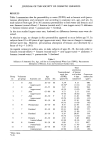
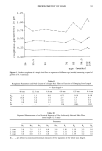
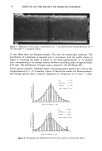
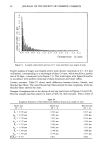
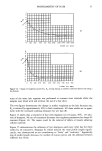
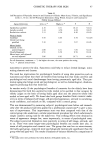
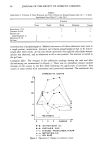
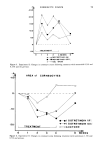
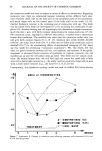
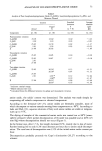
COSMETIC THERAPY FOR SKIN 45 psychology of make-up, the psychology of skin care, hair and hair care, and more recently, the psychology of fragrance. If we consider the social meaning of different aspects of appearance, we can see the importance of attractiveness and adornment in perspective. Anthropological studies have shown us that, historically, the meanings of bodily adornments differ in different cultures and different times. This is reviewed by Victoria Ebin (5) in her book The Body Decorated. For example, paint is used for facial adornment in ritual and ceremonial occasions: wooden lip plugs denote status. Some Maori women from New Zealand still engage in the practice of wearing tattoos around their mouths "as a means of retarding the aging process"-- they honestly believe it keeps them young and prevents the skin from shrivelling. Today we see that in many ways we have come full circle in that both men and women in our society currently use some very primitive-looking adornments, particularly if we look at the somewhat extreme use of cosmetic adornments evident in punk rock and new-wave type subcultural groups today. In attempting to assess the social meanings of conventional modern day cosmetics, our first major empirical study (3) aimed at showing that normal everyday use of a standard range of cosmetics enhances attractiveness and thereby brings to the user the many advantages associated with being attractive, since the advantages of looking physically attractive are many. The attractive gain social benefits in all kinds of different situations (6). They do better in interview situations, they get better grades in school, they are more likely to marry into a higher social class, people are likely to help them more, and so on. Attractiveness is one of the most powerful factors influencing social behavior. The reason why the physically attractive benefit is because of the existence of the stereo- type "what is beautiful is good"-- such that people tend to assume that a person has all kinds of favorable qualities in terms of personality, etc., just because he/she happens to look physically attractive (7). So the hypotheses of our first study (3) were that cosmetics should enhance the attrac- tiveness of a person so that the person should then enjoy the benefits of being physically attractive and being perceived more positively. This should apply when facial make-up is used to enhance the appearance, and the same principle should apply with hair care. The methodology that we developed for use in this study consisted of using photo- graphs of each of four people of (previously assessed) medium physical attractiveness in each of four different conditions: no make-up, no hair care make-up only hair care only and both hair care and make-up together. The photographs were rated by a panel of male and female judges on seven-point rating scales. The scales were bipolar, with a positive and negative pole to each dimension. The dimensions were different aspects of appearance and personality. Table I shows the dimensions that were significantly af- fected by make-up and by hair. In terms of appearance, with make-up the same person was seen as significantly more clean-looking, tidy-looking, attractive, feminine, pleasant, and mature-looking with hair care the person was seen as more clean, tidy, pleasant, and mature-looking. In terms of personality, with make-up the same person was seen as significantly more secure, sociable, interesting and making an effort, poised, confident, organized, and popular and with hair care, more poised, organized, popular, caring, sincere, making

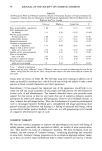
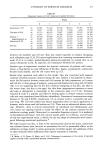
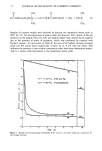
46 JOURNAL OF THE SOCIETY OF COSMETIC CHEMISTS more of an effort, reliable, kind, sensitive, and warm. Thus, qualitatively different aspects of personality tended to be affected by each kind of cosmetic, make-up affecting mainly the more outgoing aspects of personality, and hair care affecting the softer, gentler aspects of personality. AGING AND APPEARANCE In our early pilot research on the psychology of cosmetics in relation to aging specifi- cally, a preliminary investigation of motivation for use of cosmetics at different ages indicated that motivations do seem to differ with age, the over 40's motivations re- flecting more concern about aging, needing make-up to add color to the skin, needing make-up to look better in order to feel better healthwise and to help to attract the opposite sex or compete with other women (8). In our research on the elderly (9) at the University of Pennsylvania we compared psy- chological differences in elderly women aged 60 through to 96 who had all aged well with those who had aged badly in terms of facial cutaneous changes and disfigurements that had occurred over the years--specifically dry, leathery, yellowing skin, wrinkling, sagging, circles under the eyes, pigmented lesions, brown age spots, various growths, and so on. Our two groups were exactly matched for chronological age. We suggested on the basis of dermatological considerations that indifference to cos- metic care might have contributed to low attractiveness in old age in a number of ways. For example, use of lipstick might protect the lips from actinic damage and preserve the topographic features into old age. Sunscreens could reduce dermal damage, minimizing elastosis and dryness. There might be considerably less motivation for the unattractive elderly to care for their appearance because of being labelled and reacted to as "unat- tractive" in earlier years. There is now some evidence to suggest that facial appearance provides a reliable index of mental and physical well being. Borkan and Norris (10), in a study of correlates of aged appearance in elderly males, have shown that males who looked prematurely aged for their years were in fact older by physiological measures (tests of heart, lungs, etc.) and were found to live less long than those who were of similar chronological age and looked younger than their years. In our own research (9) with elderly women we found that the physically attractive elderly (those who had aged well) perceived themselves more posi- tively than the physically unattractive elderly (those who had aged badly) in terms of mental and physical well being and aspects of their social behavior. On comparing them psychologically, the group that looked good, the well-aged group, scored significantly higher on a number of important dimensions: they perceived themselves to be more healthy physically, their mental health was better, their outlook was more positive, they were more cheerful/less depressed, and they were better adjusted. They were also more satisfied with their lot in life and were more involved and realistic. Table II shows the mean scores, F ratios, significance levels, and degrees of freedom from analysis of variance for the dimensions along which the two groups were found to differ signifi- cantly. Observations of the skin and subjects' verbal reports indicated that the condition of the skin of a number of subjects, particularly those in the "aged badly" category, appeared to be the result of severe sun damage over the years, probably from insufficient use of
Purchased for the exclusive use of nofirst nolast (unknown)
From: SCC Media Library & Resource Center (library.scconline.org)