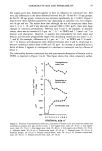
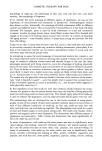
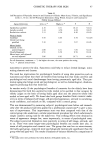
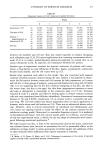
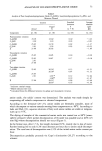
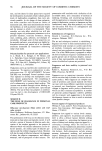
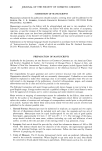
COSMETIC THERAPY FOR SKIN 47 Table II Self Perception of Physically Attractive and Unattractive Elderly: Mean Scores, F Ratios, and Significance Levels (1, 30 d.f.) for Self Perception Dimensions Along Which Attractive and Unattractive Elderly Groups Differed Aging dimensions Low p.a. * High p.a. * F P Satisfied/not satisfied 4.19 6.31 10.43 0.01 Socially involved 3.44 4.50 4.68 0.05 Realistic/not realistic 5.31 6.50 4.26 0.05 Physical health Good/bad 4.50 6.06 6.59 0.025 Overall well being good/bad 5.19 6.31 5.07 0.05 Mental health Outlook on life: positive/negative 4.88 6.31 7.85 0.01 Cheerful/depressed 4.56 6.50 9.59 0.01 Mental state: well adjusted/ not well adjusted 5.06 6.63 10.71 0.01 For all dimensions, maximum = 7 the higher the score, the more positive the rating. * p.a. = physical attractiveness. sunscreens to protect the skin. Sunscreens could help to reduce dermal damage, mini- mizing elastosis and dryness. The work has implications for psychological benefits of using skin protection such as sunscreens and shows that there are benefits from having skin that looks cared-for and psychological and social disadvantages from having prematurely aged skin. Thus pre- mature aging also brings social and psychological, as well as dermatological, disadvan- tages by producing skin that looks bad. In another study (4) the psychological benefits of cosmetics for the elderly have been demonstrated for both the unattractive (who tended to be ascribed to that category by elderly judges on the basis of having badly aged skin) and the attractive (those who tended to have aged well). We found that both groups benefited from cosmetic make- overs in terms of enhanced self image, self-perceived appearance, attitude to socializing, social confidence, and outlook on life, compared with a control group. This was demonstrated by measuring subjects' psychological state before and immedi- ately after the products had been applied by a professional cosmetician* to give a mea- sure of improvement. This improvement score was then compared with that of the control group who underwent a similar experimental procedure but which substituted a simple cosmetic sorting task for the make-over. Very striking effects were obtained in terms of appearance changes but, more importantly, in terms of psychological state. The subjects perceived themselves more positively in terms of self image, attitude, and so on. There were some longer-term psychological benefits one month later also, in terms of self perception and cosmetic care. The group that was low on attractiveness, the badly aged group, improved more psychologically (statistically significant) than the group who had aged well. The results of analyses of variance followed by comparisons of * The make-overs were performed by Glenn Roberts of Elizabeth Arden, Inc.

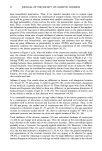
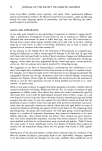
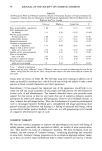
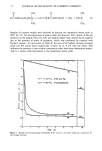
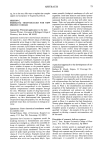
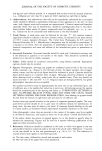
48 JOURNAL OF THE SOCIETY OF COSMETIC CHEMISTS Table III Self Perception With and Without Cosmetics: Results of Univariate Analyses of Variance Followed by Comparison of Means Tests for Dimensions of Self Perception Significantly Affected by Make-Overs, for High and Low* p.a. Groups Low p.a. High p.a. Control Gp. P Phys. attractive/phys. unattractive 1.88 1.25 0. ! 3 Well, healthy/not well, not healthy 2. !3 0.50 - 0.25 Feel like going out/don't feel like going out 2.88 1.13 0.03 Confident/shy, reticent 1.63 1.0 - 0. !2 Optimistic/pessimistic 1.63 - 0.25 0.38 Confident in appearance/not confident in appearance 1.75 0.88 - 0.87 Happy to look at self in mirror/ prefer not to look at self 2.50 1.50 -0.87 Outlook on life: positive/negative 0.38 0.63 4.14 Want to be seen/don't want to be seen 2.63 1.13 0.00 Attitude to make-over sessions 2.88 3.13 0.38 Would be glad to see people/ prefer not to see people !.0 0.63 -0.75 0.05 0.025 0.05 0.025 0.05 0.05 0.001 0.01 0.05 0.01 0.05 * p.a. -- physical attractiveness Scores shown are mean "difference" scores ("difference" refers to the result of subtracting the score for the "before" rating from the score for the "after" rating for each subject: the mean across subjects is shown for each scale). means tests are shown in Table III. We feel that long-term training in ef•ctive use of make up should be introduced as a vehicle for self care to help the elderly to take a more positive attitude towards themselves and their appearance. Kastenbaum (11) has argued that improved care of the appearance would help to in- crease the self and social acceptance of old people and help prevent the self-destructive vicious cycle of self abandonment. The research described above now provides some support for this notion in that we now know that use of cosmetics enhances positive perception by others and enhances self-perception. Positive social feedback should, in turn, enhance the self image further. Thus the development of a positive psychological cycle is encouraged (positive feedback and a strengthened self image generating more positive attitudes and behavior and leading to a feeling of enhanced well being, which in turn elicits further positive feedback, and so on, in a self-perpetuating cycle) instead of a negative self-destructive type of cycle. COSMETIC THERAPY We feel that cosmetic programs to improve the psychological and social well being of elderly persons, particularly the unattractive elderly, are worthy of more serious atten- tion. They deserve the status of a therapeutic modality. We have developed, from our research, the new concept of "cosmetic therapy," combining psychology and cosmetics in some form. Cosmetic therapy programs can be as simple as applying ordinary make- up or they can involve expert professional help in which cosmetics are used as a vehicle
Purchased for the exclusive use of nofirst nolast (unknown)
From: SCC Media Library & Resource Center (library.scconline.org)