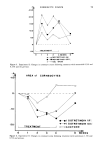
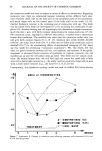
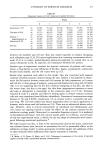
COSMETIC THERAPY FOR SKIN 49 to rebuild self image and confidence after disfiguring accidents. Cosmetic therapy pro- grams can moderate anxiety over appearance and increase opportunities for enjoying some of the advantages of looking attractive. Individual cosmetic therapy programs are likely to be particularly helpful for those suffering from depression (12,13) and for those who simply need a psychological boost. It is also appropriate for the special needs of those with skin disorders and disfigure- ments that need camouflaging (skin diseases, scars, post-plastic surgery problems, aging skin, etc.) (14). Those who are unattractive or have visible defects or disfigurements are disadvantaged socially and psychologically (15). Thus cosmetic changes to the appearance become very important in helping to restore the balance and to give more individuals the opportu- nity to enjoy the advantages of looking attractive or at least looking fairly normal and average in appearance. The British Red Cross started an innovative program of beauty care for people who are hospitalized, the elderly, the depressed, and those in need of a psychological boost. We have also linked up with the British Red Cross (16) to add the psychological dimension to the training programs for their cosmetic service of giving make-overs, skin care, massage, and manicures to hospital patients, including those with skin defects and disfigurements, who are in need of additional psychological support (17). We have helped them to extend their program to incorporate training in the psychological aspects of their work. This Red Cross cosmetic program has also expanded to other countries including Australia, New Zealand and, fairly recently, Japan. We have tried to encourage the development of a similar service in the United States through the American Red Cross. In our research in the U.S. we have developed a program of cosmetic therapy for disfi- gured burn victims, many of whom can be severely disfigured--as a means of helping them to develop coping mechanisms to recover from burn injury--since they fre- quently report that it is discomfort and negative reactions of others to negative appear- ance that is the cause of most of their distress. As with the elderly, it is the stigma associated with unattractive appearance that is a major cause of social disadvantage and, again, cosmetics of all kinds provide a powerful vehicle to alleviate at least some of the suffering. Camouflage and color cosmetics are important in effecting positive psycho- logical change in this group. Academic discussions of coping mechanisms for the disfig- ured now pay attention to the important role that cosmetics can play in developing coping strategies. in an exploratory study of the effect of our cosmetic therapy programs on a psychiatric population across the life span, consisting mainly of depressives but also including patients who suffered from self-image-related disorders such as anorexia nervosa and bulimia (13), the change in mood state within the hospital setting was readily notice- able, often appearing to speed recovery. The concept of cosmetic therapy is based on the notion of working with the patient or subject to build or rebuild the level of confidence and self esteem and a positive self image by training the person to disguise defective aspects and to enhance positive aspects of appearance as a vehicle to help her psychologically. Part of the cosmetic therapy program involves training in the use of cosmetic camouflage to correct defor-

50 JOURNAL OF THE SOCIETY OF COSMETIC CHEMISTS mities or aging skin problems so that heavy thick-covering cosmetics can be used to disguise skin problems (14). Beautifying color, as well as covering, cosmetics are used to disguise the defective aspects of appearance. The change in psychological mood state that takes place is sub- stantial for men as well as women. Camouflage cosmetic treatments are very effective for pigmentary abnormalities such as vitiligo, and for a disfiguring disease such as lupus erythematosus for which treatment may be lengthy and which may not clear without some residue. Reduced visibility for the duration of the medical treatment and after- wards is a worthwhile goal. For those with aging skin problems, specifically, there are limits to what cosmetics per se can do to improve severe wrinkling, but some standard cosmetics can be used to camouflage wrinkles effectively if the damage is not too severe. Use of color and con- touring cosmetics is also important in producing a more youthful appearance. Use of covering and beautifying cosmetics can also be important as an adjunctive treat- ment after surgery to deal with related aging problems, e.g., for face lifts, dermabra- sions, etc. Cosmetics can often be used to complete the camouflage of the facial disfig- urements that surgery is not able to deal with and to restore self confidence. After surgical changes such as face lift and chemical peel, the motivation to cosmetically enhance appearance can be nurtured. Changes in make-up usage, hairstyle, and coloring often become evident upon completion of surgical improvements, again indicating a more youthful appearance. There are many ways in which cosmetics can serve as effec- tive "anti-aging" devices. CONCLUSIONS Cosmetic therapy programs have started to be implemented. Programs have been de- signed and set up for hospitals in which training in appropriate cosmetic use is being used to help people to benefit psychologically. Cosmetic therapy can provide an impor- tant contribution to alleviate some of the problems with the elderly, particularly those with aging skin problems, the depressed, including those with self-image-related dis- orders, with burn victims or those with pigmentary abnormalities, and those with facial disfigurements that surgery cannot restore. REFERENCES (1) J. A. Graham and A. J. Jouhar, Cosmetics considered in the context of physical attractiveness: A review, Int. J. Cos. Sci., 2, 77-101 (1980). (2) A.M. Kligman and J. A. Graham, The Psychology of Cutaneous Aging (in press). (3) J. A. Graham and A. J. Jouhar, The effects of cosmetics on person perception, Int. J. Cos. Sci., 3, 197-208 (1981). (4) j. A. Graham and A.M. Kligman, Cosmetic therapy for the elderly, J. Soc. Cosmet. Chem., 35, 133-145 (1984). (5) V. Ebin, The Body Decorated (Thames & Hudson, London, 1979). (6) E. Berscheid and E. Walster, "Physical Attractiveness," in Advances in Experimental Social Psychology, L. Berkowitz, Ed. (Academic Press, New York, 1974), Vol. 7, pp. 158-216. (7) K. Dion, E. Berscheid, and E. Walster, What is beautiful is good, J. Pers. Soc. Psychol., 29, 285-290 (1972).
Purchased for the exclusive use of nofirst nolast (unknown)
From: SCC Media Library & Resource Center (library.scconline.org)