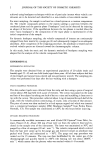
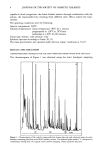
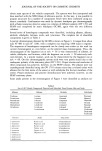
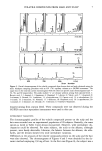
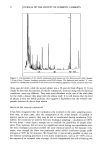
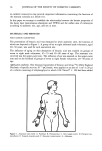
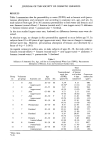
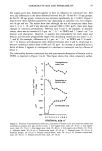
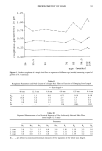
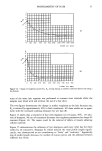
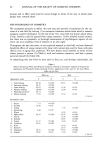
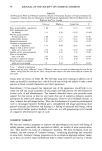
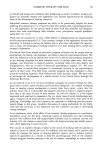
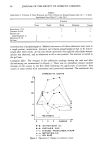
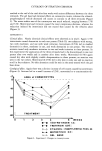
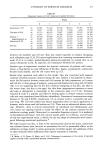
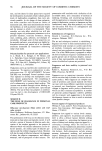
56 JOURNAL OF THE SOCIETY OF COSMETIC CHEMISTS Table I Experiment I: Irritation of Three Retinoids and Their Vehicles on Normal Forearm Skin (N = 5) After Application Once Daily 5/7 d for 28 d Irritation None Slight Weak Moderate Strong Isotretinoin 1.5% Tretinoin 0.05 % Ethanol and propyleneglycol aa Motretinid 0.5 % Gel base 1 3 1 1 2 2 2 1 concentration of propyleneglycol. Marked reactions to all three substances were seen in a single person isotretinoin, tretinoin and ethanol-propyleneglycol had to be discon- tinued after three weeks. At the sites where motretinid was applied only slight desqua- mation was observed, and no alteration at all in two persons. No reaction occurred to the gel base. Cytological efficts. The changes in the exfoliative cytology during the trial and after discontinuing are summarized in Figure 2. There was an immediate almost twofold increase of cell counts in the first week following the application of tretinoin. Also counts in areas treated with isotretinoin and motretinid increased. The maximum was •c 400 +50- -50• CORNEOCYTE COUNTS TREATMENT Figure 0-0 ISOTRETINOIN 1.5Y. ,--, TRETINOIN O.05Z o--o ETHANOL+ PROPYLENEGLYCOLWa &--& MOTRETINID 0.5Y. /•--/• GEL BASE 2. Experiment I: Changes in corneocyte counts.

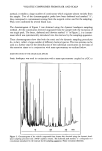
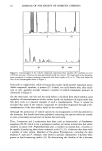
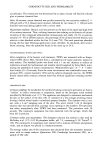
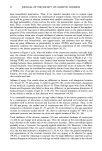
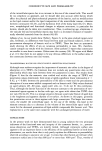
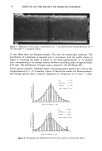
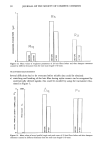
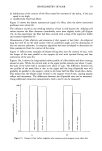
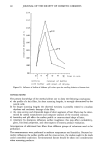
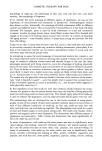
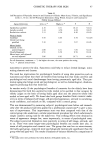
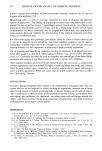
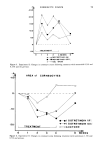
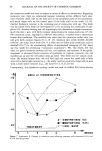
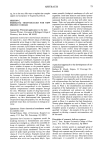
CYTOLOGY OF STRATUM CORNEUM 57 reached at the end of the trial after four weeks with minor differences between the three retinoids. The gel base had minimal effects on corneocyte counts, whereas the ethanol- propyleneglycol vehicle decreased cell counts in contrast to all three retinoids (Figure 2). The mean surface area of the corneocytes was much reduced, ranging between 17% and 31%. Motretinid and tretinoin caused the most conspicuous decrease, whereas the reduction induced by isotretinoin did not exceed that caused by the vehicles alone (Figure 3). EXPERIMENT II Clinical efj•cts. Nearly identical clinical effects were observed as in trial I. Again 1.5 % isotretinoin caused dermatitis in each test person (Table II): two subjects with strong, two with moderate, and one with weak irritation. Isotretinoin (0.5%) led to marked derrnatitis in three, moderate in one, and weak dermatitis in one person. The vehicle acetone caused only moderate irritation in two and weak irritation in three persons. In this experiment the application of the three retinoids had to be discontinued in one test person after two weeks and in another after three weeks. Motretinid (0.5%) again caused dry skin with slightly visable desquarnation in three persons no reaction was seen in the two others. Motretinid (0.25%) led to dry skin in only one and no reaction at all in four subjects. No skin alteration could be seen in the areas treated with the gel base alone. Cytological efj•cts. Again there was a distinct increase of cell counts caused by isotretinoin (Figure 4). Acetone led to a small increase of 25%, motretinid to a concentration-de- •C AREA of CORNEOCYTES 7o _ . [ TREAT ß ---e ISOTRETINOIN 1.5• •--•, TRETINOIN 0.052 ETHANOL+ PROPYLENEGLYCOL•-a MOTRETINID 0.5Yo GEL BASE Figure 3. Experiment I: Changes in corneocyte areas.
Purchased for the exclusive use of nofirst nolast (unknown)
From: SCC Media Library & Resource Center (library.scconline.org)