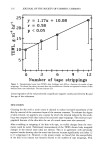
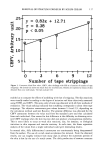
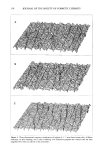
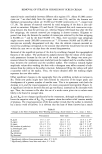
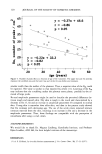
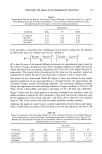
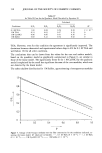
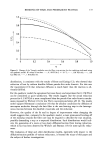
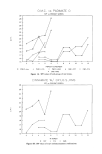
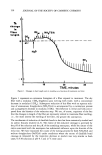
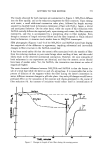
j. Soc. Cosmet. Chem., 41, 111-121 (March/April 1990) Mechanical removal of the superficial portion of the stratum corneum by a scrub cream: Methods for the objective assessment of the effects MARIE LOD•N and ANDERS BENGTSSON, Medical Department, ACO AB, S-171 26 Solna, Sweden (M.L.), and Department of Production Engineering, Chalmers University of Technology, S-412 96 Gothenburg, Sweden (A.B. ). Ra•ived November 16, 1989. Synopsis Abrasive cleansers (peeling or scrub creams) are claimed to make the skin surface smoother by mechanical removal of the outermost layers of the stratum corneum. The aims of the present study were: (1) to objectively assess the degree of skin removal by comparing the effect of scrubbing with that of successive tape strippings and (2) to quantify the changes in the surface texture using a replica technique and profilom- etry. The. tested scrub cream contained inert polyethylene granules dispersed in an oil-in-water emulsion. After stripping or scrubbing the skin, an irritant was applied to the test sites. TEWL and blood flow graphs show that scrubbing corresponds to the effect of 2.4 and 2.9 tape strippings, respectively. Visual assessment indicates that scrubbing corresponds to about three tape strippings. Profilometry shows that the values of the amplitude parameters (R s, Rq, Ry) are decreased by the scrubbing, whereas the number of peaks (Rn) are increased. In conclusion, this scrub cream removes the outermost layers of the stratum corneum, and the topograph- ical analysis provides a rationale for the perception of smoothness after the use of a scrub cream. INTRODUCTION Smoothness of the skin is an experienced feeling of its surface properties. Cosmetic products, which are aimed at conferring smoothness to the skin, may perform their function in different ways. Application of creams and lotions results in a deposition of ingredients onto the skin surface. These ingredients may directly or indirectly cause perceptible changes to the surface, i.e., either as lubricants or by inducing changes in the structure of stratum corneum (e.g., by swelling due to hydration) whereby the friction can be altered (1-3). Cleansing products, such as soaps and scrub creams, remove substances from the skin. The granules in scrub creams are supposed to enhance the cleansing effect by mechanical removal of the loosely bound outermost layer of the stratum corneum (4). The perceived smoothness of the skin is likely due to this gentle polishing of the skin. To our knowledge no data is available concerning either the 111

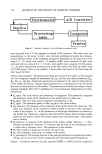
112 JOURNAL OF THE SOCIETY OF COSMETIC CHEMISTS degree of the skin removal or the resultant topographical features after using a scrub cream. To evaluate the degree of skin removal from scrubbing, a new concept was applied. Thus, the amount of skin removed by scrubbing was compared to that removed by successive stripping of the skin with tape. Following the treatments, the areas were exposed to an irritant (sodium lauryl sulfate, SLS). The resultant skin reaction was then evaluated visually as well as measured objectively (TEWL and cutaneous blood flow). A "standard" curve was established by plotting the provoked skin reaction against the number of strippings, and from this curve the result of the scrubbing could be read. Profilometry was finally used to study the influence of stratum corneum removal on surface structure. In the profilometry study a computer-controlled three-dimensional stylus-instrument system was used (5-7). The stylus is moved horizontally along the surface of a hard replica of the skin. The topographical features of the surface induce vertical movements in the stylus, which are converted into electrical signals and digi- tized. The collected data are used for a three-dimensional reconstruction of the skin surface and for calculation of applicable mathematical parameters used to quantify its roughness. MATERIALS AND METHODS The study was divided into two parts. The degree of skin removal from scrubbing was studied, and secondly the changes in the surface structure were quantitated. Different volunteers participated in the two parts. MATERIALS The scrub cream (ACO Scrub Cream, ACO AB, Sweden) is an oil-in-water emulsion, containing nonionic surfactants and inert polyethylene granules. The shape and the surface of the granules are irregular, with a main size of 100-200 I.tm. DEGREE OF REMOVAL OF THE SKIN LAYERS Subjects and treatments. Nine healthy women without skin diseases (mean age 36, range 19-52 years) participated in the study. Five areas on the volar forearm were used. One area was gently scrubbed for 30 seconds, one area was left untreated, and the three remaining areas were stripped using Scotch • invisible tape 3, 6, or 12 times. The treatments were randomly allocated to the five areas. Following the treatments, all five areas were exposed to sodium lauryl sulfate (SLS) and the resultant skin reaction was evaluated. Using a micropipette 50 •1 of SLS [8% (w/w) in distilled water] was measured onto one layer of filter paper placed inside a large aluminium Finn Chamber (internal diameter 12 mm) (Epitest Oy, Finland). To prevent drying of the filter paper, this was done immediately before application to the skin. The Finn Chambers were fixed to the skin by non-occlusive tape (Scanpor Norgeplaster AB, Norway). The patches were removed after seven hours, and the arm was gently rinsed with water and patted dry. The reac- tions on the test sites were evaluated 14 hours later.
Purchased for the exclusive use of nofirst nolast (unknown)
From: SCC Media Library & Resource Center (library.scconline.org)