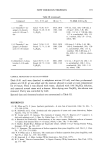
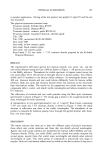
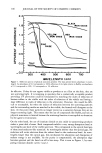
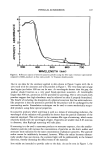
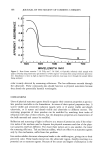
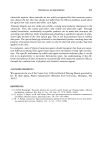
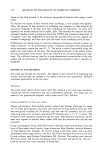
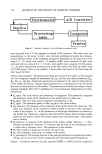
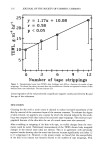
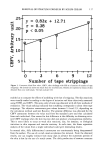
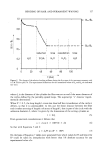
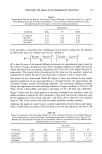
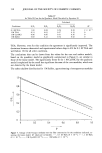
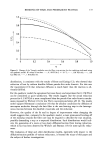
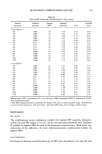
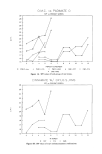
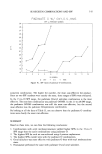
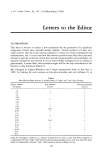
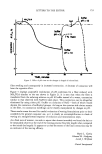
SUNSCREEN COMBINATIONS AND SPF 145 29 PADIMATE 0 W/ OXY,O.S.,HMS SPF vs PERCENT SCREEN 28 27 26 25 24 25 22 21 20 19 18 17 16 15 2 5 4 5 6 7 8 % SCREEN [] OXY + O.S. o HMS Figure 1C. SPF values of padimate O combinations. I I I I 9 10 11 12 sunscreen combination. The higher the number, the most cost-effective the product. Since no two SPF numbers were exactly the same, three ranges of SPFs were evaluated. In the 15-to-18 SPF range, the padimate O/octyl salicylate combination is the most effective. The next best combination was padimate O/HMS. In the 21-to-28 SPF range, the padimate O/HMS combination was still the most cost-effective, but the second most effective was the padimate O/oxybenzone combination. By looking at all the data of Table II, one can observe that the padimate O combina- tions were clearly the most cost-effective. SUMMARY Based on these tests, we can draw the following conclusions: 1. Combinations with octyl methoxycinnamate yielded higher SPFs in the 15-to-21 SPF range than the same combinations using padimate O. 2. The highest SPF for each set was achieved using 6 percent oxybenzone. 3. The highest SPFs overall were with the padimate O combinations. 4. Octyl salicylate was more effective with padimate O than with octyl methoxycinna- mate. 5. Homosalate performed the same with padimate O and octyl salicylate.

146 JOURNAL OF THE SOCIETY OF COSMETIC CHEMISTS 6. The octyl salicylate combinations were the most cost-effective. 7. The oxybenzone combinations were the least cost-effective. 8. The padimate O groups were all more cost-effective than the octyl methoxycinna- mate groups. REFERENCES (1) B. L. Diffy and J. Robson, A new substrate to measure sunscreen protection factors throughout the ultraviolet spectrum, J. $oc. Cosmet. Chem. 40, 127-133 (May/June 1989). (2) R. M. Sayre, P. P. Agin, G. J. Levee, and E. Marlowe, A comparison of in vitro and in vivo testing of sunscreen formulas, Photochem. Photobiol. 29, 559- 566 (1979). (3) C. Cole and R. VanFossen, Rapid in vitro evaluation of sunscreens: SPF and PFA, Photochem. Photo- biol., 47, 73S (1988). (4) L. Agrapidis-Paloympis, R. Nash, and N. Shaath, The effect of solvents on the ultraviolet absorbance of sunscreens. J. Soc. Cosmet. Chem., 38, 209-221 (July/August 1987). (5) H. Brown, Solubility of Suncreens in FINSOLV and other vehicles, Fintex technical bulletin (April 1989).
Purchased for the exclusive use of nofirst nolast (unknown)
From: SCC Media Library & Resource Center (library.scconline.org)