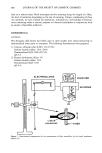
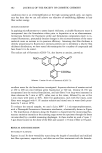
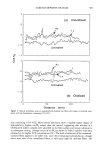
336 JOURNAL OF THE SOCIETY OF COSMETIC CHEMISTS c. Extraneous materials from a polluted environment (soot, hydrocarbons) d. Proteinaceous matter from cell debris and sweat In Western cultures where social practices have led to almost daily shampooing the accumulation of hair lipid is generally low, and hair soils are more likely to be self-ap- plied (b above) and are to a lesser extent soil types c and d. Shampoos need to be formulated to address these soils. In general, temperature and water supply restrictions are not present in Western cultures. However, in other countries where shampooing is less frequent, perhaps only once a week, the primary soil is type a. Shampoos for these markets may also be limited by the temperature and water supply constraints previously mentioned, and perhaps too by economic restrictions that limit raw material avail- ability and regulate the cost of the product. In a previous paper (1), a comprehensive procedure to determine selective removal of sebum components from hair was described, and the results compared with a rapid, in-house, screening test for total sebum removal using wool swatches impregnated with sebum/dye. The work detailed here builds on the aforementioned paper. Previously, the detergency of three surfactants -- sodium laureth-2 sulfate (SLES-2), ammonium lauryl sulfate (ALS), and sodium octeth/deceth-1 sulfate (SODS-1) -- was evaluated by examination of sebum residues on hair after one and ten soil/wash cycles. These experiments, carried out using tap water, -41øC-43øC (105-110øF) and 75-80 ppm Ca (as CaCO3), showed SLES-2 to be the most effective detergent (90% removal of all components after both one and ten cycles). ALS was not as good (72.4 +- 9 total sebum removed vs 93.7 + 3 for SLES-2) and, in addition, the extended use data (ten soil/wash cycles) suggested a buildup of fatty acid components on the hair with ALS. This was corroborated in a separate experiment by ESCA and interpreted in terms of a hard water ion/fatty acid interaction (1). Since many consumers use shampoos at temperatures less than the optimum of 41-43øC, there is a need to examine if, and how, temperature affects sebum component removal. The question arises as to whether any unexpected reversals or selectivity differences occur between lower and higher wash temperatures. With this objective in mind, two surfactants were selected for our experiments: SLES-2 and ALS. Both surfactants are widely used in shampoos. Two temperatures, 2 IøC and 43øC, representing extremes likely to be encountered under normal usage, were also chosen, and ten soil/wash cycles were carried out so that extended-use conditions are mimicked. The determination and evaluation of surfactant sebum removal efficacy is a modification of a technique reported in the literature (2), and is the same as that used in the prior work (1). MATERIALS AND METHODS ARTIFICAL SEBUM The artificial sebum used in all experiments was prepared according to the Spangler formula (3) and has been described previously (1).

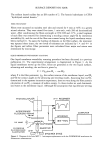
CLEANING HAIR 337 HAIR SUBSTRATE Dark brown, Oriental hair, of virgin quality and 10" length, was used in all experi- ments (DeMeo Brothers, New York). Prior to soiling with sebum, the hair was divided into approximately -3.7-g tresses, washed twice with 20% SLES-2 (one-minute wash, two-minute rinse) using tap water (4 iøF), and air dried at room temperature. Tresses were conditioned in a humidity room, 2 IøC and 60% relative humidity, for seventy- two hours prior to soiling with sebum. All subsequent weights of hair were made after similar temperature and humidity conditioning. SURFACTANTS SLES-2 and ALS (Standapol ES-2 and Standapol A, respectively) were obtained from Henkel Corporation. The surfactants were used as provided by the manufacturer, with no further purification. Solutions were prepared with deionized water. HAIR SOILING PROCEDURE Hair tresses were soiled, and sebum loads estimated, using conditions described in reference 1. These soiling solutions (1) resulted in an initial soiling level on the tresses of approxi- mately 0.03-0.04 g/g. Hair soiled in this manner was perceived to be very oily, repre- senting perhaps an extreme in hair oiliness for most Western cultures. After the soiled tresses dried, each was split into two 1.7-g tresses. One of each pair was washed with the appropriate surfactant. The other portion remained unwashed, thus providing an internal control. This was necessary to compensate for sample-to-sample variation in soiling levels. TEN-CYCLE SOIL/WASH EXPERIMENT For ten-cycle soil/wash experiments, tresses were split as described above and one tress kept as control. The other portion was washed, dried (described below), and placed in a constant humidity room overnight. The next day the tress was resoiled with sebum (accomplished using a 3% sebum solution). After soiling, the tresses were dried at room temperature and placed in the constant humidity room overnight. The following day the tresses were washed with the appropriate surfactant. This soil/wash cycle was carried out ten times. The order for both the soiling and washing procedures for each day was randomized among the tresses. HAIR CLEANING PROCEDURE Cleaning of the soiled tresses was achieved using a bulk process similar to that described in reference 2. The soiled hair tress was suspended in 100 ml of 0.01% aqueous surfac- tant at either 43øC or 21øC and agitated (magnetic stirrer) for five minutes. Tresses were then rinsed under running tap water (43øC or 2 IøC) for 20 seconds (total rinse volume, 500-600 ml). Heat from a hand-held drier was applied for one minute, and
Purchased for the exclusive use of nofirst nolast (unknown)
From: SCC Media Library & Resource Center (library.scconline.org)