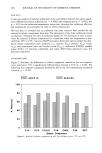
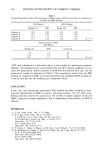
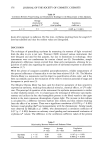
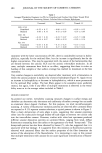
376 JOURNAL OF THE SOCIETY OF COSMETIC CHEMISTS Table IV Correlation Between Visual Scoring and Chromameter Readings for the Measurement of Skin Darkness Average chromameter Average Correlation grading/• L* visual grading coefficient r n = 9 5.5 2.3 0.895 (p 0.001) hours after exposure to radiation. By this time, erythema resulting from the single UV dose has subsided and thus the redness values are disregarded. DISCUSSION The technique of quantifying erythema by measuring the amount of light re-emitted from the skin in vivo is not new. Tronnier (1969) reviewed various instruments that were designed and used for this purpose, but due to limitations in technology, these instruments were too cumbersome for routine clinical use (6). Nevertheless, simple photoelectric reflectance meters evolved from these early instruments, allowing for ac- quisition of useful data regarding the quantitation of erythemal responses to ultraviolet radiation (1,7). With the advent of computer-controlled spectrophotometers, reliable measurement of the spectral reflectance of human skin in vivo has been achieved (5,8-10). The Minolta Chroma Meter is a noninvasive tool for objective quantification of skin color, and it has been successfully used in the estimation of the relative irritation potential of soaps and detergents in patch tests (3). The Minolta Chroma Meter has been used for objective assessment of skin sensitivity expressed as erythema, resulting from physical stimulus, chemical effects, or UV radia- tion. The principal of operation of the instrument for erythema measurements is similar to other erythema meters (13). It is based upon the technique of reflectance spectropho- tometry and utilizes the fact that hemoglobin present in the blood vessels in the upper dermis is the main cutaneous chromophore of green light. The increase in skin redness is calculated by a difference between baseline skin redness and skin redness resulting from the effect of an irritant. There was a significant correlation of 0.678 (p 0.001) between visual grading (Aa*) and measurements with the chromameter. Similar results were observed by Babulak et al. (1986), who demonstrated a correlation coefficient of 0.97 (p 0.003) between an arbitrary visual grading and instrumental evaluation of erythema (a* values). The difference in the correlation coefficient values of the present Table V Relationship Between Redness and Darkness Values Average Average Correlation a* value l/L* value coefficient r Erythema n = 16 6.08 0.03 Tanning n = 16 9.89 0.014 0.167 (p = 0.02) 0.898 (p 0.00 l)

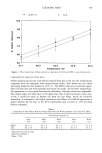
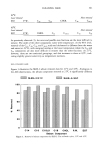
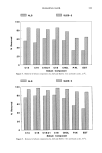
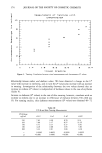
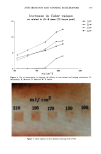
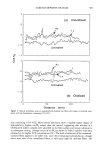
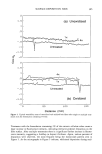
ANTI-IRRITANTS AND TANNING ACCELERATORS 377 study and their findings can be accounted for by the fact that in this study Aa* was compared with visual assessment while a* values on the treated sites were used by Babluk et al. The instrument, because of its sensitivity and accuracy, has been utilized in development of techniques for estimation of efficacy of anti-irritant products. The major chromophore for visible light in the epidermis is melanin. The effect of radiation after 24 hours determines the erythema and is independent of the L* value if immediate pigment darkening is ignored. The stimulation of melanin manifested by tanning response is detected by the reflectance L* values after 48-72 hours, and it does not correlate to skin erythema a* values (Table V). According to the observations of Seitz and Whitmore (1988), yellow coloration (b* values) exhibits a significant correlation with the tanning effect. In our results we ob- served the same however, we believe that yellow measurements alone do not depict the tanning response. A combination of L*, a*, and b* in the form of AE* can be obtained to obtain a complete picture of the tanning effect. Nevertheless, it is the reflectance (L*) values that are the most important to show darkness of skin due to tanning. Visual and instrumental estimation of skin darkness/tanning response revealed a good correlation 0.895 (p 0.001). Comparison of subjective and objective quantification (9) shows that each subjective grading corresponds to a broad range of color values and that there is a slight overlap between consecutive grades. This is understandable, as the subjective grading represents truncation of a continuous range of color values into a limited number of discrete brackets and bears subjective variation that may exist among different clinical personnel or that occurs in the same observers at different times. Objective assessment is better than subjective grading since it extends discrete subjec- tive grading to a continuous range of numbers, thus making possible a meaningful dose response curve. The linear dose response curve between radiation dose and degree of tanning, from our studies, provides a new approach for the calculation of the tanning response and the quantification of the efficacy of tanning products. REFERENCES (1) R. Breit and A.M. Kligman, "Measurement of Erythemal and Pigmentary Responses to Ultraviolet Radiation at Different Spectral Qualities," in The Biological Effects of Ultraviolet Radiation with Emphasis on the Skin, F. Urbach, Ed. (Pergamon Press, Oxford, 1969), p. 267. (2) P. M. Farr and B. L. Diffey, Quantitative studies on cutaneous erythema induced by ultraviolet radiation, Br. J. Dermatol., 111, 673-682 (1984). (3) S. W. Babulak, L. D. Rhein, D. D. Scala, F. A. Simion, and G. L. Grove. Quantitation of ery- thema in a soap chamber test using the Minolta Chroma (reflectance) Meter: Comparison of instru- mental results with visual assessments, J. Soc. Cosmet. Chem., 37, 475-479 (1986). (4) M. Forsbeck and E. Skog, Immediate reactions to patch tests with Balsam of Peru, Contact Dermatitis, 3, 201-205 (1977). (5) J. B. Dawson, D. J. Barker, and D. J. Ellis, A theoretical and experimental study of light absorption and scattering by in vivo skin, Phys. Med. Biol., 25, 695-709 (1980). (6) H. Tronnier, "Evaluation and Measurement of Ultraviolet Erythema," in The Biological Effects of Ultraviolet Radiation With Emphasis on the Skin, F. Urbach, Ed. (Pergamon Press, Oxford, 1969) p. 267. (7) F. Daniels and J. D. Imbrie, Comparison between visual grading and reflectance measurements of erythema produced by sunlight,./. Invest. Dermatol., 30, 295 (1958). (8) S. Wan, K. F. Jaenicke, and J. A. Parrish, Comparison of the erythemogenic effectiveness of ultravi-
Purchased for the exclusive use of nofirst nolast (unknown)
From: SCC Media Library & Resource Center (library.scconline.org)