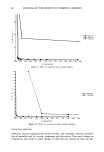
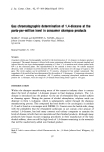
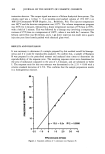
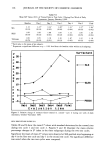
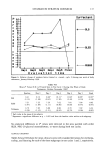
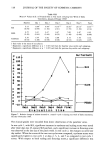
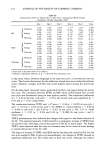
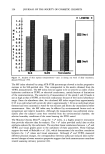
80 JOURNAL OF THE SOCIETY OF COSMETIC CHEMISTS T ! M I N • Na-LS ---•---MEA-LS ß TEA-LS 0.04 0.08 0.08 0,10 0.12 0.t4 0.t8 0.18 0.20 0.22 0.24 0.26 • SURFACTANT Figure 9. Effect of counterion size on lauryl sulfates. •.2 ii 10 T -- M N I I I [ I I ß 0.00 0.05 0.10 0.15 0.20 0.26 0.30 0.•5 0.40 0.45 0.50 I I 0,55 0.80 • SURFACTANT Figure 10. Effect of counterion on lauryl benzyl sulfonates. Na-LBS TEA-LBS SURFACTANT MIXTURES Surfactant mixtures aggregate into mixed micelies, and seemingly unlimited possibil- ities of assembly exist by varying components and their ratios. Very small changes in composition may result in major changes in their behavior toward the skin and also

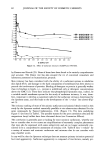
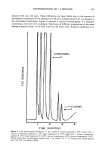
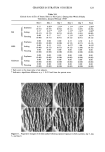
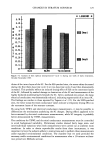
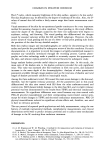
SURFACTANT-SKIN INTERACTIONS 81 toward liposomal membranes. An aggressive component may be taken up into a mixed micelie and thus be prevented from interacting with the membrane, while the deter- gency of the surfactant mixture may be maintained. Lang and Spengler mathematically described the changing synergism of very simple surfactant/cosurfactant mixtures (9). More complex mixtures have so far eluded math- ematical treatment. The effect of a surfactant alone may differ greatly from its syner- gistic effect in a surfactant mixture. Modification of the action of one surfactant can often be achieved by the addition of a second. Figure 11 depicts a reduction in aggressiveness of sodium lauryl sulfate by the addition of increasing amounts of lauryl ether sulfosuccinate. Unexpected results were obtained from mixtures of SLES and Pluriol PE6400, a PO/EO block co-polymer. The interaction of the surfactant blend with the liposomes increased as the ratio of the nonionic com- ponent was stepped up from 20% to 50% (Figure 12). This may be due to the changing character of the surfactant-mixed micelies, i.e., the surfactant mixture takes on a more nonionic character and the correlation breaks down. DISCUSSION For the personal care and cosmetic industries it is very important to be able to offer the consumer the least irritating products and to be able to substantiate claims to this effect. A variety of in vivo and in vitro tests have, therefore, been developed (24) that range from the survival time of goldfish in surfactant solutions (25), chemical and biophysical changes in skin and isolated skin components (8,26,27), and damage to rabbit eyes in vivo (the Draize test) (2) to correlating irritancy with surface tension of surfactant solutions (28). Several other in vivo and in vitro methods have been described and assessed ......... SLS+O.B•SUCC .... ß .... SLS+4•SUCC I I I I I I I I I I I I X ourfactant Figure 1 l. Effect of surfactant mixtures (SLS/di-Na lauryl ether sulfosuccinate).
Purchased for the exclusive use of nofirst nolast (unknown)
From: SCC Media Library & Resource Center (library.scconline.org)