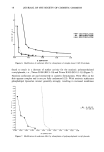
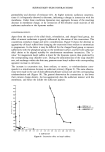
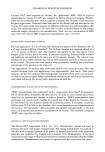
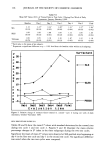
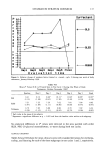
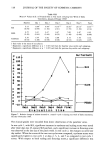
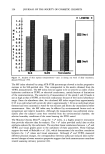
CHANGES IN STRATUM CORNEUM 125 * LEGEND t.3- i i N e i • Dayi 8 o.g n 0.8 0.7 P 8 0.6 t i 0.4 o 0.3 o. 2 • Day5 o.i 0 • ELE ELEE Ta i lo Nate Figure 14. Analysis of skin replicas (area/perimeter--cycle 1) during one week of daily treatments, October-November 1989. dition of the intact layers of the SC. For the SLS-patched sites, the mean values decreased during the first three days (test cycle 1) or two days (test cycle 2) and then dramatically increased. This probably reflects an induced drying effect of SLS on the outermost layers of the SC, followed by marked damage or destruction of the SC and measurement of the highly hydrated epidermal layers beneath the SC. After a weekend rest period, the mean electrical conductance was dramatically reduced, indicating regeneration of an intact SC. The findings are similar to those reported by Tagami et al. (22). For the SLES-patched sites, the lower mean electrical conductance values indicate a temporary drying effect on the outermost layers of the stratum corneum. By using both TEWL and electrical conductance measurements, it may be possible to differentiate the mechanisms underlying the SC changes. Drying effects appeared to be better assessed by electrical conductance measurements, while SC integrity is probably better demonstrated by TEWL measurements. The conditions for TEWL and electrical conductance measurements must be controlled to avoid background variability. Preliminary studies showed fairly large intra- and inter-individual variations when both measurements were carried out at ambient room conditions. In order to obtain reproducible results from these instruments, it was important to have the subjects adhere to instructions and to perform these measurements under regulated environmental conditions. The chamber that we used provided the necessary stable environmental conditions for measurement after a 30-minute acclima- tion period (see Methods section).

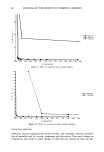
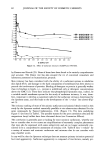
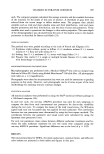
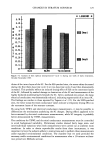
126 JOURNAL OF THE SOCIETY OF COSMETIC CHEMISTS , LEGEND t.4- i3 Mtt i ' • Oayi o.g O.B 0.7 0.6 0.5 0.4 0 .a I•l Day5 0.2 0.! 0 SLS SLES Ta 1 lowate Figure 15. Analysis of skin replicas (areaJperimeter-•cycle 2) during one week of daily treatments, January-February 1990. The MF index obtained by using ATR-FTIR spectroscopy showed a similar progressive increase in the SLS-patched sites. This corresponded to the results obtained from the TEWL measurements. The MF index does not appear to be as sensitive an index of skin hydration condition as TEWL or electrical conductance, mainly because of limitations of the instrumentation. The sensitivity of measurement of the amide I and II bands is not as high as that of TEWL or electrical conductance because of the limited absorbance range. From the absorbance data, the calculated MF index ranges from approximately 0.95 in an individual with severe dry skin to approximately 1.60 in an individual whose forearm had been immersed in water for ten minutes and blown dry immediately before measurement. Also, the MF index may be affected by environmental factors such as temperature and relative humidity. Although the measurement was performed imme- diately after the subject's arms were removed from the environmental chamber, the relative humidity conditions of the room housing the FTIR varied. The Minolta Chroma Meter ©, using the q-a* index, is a highly sensitive instrument that provides objective data for analysis. The + a* index provided useful data on skin erythema induced by the surfactants. The excellent linear correlations between q- a* and TEWL and visual grades point to the usefulness of these parameters. These findings support the work of Bubulak et al. (24), which demonstrated the excellent correlation between the q- a* values and visual assessment. Although a* and TEWL measured different physical changes, the correspondence between surfactant-induced skin erythe- ma and changes of water retention properties suggest that both measurements contribute toward assessing irritancy potential (24).
Purchased for the exclusive use of nofirst nolast (unknown)
From: SCC Media Library & Resource Center (library.scconline.org)