J. Soc. Cosmet. Chem., 46, 231-245 (September/October 1995) Effects of silicone pretreatment on oxidative hair damage MARIANNE D. BERTHIAUME, JAMES H. MERRIFIELD, and DONNA A. RICCIO, GE Silicones, 260 Hudson River Road, Waterford, NY 12188. Received July 15, 1994. Presented at the Annual Seminar of the Society of Cosmetic Chemists, Las Vegas, May 1994. Synopsis A high-viscosity, high-amine-content silicone fluid has been found to provide significant conditioning properties. Application of this material as a pretreatment provides protection against the damage caused by bleaching and oxidative dyeing as observed by scanning electron microscopy (SEM) and combing force studies. This product does not interfere with the bleaching or oxidative dyeing processes when used as a pretreatment as shown by half head studies and thin-section light microscopy. Treatment of hair with the microemulsion also reduces color fading of temporary dyes through shampooing as shown by chromaticity tristimulus evaluations and thin-section light microscopy. In deposition experiments, several silicones were found to penetrate through the cuticle and into the cortex of the hair fiber. This was demonstrated by scanning time-of-flight secondary ion mass spectroscopy (TOF-SIMS). INTRODUCTION Hair is known to be easily damaged by a variety of mechanisms including environmental exposure, mechanical abrasion, and chemical processing (1-4). Damage is manifested by both degradation of the intrinsic keratin proteins, as well as by changes along the fiber surface. On a microscopic level, damage is known to involve mechanical degradation of the cuticle structure during grooming and both oxidative and UV-induced damage to the proteins and amino acids within the hair. In the early stages, these changes may be observed microscopically or spectroscopically. Continued degradation of the keratin structure leads to damage on a macroscopic level detectable by the consumer. This damage includes split ends, a dull appearance, a rough feel, and hard-to-comb, flyaway hair (5,6). In a recent study, a high percentage of consumers characterized their hair as being "damaged" (7). In efforts to alleviate the symptoms of damaged hair, many people use conditioners or conditioning treatments. Among the materials effective in condi- tioning hair are silicone fluids and emulsions, including dimethicones, cyclomethicones, amodimethicones, and trimethylsilylamodimethicones. Silicones have been used in hair treatments for conditioning and surface treatment of damaged hair for many years due to the pleasing aesthetic properties imparted to the hair. These properties are due in large part to the low surface free energy of the silicones. After depositing on the surface of the hair, silicone oil droplets collapse and spread, forming a uniform, thin coating on the fiber. This silicone coating manifests itself in a 231

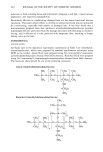
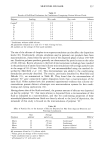
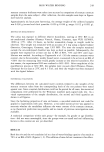
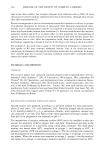
232 JOURNAL OF THE SOCIETY OF COSMETIC CHEMISTS reduction in both combing forces and triboelectric charging, a soft feel, a more lustrous appearance, and improved manageability. Particularly effective in conditioning damaged hair are the amino functional silicone emulsions. This paper details efforts to develop an amino functional silicone optimized for conditioning, especially with respect to damaged hair. It has been found that a microemulsion prepared from this optimized trimethylsilylamodimethicone provides surprisingly effective protection from the damage associated with bleaching or oxidative dyeing, and is effective as a color protector with temporary dyes, resulting in longer lasting color on the hair. EXPERIMENTAL SILICONE FLUIDS All fluids used in the deposition experiments summarized in Table I are trimethylsil- ylamodimethicones, which were prepared by standard equilibration techniques using KOH as the catalyst. Linear fluids were prepared using N-(2-aminoethyl)-3-aminopro- pylmethyldimethoxysilane obtained from Huls America. Branched fluids were prepared using N-(2-aminoethyl)-3-aminopropyltrimethoxysilane obtained from Huls America. The fluids are characterized by one of the following structures: Linear trimethylsilylamodimethicone: /I I I I /I CH 3-- Si-- O-4-- Si-- O-•--Si-- O-•Si-- CH 3 CH3 LCH3 •X •H2)•Y CH3 NH I (CH2)2 I NH2 Branched trimethylsilylamodimethicone: CH3•Si•CH 3 I o •H3 ,CH3-• CH3--•i-- [O•l[ Si [ CH31 CH3• I •H3--S,i--CH3• I o s i O•Si•CH 3 , (•H2) CH CH 3 b c NH (CH2)2 NH2
Purchased for the exclusive use of nofirst nolast (unknown)
From: SCC Media Library & Resource Center (library.scconline.org)