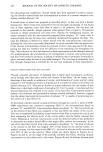
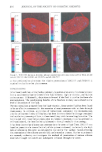
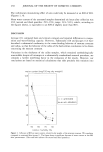
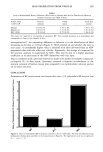
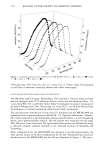
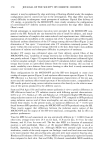
252 JOURNAL OF THE SOCIETY OF COSMETIC CHEMISTS water content (mg/100 mg dry weight) 105 •• I o- --o with 10ø/o urea -- -- without urea 25 ß 5 90 80 70 60 relative humidity (%) Figure 3. Influence of RH on water content, related to dry weight, of the stratum corneum. Treatment by a urea-containing w/o emulsion compared to the urea-free emulsion (group 2). The figure shows a significant increase of the water content at RH of 90% after pretreatment with urea. (The error bars indicate the second and third quartiles.) (3) showed that emulsifier can integrate into these multilamellar intercellular lipids, it seems reasonable to assume that this interaction between emulsifier and intercellular lipids is responsible for the change in water-binding capacity at 60% RH. Moreover, the emulsifiers could also act as surfactants in combination with water (by washing or sweating), resulting in a different amount and composition of these intercellular lipids (6-8), which could also be responsible for the decreased water-binding capacity at 60% RH (15,16). Finally, there is the possibility that other components of the preparations have replaced a proportion of the binding sites by an unexplained mechanism. This dehydrating effect on weakly bound water could not be counteracted by the addition of 10% urea. At an RH of 60% to 70%, the water-binding capacities for the emulsions with and without urea were nearly identical. The well-known hydrating effect of urea (1,2) could only be demonstrated at an RH of 90%. At a water content of more than 35% (corresponding to slightly more than 80% RH on the basis of the above data), the free water increases linearly with the total water content (14). Interestingly, this effect does not seem to differ substantially between the emulsions used, even though Wohlrab (1) primarily emphasized the significance of the emulsion type. These results thus confirm the assumption of Inoue et a/o (4), who presumed that urea affects mainly

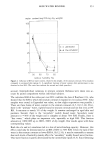
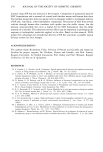
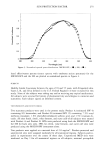
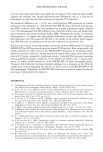
SKIN WATER BINDING 253 water content (mg/100 mg dry weight) 105 + 85 ................... 65" I o o with 10% urea ß ß without urea 45 25 5 90 $0 70 60 relative humidity (ø/o) Figure 4. Influence of RH on water content, related to dry weight, of the stratum corneum. Urea- containing o/w emulsion compared to a urea-free emulsion (group 4). A significant increase of water content after pretreatment with urea at RH of 90% is observed as well. (The error bars indicate the second and third quartiles.) the free water [in contrast to glycerol, which also leads to an increase of water content at 60% RH (17) and for which an interaction with the intercellular lipids has been proven ( 18)]. These emulsions do not lead to a decrease in the total water content in vivo (9). However, in vivo observations do not permit conclusions concerning the relationship between free and weakly bound water. In addition, in vivo investigations are difficult to interpret because of the superimposed occlusive effect of the emulsions (19,20). Thus the observed dehydrating effect does not dominate in vivo, but it seems possible that the relationship between free and bound water is affected by this pretreatment. This aspect appears to be of particular interest in the context of the significance of weakly bound water for the mechanical properties of the stratum corneum (12,21), and should be investigated in further studies. ACKNOWLEDGMENTS We appreciate Prof. Howard Maibach's helpful assistance in the preparation of this
Purchased for the exclusive use of nofirst nolast (unknown)
From: SCC Media Library & Resource Center (library.scconline.org)