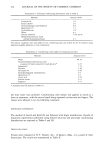
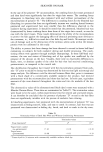
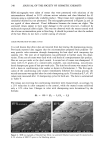
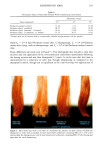
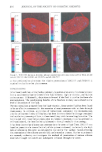
SILICONES ON HAIR 235 COMBING EXPERIMENTS Combing measurements were carried out on a Diastron model MTT 600 series using a crosshead speed of 30 mm/min and a 2000 gram load cell. Tresses were 6 inches long and weighed 2 grams. The combing experiments involved combing the wet tress ten times per side and then immersing it three times into a beaker of water and squeezing the excess out between fingers. This procedure was performed in order to introduce a random degree of tangling. The results of combing experiments (reported in joules) are the average of one measurement on each of two tresses per treatment. To determine instrument error, wet combing forces were measured for 24 untreated Caucasian tresses. At the 95% confidence level, the standard error associated with this technique is estimated to be approximately 15%. Statistical analysis was performed using Rheo PC and Excel software applications. CHROMATICITY EVALUATIONS Chromaticity values were measured by means of a Minolta Chroma Meter model CR300, which records the tristimulus parameters L*, a* and b*. Three measurements were recorded for each tress. Mean values are reported in Tables IV and V for hair dyed with oxidative and temporary color products, respectively. Standard deviations varied from 1.5%-4.5%. TIME-OF-FLIGHT SECONDARY ION MASS SPECTROSCOPY (TOF SIMS): Samples were evaluated at Charles Evans and Associates, an independent testing lab. Tresses were treated with 0.2% aqueous dilutions of silicone emulsions for 20 minutes and then thoroughly rinsed under running tap water. Studies were conducted on a Charles Evans and Associates TFS system. Individual hair fibers were mounted, sec- tioned, and studied. Positive and negative ion mass spectra were obtained using a gallium metal liquid ion gun (LMIG) primary ion source. The instrument was operated in an ion microprobe mode in which the pulsed primary ion beam was rastered across the sample surface, permitting an imaging mode analysis of small features. Typical primary ion doses were on the order of 10 TM ions/cm 2. LIGHT MICROSCOPY AND IMAGE ANALYSIS Hair samples were treated and then tightly bundled together to achieve a high density of hair fibers within each section. The bundled hair fibers were then encapsulated with a slow-curing epoxy. Trapped air bubbles in the epoxy were evacuated using a vacuum pump during the encapsulation process, which permits a continuous coating of epoxy around each hair fiber. After curing, the specimens were ground with successively finer abrasives down to a 1-p•m diamond abrasive on a low-nap cloth. The polished sections were then permanently attached to a petrographic glass slide (polished surface toward the glass slide) with a quick-curing epoxy. The back side of the mount was then ground to a thin section of about 0.005 inch and polished.

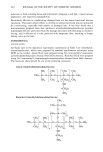
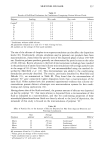
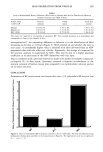
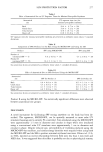
236 JOURNAL OF THE SOCIETY OF COSMETIC CHEMISTS SCANNING ELECTRON MICROSCOPY (SEM) Six or eight treated hairs were selected at random from each sample, then stretched across a holder and glued at each end. The mounted samples were then sputter-coated with approximately 50 Angstroms of Pt and examined in a high-resolution Hitachi S4500 field-emission SEM. Microscopy was performed with a beam energy of 5 kV and a sample tilt of approximately 20 ø from the horizontal along the hair axis. RESULTS AND DISCUSSION Deposition of silicones from emulsions is known to be highly dependent upon a number of parameters, including particle size of the emulsion droplet, zeta potential, organo- modification of the fluid, fluid viscosity, and types of emulsifiers employed (9, 10). To determine the structural properties of the silicone fluid that influence the deposition of trimethylsilylamodimethicones on hair, several fluids were prepared, with variations in the viscosity, amine content and polymer structure. The nature of the organoamino pendant group remained constant throughout this study. These fluids were emulsified and incorporated into a prototype conditioning base. Hair tresses were treated with these conditioners and then digested in an enzyme solution. The level of silicones deposited on the hair was determined by atomic absorption spectroscopy. Table I summarizes the results of these deposition experiment results. Maximum deposition of silicone onto hair from this prototype conditioner base was observed for polymer "D," a linear, high- viscosity fluid with a high amine content. Tress evaluations were performed at an independent testing laboratory to evaluate the conditioning properties of these silicone fluids. These studies, summarized in Table II, indicated that conditioning as perceived by ease of wet and dry combing, level of snarling, and softness was directly related to the amount of silicone deposited on the hair. Follow-up half-head experiments at the same testing facility indicated that the best conditioning, as defined by ease of wet combing, ease of dry combing, reduced flyaway, luster, softness, body, fullness, and bounce, was obtained with polymer "D." These results were presented earlier by Thayer and Merrifield (11). Table I Results of Experiments Investigating the Effects of Various Parameters on the Deposition of Silicone on the Hair Polymer Viscosity Amine content Structure PPM Si • A Low b 0.50 c Branched 17.1 d B Med 0.80 Branched 22.5 C Low 0.80 Linear 21.3 D High 0.80 Linear 26.4 E Med 0.50 Linear 18.1 F Med 0.25 Branched 16.3 G Med 0.15 Branched 15.0 Values given are averages of two tresses. Low viscosity = 100-250 cstks medium viscosity = 250-500 cstks high viscosity = 1500-3000 cstks. Measured as milliequivalents per gram. Measured by AA in a procedure similar to that used by Gooch and Kohl (8). All silicones were adjusted to 1% silicone solids in a conditioner base. Conditioner formulation is given in Experimental section.
Purchased for the exclusive use of nofirst nolast (unknown)
From: SCC Media Library & Resource Center (library.scconline.org)