254 JOURNAL OF THE SOCIETY OF COSMETIC CHEMISTS manuscript. Dipl. met. Olaf Kolle of the Meteorological Institute of the Nuclear Research Centre Karlsruhe provided technical support. REFERENCES (1) W. Wohlrab, The influence of urea in different emulsions on the water-binding capacity of the human horny layer, Z. Hautkr., 66, 390-395 (1991). (2) K. Grice, H. Sattar, and H. Baker, Urea and retinoic acid in ichthyosis and their effect on transep- idermal water loss and water holding capacity of stratum corneum, Acta Derm. Venereol., 53, 114-118 (1973). (3) D. T. Downing, W. Abraham, B. K. Wegner, K. W. Willman, and I. C. Marshall, Partition of sodium dodecyl sulfate into stratum corneum lipid liposomes, Arch. Dermatol. Res., 285, 151-157 (1993). (4) T. Inoue, K. Tsujii, K. Okamoto, and K. Toda. Differential scanning calorimetric studies on the melting behavior of water in stratum corneum, J. Invest. Dermatol., 86, 689-693 (1986). (5) T. Yamamura and T. Tezuka, The water-holding capacity of the stratum corneum measured by H-NMR, J. Invest Dermatol., 93, 160-164 (1989). (6) A. W. Fulmer and G. J. Kramer, Stratum corneum lipid abnormalities in surfactant-induced dry scaly skin, J. Invest. Dermatol., 86, 598-602 (1986). (7) L. B. Goldsmith, S. E. Friberg, and J. E. Wahlberg, The effect of solvent extraction on the lipids of the stratum corneum in relation to observed immediate whitening of the skin, Contact Dermatitis, 19, 348-350 (1988). (8) C. L. Froebe, F. A. Sireion, L. D. Rhein, R. H. Cagan, and A. Kligman, Stratum corneum lipid removal by surfactants: Relation to in vivo irritation, Dermatologica, 181, 277-283 (1990). (9) J. Betringer, M. Gloor, and W. Gehring, The influence of a pretreatment with emulsions on the dehydration of the skin by surfactants, Int. J. Cosmet. Sci., 16, 53-60 (1994). (10) M. Takenouchi, H. Suzuki, and H. Tagami, Hydration characteristics of pathologic stratum cor- neum--Evaluation of bound water, J. Invest. Dermatol., 87, 574-576 (1985). (11) J. L. Leveque, in Bioengineering of the Skin.' Water and Stratum Corneum, P. Elsner, E. Berardesca, and H. I. Maibach, Eds. (CRC Press, Boca Raton, Florida, 1994), pp. 13-22. (12) S. L. Jacques, Water Content and Concentration Profile in Human Stratum Corneum, Ph.D. Thesis (Uni- versity of California, Berkeley, 1984), pp. 217-222. (13) K. J. K. Buettner, Diffusion of water vapor through small areas of human skin in normal environ- ment,J. Appl. Physiol., 14, 269-275 (1959). (14) K. Walkley, Bound water in stratum comeurn measured by differential scanning calorimetry, J. Invest. Dermatol., 59, 225-227 (1972). (15) G. Imokawa and M. Hattori, A possible function of structural lipids in the water-holding properties of the stratum comeurn, J. Invest. Dermatol., 84, 282-284 (1985). (16) S. E. Friberg, I. Kayall, L. D. Rhein, F. A. Simion, and R. H. Cagan, The importance oflipids for water uptake in stratum corneum, Int. J. Cosmet. Sci., 12, 5-12 (1990). (17) M. M. Rieger and D. E. Deem, Skin moisturizers. II. The effects of cosmetic ingredients on human stratum corneum, J. Soc. Cosmet. Chem., 25, 253-262 (1974). (18) C. L. Froebe, F. A. Sireion, H. Ohlmeyer, L. D. Rhein, J. Mattai, R. H. Cagan, and S. E. Friberg, Prevention of stratum comeurn lipid phase transitions in vitro by glycerol--An alternative mechanism for skin moisturization, J. Soc. Cosmet. Chem., 41, 51-65 (1990). (19) H. Tsutsumi, T. Utsugi, and S. Hayashi, Study on the occlusivity of oil films, J. Soc. Cosmet. Chem., 30, 345-356 (1979). (20) C. W. Blichmann, J. Serup, and A. Winther, Effects of single application of a moisturizer: Evapo- ration of emulsion water, skin surface temperature, electrical conductance, electrical capacitance, and skin surface (emulsion) lipids, Acta Derm. Venereol. (Stockh), 69, 327-330 (1989). (21) R. H. Wildnauer, J. W. Bothwell, and A. B. Douglass, Stratum corneum biomechanical properties, J. Invest. Dermatol. 56, 72-78 (1971).

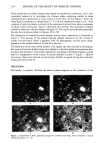
j. Soc. Cosmet. Chem., 46, 255-260 (September/October 1995) Interfacial transfer of vitamin E acetate during evaporation of its emulsion STIG E. FRIBERG, Teanoosh Moaddel Center for Advanced Materials Processing, Clarkson University, Potsdam, NY 13699-5814, and ANDR]•-JEAN BRIN, Laboratoires D N.G. Payot S.A., 7 Boulevard d'Osny, Cergy St. Christophe, F-95808 Cergy Pontoise, Paris, France. Received January 26, 1995. Synopsis The phase equilibria were determined in a vitamin E acetate-in-water emulsion stabilized by lecithin, and the phase changes were studied during evaporation. The theoretical evaporation trajectory predicted the vitamin E acetate droplets to disappear gradually in a limited range of water content during volatilization. Optical microscopy of a single droplet during evaporation confirmed the prediction: the droplet was gradually absorbed into the lameliar liquid crystal during evaporation of water. INTRODUCTION The evaporation trajectory is decisive for the final appearance of a skin lotion after application, but the literature on these phenomena is rather limited in spite of the fact that cosmetic emulsions (1) are of significant interest because of their stringent stability requirements, combined with a pleasing appearance and appealing feel upon applica- tion. The phase changes that occur during evaporation of volatile components are important because they influence the evaporation rate per se (2-4). In addition, the structure remaining on the skin after evaporation has ceased is of equal importance. This structure may be an oil phase, in which case occlusivity may be found (5), or a liquid crystal with its structural interactions with the stratum corneum lipids (3,6). We earlier analyzed the conditions in which an emulsion is applied to a surface with a hydrophobicity similar to that of human skin (7). That analysis was concerned with phase changes and inversion of the emulsion as well as with its flocculation and coales- cence. With the present interest in vitamin E (8) and with regard to its intricate phase equilibria (9), we found an investigation into its behavior during evaporation from an emulsion to justify an investigation. The evaporation trajectory in the equilibrium phase diagram indicated the potential of absorbing original vitamin E droplets into a contin- uous phase during evaporation. Such a change in structure would, of course, have essential importance from a cosmetic point of view. With this article we show the 255
Purchased for the exclusive use of nofirst nolast (unknown)
From: SCC Media Library & Resource Center (library.scconline.org)