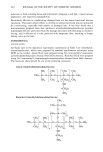
248 JOURNAL OF THE SOCIETY OF COSMETIC CHEMISTS Group I (female: 13 male: 2 ages: 15-80 mean age: 48.8): Fifteen subjects had one heel treated three times daily for three days using the following w/o emulsion: Protegin X © (mineral oil, petrolatum, ozokerite, glyceryl oleate, and lanolin alcohol self-emulsifying w/o-basis consisting of a mixture of various nonionic w/o emulsifiers and purified mineral fats manufacturer: Goldschmidt, Essen, Germany), 22.0% bees- wax (manufacturer: Caesar & Loretz, Hilden, Germany), 3.0% avocado oil (manufac- turer: Caesar & Loretz, Hilden, Germany), 1.5% PCL-liquid © (cetearyl octanoate mixture of branched-chain, readily spreading fatty acid esters, manufacturer: Gold- schmidt, Essen, Germany), 2.0% wheat-germ oil (manufacturer: Caesar & Loretz, Hilden, Germany), 1.5% MgSO 4 * 7 H20, 0.5% purified water, 69.5%. The vol- unteers' second heel remained untreated. Right and left heel treatment were randomized in this and subsequent groups. Group 2 (female: 12 male: 6 ages: 19-86 mean age: 46.8): Eighteen volunteers had one heel treated with the above w/o emulsion as in group 1. Their second heel was treated with the same w/o emulsion in which the water content was reduced to 59.5% and 10% urea was added. Group 3 (female: 6 male: 4 ages: 17-89 mean age: 50.6): In ten test subjects one heel was treated with the following o/w emulsion: Tegin © (alkaline stearate as anionic o/w emulsifier and mono-, di- and triglycerides of stearic and palmitic acid as w/o coemulsifiers manufacturer: Goldschmidt, Essen, Germany), 10.0% Miglyol © 812 (caprylic/capric triglyceride medium-chain triglycerides, DAB 10, readily spreading, stable triglycerides manufacturer: Caesar & Loretz, Hilden, Germany), 8.0% oleic acid oleoyl ester (manufacturer: Caesar & Loretz, Hilden, Ger- many), 5.0% 2-octyldodecanol (manufacturer: Caesar & Loretz, Hilden, Germany), 2.0% petrolatum, 1.0% purified water, 74.0%. The second heel remained untreated (vehicle control). Group 4 (female: 8 male: 3 ages: 17-72 mean age: 51.6): In 11 volunteers one heel was treated as in group 3 with the above-mentioned o/w emulsion. The other heels were treated with the same emulsion in which the water content was reduced to 64% and instead of water 10% urea was added. The heels were treated by the volunteers three times per day about every eight hours for three consecutive days, a duration of treatment that had led to significant effects in previous i, vivo investigations (9). Approximately 0.25 g of the emulsion was applied to an area of about 50 cm 2 (partly exceeding the heel area), resulting in an approximate dose of 5 mg/cm 2. During the three days of treatment, the soles were washed with water (no standardized procedure) twice per day, directly before the first and the third treat- ments. Three hours after the last application, following removal of shoes and cotton socks, pieces of callus of comparable thickness and area were mechanically removed from each sole by a horny layer plane (Credo, Solingen, Germany). The depth of skin removed was restricted so as not to expose the subpapillary vascular plexus, which was just visible through the remaining tissue following sample removal. Interindividual variations in

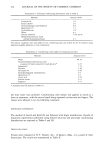
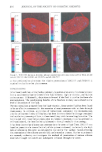
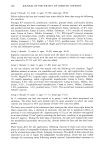
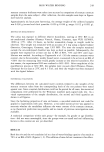
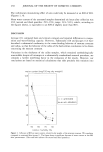
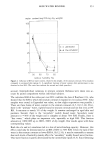
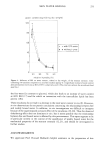
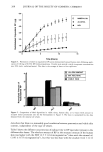
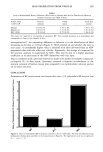
SKIN WATER BINDING 249 stratum corneum thickness were taken into account by comparison of stratum corneum samples from the same subject. After collection, the skin samples were kept in Eppen- dorf vials for analysis. Approximately six hours post harvesting, the average weight of the collected samples was 0.036 g (second and third quartiles: 0.026 g-0.044 g range: 0.012 g-0.093 g). METHOD OF MEASUREMENT The callus was exposed to different relative humidities, starting at 90% RH in an air-conditioned chamber (Heraeus Voetsch, Hanau, Germany, type VUK 02/500/S, 1990) at 37øC. After 24 hours, no further measurable change in weight could be observed. This weight was measured with an accuracy of 2 mg using a digital balance (Sartorius, Goettingen, Germany, type 1265 MP). The time the samples remained outside the air-conditioned chamber was kept as short as possible. Subsequently, the samples were exposed for at least one day to RH of 80%, 70% and 60% until equi- librium was reached. According to Tagenouchi eta/. (10) the stratum corneum water content, due to the secondary, weakly bound water, is assumed to be so low at an RH of 60% that the measuring error would greatly increase at low relative humidities. For this reason, the experimental RH was confined to 60%-90%. After completion of the equilibration process at 60% RH, the samples were vacuum dried (Heraeus, Hanau, Germany) for six days at 25øC and 0.1 Torr, and their dry weight was then measured with the digital balance. STATISTICAL EVALUATION The differences between the calculated water contents (related to dry weight) of the stratum corneum taken from the corresponding heels of the test persons were tested against zero. Since a normal distribution could not be proved for all cases, the statistical comparisons were performed by the Wilcoxon matched pairs signed rank test. As a visual representation of the sample distribution, the second and third quartiles are shown in all figures. Since the hydrating properties of urea are known, a one-sided statistical test could be applied to experiments with urea. However, a two-sided statistical test was applied to ascertain whether the emulsifiers influence the water content of the stratum corneum, as no theoretical prediction was possible and no results of previous investigations were available. A statistical comparison within each groupsfor example, by gender or age distribu- tion-did not seem meaningful, since the groups were too small and real influencing factors in this context are not yet described. RESULTS Both the o/w and the w/o emulsion led to a loss of water-binding capacity of as much as 70% at an RH of 60% (Figures 1, 2). The addition of urea did not counteract this effect.
Purchased for the exclusive use of nofirst nolast (unknown)
From: SCC Media Library & Resource Center (library.scconline.org)