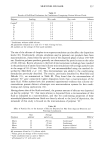
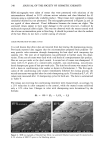
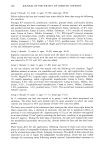
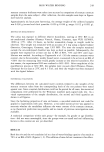
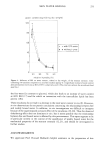
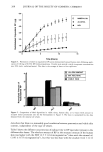
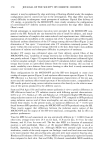
268 JOURNAL OF THE SOCIETY OF COSMETIC CHEMISTS 6.0 ß - 3.0 • 2.0 -- 1o0 I m ñ ñ ñ 1111 MINERAL OIL ALCOHOL NSV 0 5 1•0 15 Time (Hours) Figure 4. Permeation of label (as equivalent RP) across dermatomed excised human skin following appli- cation of 100 mg of 0.05% RP (w/w) preparations. Vesicles were neutral vesicle component concentration was 20% (w/w: surfactant/water). The data is the average of three to four replicates. [] 12-h PEN. AMOUNT [] INIT. PEN. RATE ß VIABLE SKIN _ E'• 2- Figure 5. Comparison of label deposition in viable tissue, human skin, at 12 hours with amount in receptor initial penetration rate for the formulations in Figure 4. The data is normalized by the data obtained with the mineral oil vehicle. data show that there is a reasonably good correlation between penetration and viable skin content, independent of the type of vehicle. Table I shows the different concentration of radioactivity in RP equivalent present in the different skin layers. The absolute amount of RP in the stratum corneum of the human skin was higher with the NSV (2.5 + 0.64 micrograms/cm 2) than with the mineral oil (1.60 + 0.53 micrograms/cm2), but this was less than with the alcohol (3.64 +-- 0.33

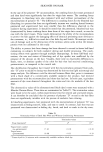
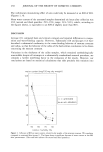
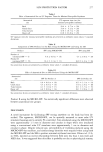
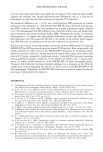
SKIN PERMEATION FROM VESICLES 269 Table I Level of Radiolabeled Retinyl Palmitate (RP) Found in Human Skin and Its Distribution Between Stratum Corneum and Viable Tissues Vehicle with Stratum Viable Total skin 0.05 % RP corneum tissues content Ethanol 3.64 (0.33) 4.29 (1.48) 7.93 (1.41) Mineral oil 1.60 (0.53) 1.41 (0.45) 3.01 (0.52) NSV (20%) 2.50 (0.64) 0.55 (0.22) 3.06 (0.54) The results are reported in micrograms of equivalent RP. The standard deviation is in parentheses and corresponds to three or four samples of skin. micrograms/cm2). An interesting difference in behavior is in the distribution of label remaining in the skin at 12 hours (Figure 6). With mineral oil and alcohol, the ratio is near unity. A considerably higher value is obtained with label delivered from an NSV preparation than with the other two vehicles. Apparently, the storage of compound by the stratum corneum is augmented by NSV. This may be due to a higher partition coefficient or to association of the NSV themselves with this layer. This is consistent with a previous observation made with another fat-soluble compound, ciclosporin (9). In that report, liposomes increased ciclosporin accumulation in the stratum corneum of hairless mouse skin compared to an hydralcoholic solution and an oil-in-water emulsion. CONCLUSION Permeation of RP across mouse and human skin into a 3% polysorbate 80 receptor was • 4- E o E .o 1 m 0 Figure 6. Ratio of radiolabeled RP in stratum corneum to that in viable skin. The data was obtained using dermatomed human skin and refers to the formulations in Figure 4. The experiments were run in replicates (n = 3orn = 4).
Purchased for the exclusive use of nofirst nolast (unknown)
From: SCC Media Library & Resource Center (library.scconline.org)