270 JOURNAL OF THE SOCIETY OF COSMETIC CHEMISTS limited intact RP was not detected in the receptor. Comparison of permeation data for NSV formulations and a mineral oil control with hairless mouse and human skin show that hairless mouse skin does not appear to be an adequate model to investigate delivery of RP and, very likely, other hydrophobic compounds. Permeation of label from several vehicles through human skin correlates with uptake into the viable tissues, but the stratum corneum/viable skin ratio is higher for the NSV formulation than for either mineral oil or alcohol. The enhanced reservoir effect may be important in prolonging the response to hydrophobic molecules applied to the skin. Based on this research, NSVs present few advantages for transdermal delivery of RP but constitute a possible topical delivery system for local therapy. ACKNOWLEDGEMENTS The authors thank Richardson Vicks, Division of Procter and Gamble and American Lecithin for project support Dr. Deckner, Procter and Gamble, and Prof. Strauss, Rutgers University, for helpful discussions Prof. Bailey and Prof. Weyand, Rutgers University, for the use of equipment. REFERENCES (1) S. Torrado, J. J. Torrado, and R. Cadorniga, Topical application of albumin microspheres containing vitamin A: Drug release and availability, Int. J. Pharm., 86, 147-152 (1992). (2) C. Surber, K. P. Wilhelm, and H. I. Maibach, In vitro skin pharmacokinetics of acitretin: Percu- taneous absorption studies in intact and modified skin from three different species using different receptor solutions, J. Pharm. Pharmacol., 43, 836-840 (1991). (3) D. Irabert, G. B. Kasting, and R. R. Wickerr, Influence of liposomal encapsulation on the pene- tration of retinoic acid through human skin in vitro, J. Soc. Cosmet. Chem., 45, 119-134 (1994). (4) E. P. Gu•nin, Topical Delivery by Vesicles: Evaluation of Phospholipids and Nonionic Surfactant Vesicles, Ph.D. thesis (Rutgers University, New Brunswick, NJ, 1993). (5) R. L. Bronaugh, R. F. Steward, and M. Simon, Methods for in vitro percutaneous absorption studies VII: Use of excised human skin, J. Pharm. Sci., 75, 1094-1097 (1986). (6) D. F. H. Wallach, Method of producing high aqueous volume multilamellar vesicles, U.S. Patent 4,855, 090 (1989). (7) J. Van Antwerp and J. Lepore, High performance liquid chromatographic methods for the quanti- tation of vitamin A palmirate in liquid multivitamin formulations, J. Liq. Chrom., 5, 571-584 (1982). (8) J. Boehnlein, A. Sakr, J. L. Lichtin, and R. L. Bronaugh, Characterization of esterase and alcohol dehydrogenase activity in skin. Metabolism of retinyl palmirate to retinol (vitamin A) during percu- taneous absorption, Pharm. Res., 11, 1155-1159 (1994). (9) K. Egbaria, C. Ramachandran, and N. Weiner, Topical delivery of cyclosporin: Evaluation of various formulations using in vitro diffusion studies in hairless mouse skin, Skin Pharmacol., 3, 21-28 (1990).

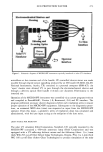
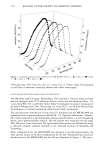
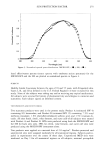
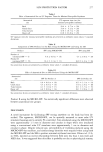
j. Soc. Cosmet. Chem., 46, 271-280 (September/October 1995) A study of the effect of anatomical site on sun protection factor efficiency using a novel UV delivery device RAYMOND D. IVESON, DEANNE M. GUTHRIE, DENISE A. VERES, and DARRELL DOUGHTY, Skin Care Category, The Procter 6- Gamble Company, Cincinnati, OH 45241. Received June 20, 1995. Presented at the 18th IFSCC Congress, Venice, Italy, October 3-6, 1994. Synopsis The design and performance of an instrument used to determine sun protection factor (SPF) efficiency anywhere on the body are discussed. The instrument, MICRO-SPF, delivered ultraviolet light (UV) to much smaller skin surface areas (--1.5 mm diameter) than those (•10 mm diameter) irradiated by conventional UV delivery systems (i.e., stand-alone solar UV simulators). The MICRO-SPF is a micro- processor-controlled fiber optic delivery system that can be optically interfaced to most solar UV simulator housings. Electromechanical shutters were microprocessor-controlled synchronously to allow all five ele- ments of a geometric dose series to be administered simultaneously. SPF efficiency produced using the MICRO-SPF was compared with SPF efficiency produced using a conventional solar UV simulator. No statistically significant difference was observed between SPFs produced using the MICRO-SPF and SPFs produced using the conventional solar UV simulator for an estimated SPF 4 product and an estimated SPF 15 product. The effect of anatomical site on UV exposure time for minimal perceptible erythema (MPE) and on SPF efficiency was examined using the MICRO-SPF on the cheek, back, volar forearm, and outer calf. Exposure time for MPE for each anatomical site was statistically significant (p • 0.0001) from all other anatomical sites average exposure times for MPE were 29.4 sec for back, 33.8 sec for face, 47.8 sec for volar forearm, and 61.8 sec for outer calf. Despite differences in natural photoprotection found for anatomical sites studied, no statistically significant differenc'e was observed for comparison of SPF efficiency between anatomical sites. These results provide evidence that although significant physiological differences exist in skin as a function of anatomical site, sunscreen film formation and, therefore, sunscreen efficiency for the products tested may be unaffected by these differences. INTRODUCTION In 1993, the United States Food and Drug Administration (FDA) issued a tentative final monograph (TFM) to establish conditions for the safety, effectiveness, and labeling of over-the-counter sunscreens. In the FDA-proposed sunscreen testing method, delinea- tion of test sites and subsequent testing is specified for back sites only (1). Consequently, sunscreen products, including those intended primarily for facial application, are not tested for sun protection factor (SPF) efficiency on the face. However, since the most frequently sunlight-exposed area of the body is the face, knowledge of the relationship of SPF results between the back and the face is critical to proper sunscreen evaluation and use. 271
Purchased for the exclusive use of nofirst nolast (unknown)
From: SCC Media Library & Resource Center (library.scconline.org)