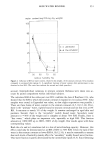
260 JOURNAL OF THE SOCIETY OF COSMETIC CHEMISTS The cosmetic significance of this result is obvious. When most of the water is evapo- rated, the continuous layer of lamellar liquid crystal will contain vitamin E acetate homogenously distributed, but with a chemical potential equal or greater than that of the pure compound. Hence, the net result is that the lameliar liquid crystal serves as a semi-solid deposit for vitamin E acetate, in which the active substance has the same tendency to penetrate into the skin as if it were applied in pure form. It should be observed that this form does not give rise to an oily feeling. ACKNOWLEDGMENTS This research was financed in part by PAYOT, France, and the New York State Science and Payot Technology Foundation at the Center for Advanced Materials Processing at Clark- son University, Potsdam, New York. REFERENCES (1) M. M. Breuer, in Encyclopedia of Emulsion Technology, Vol. 2, P. Becher, Ed. (Marcel Dekker, New York, 1983), p. 385. (2) R. Y. Lochhead, W. J. Hemker, J. Y. Castaneda, and D. Garlen, Cosmet. Toiletr., 101, 125 (1986). (3) S. E. Friberg, J. Soc. Cosmet. Chem., 41, 155 (1990). (4) G. M. Eccleston, J. Soc. Cosmet. Chem., 41, 1 (1990). (5) H. Tsutsumi, R. Utsugi, and S. Hayashi, J. Soc. Cosmet. Chem., 30, 345 (1979). (6) S. E. Friberg, L. B. Goldsmith, I. Kayali, and H. Suhaimi, Interfac. Phenom. Biol., 39, 3 (199•). (7) S. E. Friberg and B. R. C. Langlois, J. Disp. Sci. Techn., 13, 2 (1992). (8) P. Mayer, W. Pittermann, and S. Wallat, Cosmet. Toiletr., 108, 2 (1993). (9) T. Moaddel and S. E. Friberg, J. Disp. Sc•. Techn., 16, 69 (1995). 10) S. E. Friberg and L. Mandell, J. Pharm. Sci., 59, 1001 (1970). 11) L. Rydhag and I. Wilton, J. Am. Od Chem. Soc., 58, 830 (1981). •2) M. Lindstr0m, H. Ljusberg-Wahren, K. Larsson, and B. Borgstr0m, Lipids, 16, 749 (•981). 13) B. Lindman, T. Ahln•is, M. Almgren, K. Fontell, B. Ji3nsson, A. Khan, P. G. Nilsson, G. Olofsson, O. Soderman, and H. WennerstriSm, Finn. Chem. Left., 74, (1982). 14) S. E. Friberg, T. Young, R. A. Mackay, J. Oliver, and M. Breton, Colloids Surf., 100, 83 (1995).

j. Soc. Cosmet. Chem., 46, 261-270 (September/October 1995) Skin permeation of retinyl palmitate from vesicles ERIC P. GUI•NIN and JOEL L. ZATZ, Rutgers University College of Pharmacy, Piscataway, NJ 08855-0789 O.L.Z.) and Colgate-Palmolive Technology Center, 909 River Road, Piscataway, NJ 08855 (E.P.G.). Received May 18, 1995. Synopsis The delivery of retinyl palmitate (RP) from several vehicles, including those containing nonionic surfactant vesicles (NSV), was investigated in vitro. Both excised hairless mouse and human skin were utilized as model membranes in permeation experiments. Intact retinyl palmirate was not detected in the receptor. Following application of various NSV preparations to hairless mouse skin, the label accumulated in the receptor at a rate comparable to or greater than from mineral oil. The opposite occurred with excised human skin. Penetration into the receptor from a vesicle preparation, mineral oil and alcohol, was commensurate with accumulation in viable human skin tissue. Most of the label residing within human skin following appli- cation of the NSV preparation was found in the stratum corneum, to an extent significantly greater than for either of the other vehicles. We conclude that because of the importance of storage in the stratum corneum, hairless mouse skin is not a good model for RP permeation. Also, vesicle preparations augment retention of hydrophobic substances in stratum corneum with potential for extended effect. INTRODUCTION Retinoids represent a large class of compounds that are important in modern therapy for dermatologic treatment. Retinoic acid, widely used in treating acne, profoundly affects the structure of skin. While the irritation accompanying retinoic acid therapy is often acceptable in therapeutic treatment, it limits application to a broader population. Esters and other derivatives may retain many of the beneficial properties of retinoic acid while reducing undesired reactions. One of the most popular retinoids for cosmetic application is retinyl palmitate (RP). This compound is used in a number of skin products intended to alleviate the symptoms of dry skin. Recently, controlled delivery of RP was achieved using albumin micro- spheres. This system decreased the rate of drug depletion at the surface of the skin. These microspheres do not penetrate into the skin and act as reservoir of drug (1). Liposomes and nonionic surfactant vesicles have also become popular as components of dry skin products. Based on experience with other compounds, it is possible that delivery to the skin is changed in the presence of vesicles. It has been reported that synthetic retinoic acid derivatives also had very low permeation 261
Purchased for the exclusive use of nofirst nolast (unknown)
From: SCC Media Library & Resource Center (library.scconline.org)