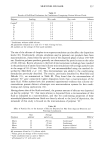
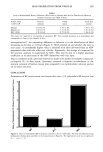
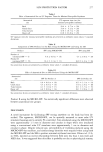
SILICONES ON HAIR 239 In the case of the polymer "D" microemulsion, the combing forces for tresses pretreated and then dyed were significantly less than for virgin hair tresses. The combing forces subsequent to bleaching were also evaluated with and without pretreatment of the microemulsion of polymer "D." The differences in combing forces for the bleached hair (bleaching is a process that does not significantly increase wet combing forces) between pretreated and unpretreated hair were smaller than the differences observed in the oxidative dyeing experiment. It should be noted that the pretreated, bleached hair was characterized by lower combing forces than those of the virgin hair control, as was the case with the dyed tresses. These results demonstrate the ability of the microemulsion to protect the hair against the damaging effects of chemical processing most obvious to the consumer, ie., difficult-to-comb hair that feels dry and brittle. Microscopic attrib- utes of damage such as the destruction of the intrinsic amino acids within the keratin protein were not addressed in this study. The ability to protect hair from damage has been observed in several in-house half-head evaluations on subjects for both oxidative dyeing and double processing. The condi- tioning effects were apparent through multiple shampooings. In these half-head eval- uations, the rate and extent of bleaching and of dye uptake was unaffected by the presence of the silicone on the hair. Visually, there were no discernible differences in shade, tone, or absolute uptake of the color for hair that had received conditioning pretreatments, as compared to the control side. Dye distribution throughout hair treated with the microemulsion prepared from poly- mer "D" prior to oxidative dyeing was determined by thin-section light microscopy and image analysis. No difference could be detected between fibers that, prior to treatment with a black shade of a commercially available oxidative dye product, had received pretreatment with the microemulsion and those that had not. In both cases, equivalent amounts of dye were observed throughout the cortex and into the medulla of the hair fiber. The chromaticity values of the aforementioned black-dyed tresses were measured with a Minolta Chroma Meter. These data are summarized in Table IV. The tristimulus values were found to be the same, within experimental error for treated and untreated tresses. It can therefore be concluded that the presence of polymer "D" on and in the hair fiber does not significantly interfere with the process of oxidative hair coloring. In bleaching experiments, hair pretreated with the microemulsion of polymer "D" was characterized as feeling smooth, silky, and easy to comb. In contrast, hair that was not pretreated was characterized as feeling dry, harsh, and hard to comb in the dry state. Table IV Tristimulus Values of Dyed Hair With and Without Conditioning Pretreatment Tristimulus values Tress (treatment) a L * a * b * Virgin brown control (no pretreatment) 17.62 - 0.18 - 0.10 Virgin brown (pretreatment) 16.68 -0.11 0.19 Tresses dyed for 30 minutes with commercially available oxidative black dye.

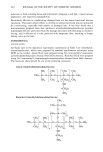
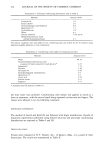
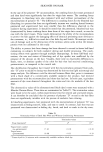
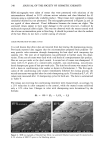
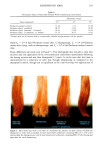
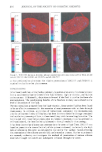
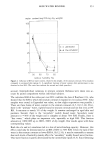
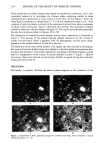
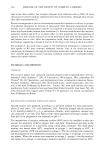
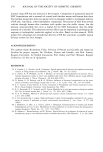
240 JOURNAL OF THE SOCIETY OF COSMETIC CHEMISTS SEM micrographs were taken of tresses that were pretreated with solutions of the microemulsion diluted to 0.2% silicone actives solution and then bleached for 45 minutes using a commercially available product. These tresses were compared to tresses similarily bleached but not pretreated. The micrographs presented in Figures 2a and 2b are typical of those observed. Visual differences between the tresses are slight. The untreated tresses appear to have some damage to the cuticle structure, evidenced by endocuticle exposure albeit slight. This was not observed with the tresses treated with the silicone microemulsion prior to bleaching. It should be pointed out that the surfaces of the hair fibers do not have a visible coating of silicone. COLOR PROTECTION OF DIRECT DYES It is well known that direct dyes are removed from hair during the shampooing process. Previously reported data suggest that the microemulsion prepared from polymer "D" may provide color retention through shampooing for hair dyed with temporary dye systems (14). The next set of experiments was performed to further study this obser- vation. Three sets of tresses were dyed with a red shade of a semipermanent dye product. One set was put aside as the dyed control. A second set of tresses was shampooed 12 times with 0.25 grams of a commercially available, non-conditioning, non-silicone- based shampoo per gram of hair per wash cycle. The third set of tresses was treated twice with a leave-in conditioning color sealant as shown in Formulation 2. The first appli- cation of the conditioning color sealant immediately followed the dyeing process the second treatment was applied after the sixth shampooing cycle. Tristimulus (L*, a*, b*) values were measured after 12 shampooing cycles for both sets. The data is summarized in Table V. The tresses not receiving the conditioning treatment were characterized, on average, by a 23% reduction in color compared to the control, while the treated tresses exhibited only a 12% color loss. Changes in color with shampooing were determined by the formula: AL = 100 X [(L c - Li)/(L o - Li)] BLEACHEI) - -•-- Figure 2. SEM micrographs of bleached hair fibers: (a) untreated bleached control and (b) treated with a 0.2% solution of SM2115 prior to the bleaching process.
Purchased for the exclusive use of nofirst nolast (unknown)
From: SCC Media Library & Resource Center (library.scconline.org)