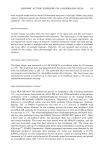
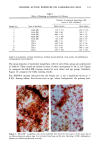
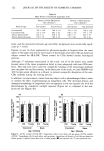
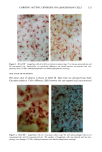
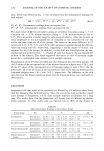
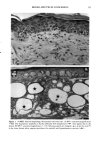
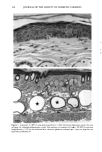
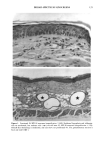
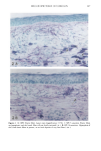
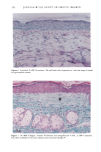
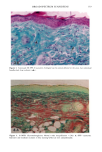
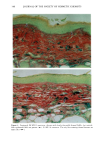
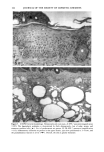
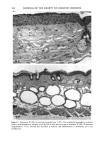
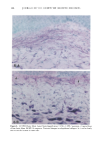
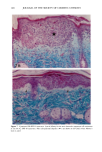
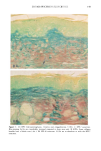
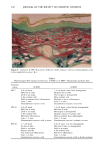
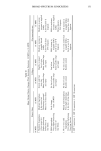
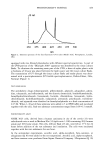
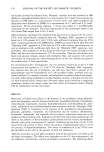
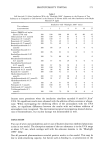
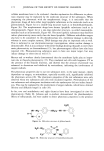
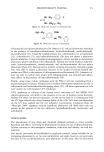
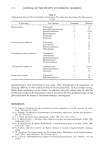
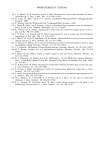
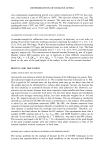
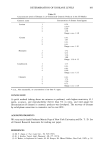
132 JOURNAL OF THE SOCIETY OF COSMETIC CHEMISTS morphology, Masson's trichrome for collagen, Luna's aidehyde fuchsin for elastic fibers (13), and Mowry's colloidal iron for glycosaminoglycans. SKIN-THICKNESS MEASUREMENTS Full-thickness skin was measured microscopically at 100X magnification on H&E stained sections using an eyepice micrometer. Measurements were taken from six animals per group at six sites along the --2-cm-long specimens at the 10- and 16-MPD dose points. TUMOR DATA Animals surviving at the 16-MPD dose point were examined for skin tumors prior to sacrifice. RESULTS Ten Minimal Photoaging Doses of Solar-Simulating Radiation HEMATOXYLIN AND EOSIN STAIN: GENERAL MORPHOLOGY SPF-7 sunscreen. The epidermis was hyperplastic with 6-8 cell layers compared to the normal 3-4 (10). There was mild loss of order, little or no atypia aside from an occasional sunburn cell, and a focally mild-to-moderate lymphocytic infiltrate (Figure 1A). Inflammation in the upper dermis was moderate, with occasional severe foci, and consisted mainly of lymphocytes with a few eosinophils and even fewer neutrophils. Sebaceous glands were enlarged, with --25 sebocytes compared to the normal 11-13 (14), as were the keratinizing cysts normally present in a single row in the lower dermis (10). The latter had proliferated to three rows in most specimens. The granulomatous reaction, evoked by rupturing cysts, was severe in most specimens (Figure lB). S?F-16 sunscreen. The general histology was similar to that seen with the SPF-7 sun- screen except that the epidermal lymphocytic infiltrate was more mild (Figure 1C). Although the skin was significantly thickened, cyst proliferation was mild, with most specimens having only 1-2 rows. The accompanying granulomatous reaction was mild to moderate (Figure 1D). S?F-18 sunscreen. Epidermal hyperplasia was slightly reduced, with most specimens having 5-7 cell layers. There was little or no loss of order or atypia aside from a rare sunburn cell (Figure 1E). The lymphocytic infiltrate was mild and consisted of scattered single cells. Upper dermal inflammation was similar to that in the other two groups. Sebaceous glands were less enlarged (--20 cells), and dermal cysts were not proliferated in most specimens. The granulomatous reaction was usually mild (Figure IF). LUNA'S STAIN: ELASTIC FIBERS S?F-7 sunscreen. Elastic fiber hyperplasia was mainly moderate, with some severe foci that approached elastosis (Figure 2A). The fibers were slightly thickened. Most speci-

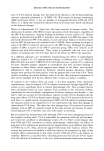
BROAD-SPECTRUM SUNSCREENS 133 Figure 1. 10 MPD: General morphology. Hematoxylin and eosin stain. A: SPF-7 sunscreen (magnification X460). The hyperplastic epidermis is focally infiltrated with lymphocytes (•) that appear also in the dermis. B: SPF-7 sunscreen (magnification X 115). Sebaceous glands are enlarged ( •- ), as are the cysts (*) in the lower dermis whose rupture exacerbates the normally mild granulomatous reaction (•). -...•_ •. • •• • • _ .... '•. - • Y .., .: ,q- , ß ... • =•.,
Purchased for the exclusive use of nofirst nolast (unknown)
From: SCC Media Library & Resource Center (library.scconline.org)