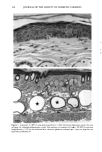
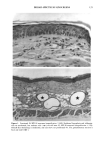
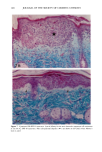
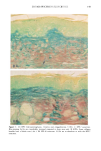
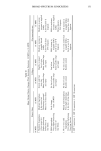
130 JOURNAL OF THE SOCIETY OF COSMETIC CHEMISTS acteristic of photoaging (3-5). Sunscreens applied to mice after the induction of dermal damage allowed matrix repair despite continued UVB exposure (6). UVA-induced damage has also been effectively prevented by sunscreens containing UVA-absorbing molecules (7-9). Except for one study (10) that used solar-simulating radiation (SSR), all other studies used radiation sources that emitted predominantly UVB or UVA and that were not representative of the complete solar ultraviolet spectrum. In summary, laboratory studies with hairless mice have shown sunscreens to provide nearly complete protection against photodamage. Despite appropriate application and use of sunscreen products, small amounts of UVB and UVA penetrate to the viable layers of the skin. An SPF-15 sunscreen will block about 93% of incident radiation. Sunburn may be prevented, but the small amount of transmitted radiation may have serious consequences with regard to chronic photodam- age. We were, therefore, interested in examining the effect of high doses of SSR on connective tissue damage in sunscreen-protected hairless mice. On the basis of previous work to establish an action spectrum for elastosis (! 1), it was determined, using a solar simulator, that a cumulative dose of --! J/cm 2 of the UVB portion of the emission allows a cumulative UVA dose of -- 170 J/cm 2. This dose, achieved over a period of nine weeks, produced a 50% increase in elastic fibers, as quantified by image analysis. This was seen, histologically, as mild elastic fiber hyperplasia. We thought it appropriate to define this dose as a minimal photoaging dose (MPD). In the current study we irradiated hairless mice until 10 and 16 MPDs were accumu- lated, based on UVB calculations (1 J/cm 2 = ! MPD). At the rate of two weekly exposures of seven minimal erythema doses (MEDs) each, these two dose points required 18 and 30 weeks, respectively. The 7-MED dose was chosen to equal the SPF value of the basic sunscreen, which contained only a UVB absorber (octyl methoxycinnamate). Two other sunscreens contained UVA absorbers in addition to the UVB absorber. One had an SPF of 16, with oxybenzone as the UVA absorber, and the other, an SPF of 18, with oxybenzone plus avobenzone (Parsol 1789) as UVA absorbers. The experimental conditions enabled us to examine the long-term consequences of UVA on UVB sun- screen-protected skin, the effects of the small amounts of radiation that are not blocked by the sunscreen, and the increase in protection provided by the addition of UVA absorbers to a UVB-absorbing sunscreen. MATERIALS AND METHODS ANIMALS Female albino hairless mice (Skh-hairless-1), ages 10-12 weeks, were obtained from the Temple University Health Sciences Center, Philadelphia, PA. Three groups of 18 mice each were individually housed but irradiated nine at a time in a cage designed to prevent mice from shielding each other. Room lighting (12-h on/off cycle) was with General Electric F-40 "GO" gold fluorescent tubes, which emit no measurable UV radiation. SOURCE AND SCHEDULE OF ULTRAVIOLET RADIATION A forced-air cooled 4200 W compact xenon arc solar simulator (Spectral Energy Corp.,

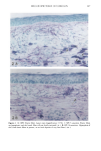
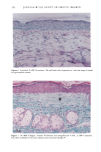
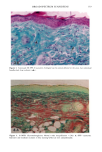
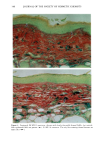
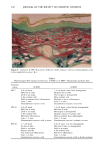
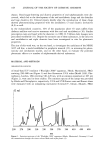
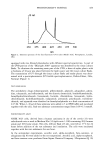
BROAD-SPECTRUM SUNSCREENS 131 Hillside, NJ) was fitted with a 1-mm WG 320 Schott filter to provide the summer noontime UV spectrum for 70 ø solar altitude. The collimated beam was passed through a water filter before impinging on a 45 ø UV-reflecting dichroic mirror. Irradiance at dorsal skin level (16 inches from source) was approximately .042 m/Wcm 2 UVB and --5.84 mW/cm 2 UVA as measured with an IL 700 research radiometer (International Light, Inc., Newburyport, MA). The UVB sensor had a peak sensitivity at --290 nm, while that of the UVA sensor was at --360 nm. Spectral distribution was measured with an Optronic 742 spectral radiometer at the beginning and end of the study. Mice were irradiated twice weekly: half of each group on Monday and Thursday, the other half on Tuesday and Friday. Over the first two weeks, exposures of all groups were raised by •/2- MED increments from 5 to 7 MEDs to avoid erythema in the group treated with the lowest SPF sunscreen. One MED, under the experimental conditions, required approx- imately .04 J/cm 2 as measured with the UVB sensor and was delivered in approximately 18 minutes. This corresponds closely to an MED for a type II human under the same experimental conditions. To accumulate the 10 and 16 MPDs at this rate required 18 and 30 weeks, respectively, with approximately two-hour exposures twice weekly. Ambient temperature, at mouse level, was maintained at 27øC with the use of two small fans. SUNSCREENS Each group of 18 mice was treated with its assigned sunscreen just prior to irradiation. Neither unprotected nor vehicle controls were included because the 7-MED dose could not be tolerated by unprotected mice. However, our laboratory has a large histologic data base of skin from unirradiated mice, long-term UV-irradiated at tolerated high doses, and various vehicle controls that provide relevant comparisons. Sunscreens were applied as 100 }xl to cover the entire exposed dorsal surface of the mice, including tail and feet, yielding an amount that was equivalent to --2.5 •l/cm 2. The active ingre- dients of the three sunscreens were as follows: 1: octyl methoxycinnamate, mainly a UVB absorber (290-320 nm) with an SPF of 7 2) octyl methoxycinnamate and oxy- benzone with an SPF of 16, providing absorption of UVB and UVA II (290-340 nm) 3) octyl methoxycinnamate, oxybenzone, and avobenzone (butyl methoxy dibenzoyl- methane Parsol 1789, Givaudan SA, Vernier, Switzerland). The latter had an SPF of 18, providing full-spectrum absorption of UVB, UVA II, and UVA I (290-400 nm). The SPF of each sunscreen was determined on human subjects according to the US Food and Drug Administration's proposed sunscreen monograph (12), using a xenon arc solar simulator fitted with a 1-mm WG-320 filter and with a spectrum similar to the one used in this study. HISTOLOGY Eight of the animals in each group were sacrificed at a cumulative dose of 10 MPD (18 weeks), with the surviving remainder (8-9) at a cumulative dose of 16 MPD (30 weeks). Dorsal skin biopsies (2 x 0.5 cm) were fixed in 10% buffered formalin and processed for light microscopy. The histochemical stains were hernatoxylin and eosin for general
Purchased for the exclusive use of nofirst nolast (unknown)
From: SCC Media Library & Resource Center (library.scconline.org)