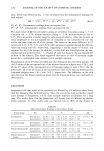
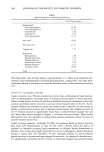
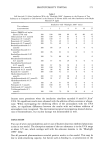
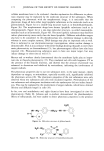
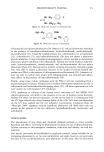
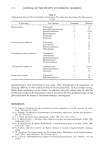
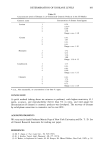
124 JOURNAL OF THE SOCIETY OF COSMETIC CHEMISTS sites, which was defined by Eq. 1, was calculated from the chromameter readings for each subject: AE = V'(L*-L*') 2 + (a*-a*') 2 + (b*-b*') 2 (Eq 1) L*, a*, b*: Chromameter readings from sun-exposed site L*', a*', b*': Chromameter readings from sun-protected site The mean values of AE for each subject group are as follows: Caucasian young = 7.32 Caucasian old = 5.79 African-American young = 5.58 African-American old = 6.55. They are within a similar range for each group of subjects. Also, the decrease in mean brightness of the sun-exposed site as compared to the sun-protected site was within the same range for all of the groups. The values of the mean difference in L* values were 4.91, 4.59, 5.31, and 5.87 for the Caucasian young and old and the African- American young and old, respectively, suggesting a similar degree of chronic sun exposure for all of the groups. In addition, a color shift was found between the sun- exposed and sun-protected sites, i.e., a higher a* value was found in the sun-exposed site in most of the subjects. This result suggested that traces of color of erythema might persist for a considerable time without recent sunlight exposure. Measurements of the L* value provided data that delineated the two ethnic groups. All the L* values of the sun-exposed sites of the African-American subjects were 58.1, and all the L* values of the sun-exposed sites of Caucasian subjects were 58.9. On the other hand, all of the L* values of the sun-protected sites of the African-American and Caucasian subjects were 63.1 and 65.1, respectively. The difference in the skin color between the African-American group and the Caucasian group was confirmed by these results. DISCUSSION Langerhans cells that reside in the epidermis are affected by UV radiation doses lower than the damaging dose for keratinocytes. Thus, the core of this study is whether a small acute damage to Langerhans cells by daily sunlight exposure accumulates for a long time. The results show that the Langerhans cell density was not affected by chronic actinic exposure. In other words, past sun exposure has no effect on the density of Table III Mean Chromameter Readings for Each Subject Group Ethnicity/age Site L* a* b* AE Caucasian/old Sun-exposed 63.96 + 3.12 7.93 - 1.24 15.03 - 1.79 5.79 -+ 1.96 Sun-protected 68.55 -+ 2.04 5.54 + 1.45 12.81 + 1.07 Caucasian/young Sun-exposed 64.80 + 3.09 8.67 - 1.43 14.44 -+ 1.77 7.32 - 2.02 Sun-protected 69.71 - 2.17 5.37 -+ 0.89 10.48 + 1.70 African-American/old Sun-exposed 52.63 - 4.93 8.03 -+ 0.86 17.64 -+ 1.53 6.55 - 2.45 Sun-protected 58.50 -+ 5.22 6.64 + 0.93 17.27 - 1.89 African-American/ Sun-exposed 48.33 - 3.97 9.03 -+ 0.89 17.69 - 1.16 5.58 -+ 1.93 young Sun-protected 53.64 -+ 5.06 7.46 + 1.47 17.92 - 1.05

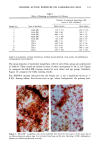
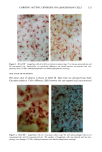
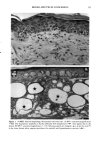
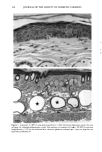
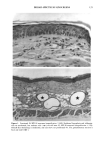
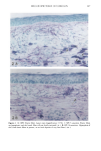
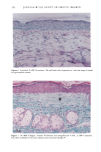
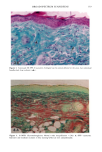
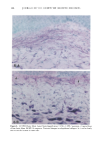
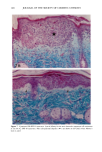
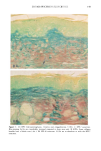
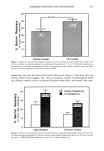
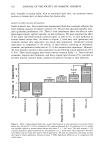
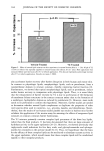
CHRONIC ACTINIC EXPOSURE ON LANGERHANS CELLS 125 epidermal Langerhans cells. Some of these data would superficially appear to differ from those reported by other investigators, but analysis of the study designs provides expla- nations to account for the observed differences. A reduction in Langerhans cell density at the sun-exposed sites ascribed to cumulative UV effects, reported by Thiers et al. (10) and Gilchrest et al. (11), was not observed in this study. The key factors that may account for the different results include our study of normal skin without evidence of actinic damage or recent sun exposure and the methods used for enumerating Langerhans cells. One of our criteria for subject selection was that the lower arms had not been exposed to sunlight for at least one month prior to biopsy, to eliminate acute UV effects. The study was performed during the late winter and early spring months, and the subject population consisted of women who had limited outdoor activity. The lack of recent sun exposure is important. Less than 3 MED of UV light exposure has been shown to result in a significant decrease in Langerhans cells within 24 hours (2,4). Further, we have shown that after approximately 2 MED of UV exposure, up to four or five weeks are required for recovery to baseline levels (20). Therefore, we had to evaluate the density of Langerhans cells without the effect of recent daily sunlight. However, past exposure to sunlight is necessary in this study in order to investigate the historical damage to Langerhans cells. Thus, skin color was measured to ensure the presence of past sun exposure. As a result, the presence of past chronic sun exposure at the dorsal forearm sites was suggested by the chromameter measurements. The dorsal forearm skin differed from the inner upper arm skin in its degree of darkness, and the similar AE values between the two sites for the two ethnic groups may suggest similar degrees of chronic sun exposure. Our finding of no significant difference between the sun-exposed and sun-protected sites in any of the subject groups is different from but not inconsistent with that of Thiers et al. (10), who reported that the number of Langerhans cells in sun-exposed skin is significantly less than that in sun-protected skin. The possible explanation is that their older subjects were from a patient group whose sun-exposed skin showed clinical evidence of solar damage, which might have had a secondary effect on the Langerhans cell density. In other words, the decreased Langerhans cell density of their patients may have been induced not by the direct effect of cumulative sun exposure, but by secondary effects from damaged dermal constituents that may interfere with the migration of Langerhans cells to the epidermis. This mechanism elucidates the discrepancy clearly since Lang- erhans cells migrate from bone marrow (21). In fact, we confirmed both decreased density and damaged morphology of Langerhans cells in clinically photodamaged skin by our staining method (Figure 4a-4b). Thus, our finding is not inconsistent with that of Thiers et al. (10). Gilchrest et al. also reported a difference between sun-exposed and sun-protected skin in subjects aged 46-68 (11). This study used preauricular skin, which is more likely to be exposed to doses of recent sunlight, for the sun-exposed site. Also, unstained cross sections of skin were used for enumeration this would not give a precise evaluation of cell density. From the four-way ANOVA, age, ethnic background, and the interaction between age and ethnic background were significant. These statistical conclusions are derived from the relatively small Langerhans cell density in the older African-American subject group. The Langerhans cell density in the older Caucasian group did not show such a decrease. This discrepancy constitutes one of the key points of our study. We think that this discrepancy is not due to the ethnic difference but rather is due to the difference in
Purchased for the exclusive use of nofirst nolast (unknown)
From: SCC Media Library & Resource Center (library.scconline.org)