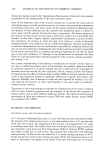
244 JOURNAL OF THE SOCIETY OF COSMETIC CHEMISTS a single application of moisturizers for up to three hours. With short-term test methods, incorrect use, bad compliance, and daily variations due to individual and environmental factors are easily controlled (10). In these studies transepidermal water loss (TEWL) and electrical capacitance (6,7,9,10) as hydration parameters are usually assessed. The quan- tiffcation of skin surface lipids (7,10), the evaluation of the mechanical properties of the skin (11), macrophotography and studies on skin replicas (5) are also employed to obtain further information on the possible role of moisturization on stratum corneum functions and biophysical properties. The aim of our study was to investigate the ultrasonographic aspects of skin hydration and to correlate them to variations in TEWL and capacitance values, as induced by a single application of different moisturizers. PATIENTS AND METHODS EXPERIMENTAL DESIGN The study was carried out on 15 healthy volunteers, six males and nine females, aged 25 to 35. Subjects were asked to avoid using any skin-care product for two days before testing. Three areas on the volar aspect of the forearm, 3, 6, and 9 cm distal from the elbow crease, were studied. Three different formulations were tested: petrolatum and two commercial products, moisturizer 1 and moisturizer 2 (oil-in-water emulsions). Patch tests with 60 mg of each product were applied for one hour using large Finn- Chambers on Scanpor tape. Immediately after patch-test removal, product residues were gently removed by wiping the skin with gauze. Measurements were performed at the beginning of the experiment, immediately after removal of the test chamber, and 15, 30, 60, 120, and 180 minutes later, after a 30-minute acclimatation period in a room with temperature at 21-22øC and 40-50% humidity. INSTRUMENTS The hydration of the epidermis was assessed using the corneometer CM 820 (Courage+Khazaka, Germany), which measures the electrical capacitance of the skin surface, expressed in arbitrary units (a.u.). Values are displayed digitally. The probe consists of a 49-mm 2 glass surface, applied on the skin under a standard load of 3,65 N, kept constant by a spring. Each recorded value represents the mean value of three measurements. Transepidermal water loss (TEWL) was measured by an Evaporimeter EP1 (Servomed, Sweden). The hand-held probe measures atmospheric temperature and dampness at two points, 3 and 6 mm above skin surface evaporation is calculated from the detected water gradient. Measurements were taken according to the guidelines of the Standardization Group of the European Society of Contact Dermatitis (13). Echographic evaluations were carried out by a 20 MHz B-scanner (Dermascan C, Cortex Technology, Denmark), which produces images representing a cross section of the skin. Dermascan C is provided with a 20 MHz transducer, which enables the high-definition study of tissues close to the body surface.

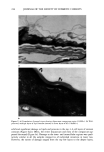
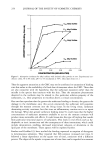
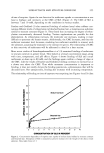
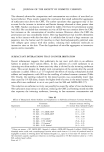
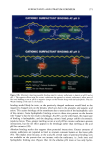
20 MHz B-SCANNING 245 A water-based gel (Cogel, Comedical, Italy) was employed as a coupling medium be- tween the transducer and the skin surface. After acquisition, the echographic images were processed by a program for image analysis (Dermavision 2D, Cortex, Denmark), enabling a numerical description of the images on the basis of segmentation procedures. The instrument, the standardization procedures, and recording conditions have already been described in detail elsewhere (14). For the evaluation of the images, two amplitude intervals were used. The first, ranging from 0 to 30, marks hypo-reflecting areas cor- responding to dermal edema the second, ranging from 201 to 255, highlights hyper- reflecting parts of the skin coinciding with the epidermis and the deep dermis. Statistics. An ANOVA test for repeated values and the SNK test were used to evaluate the differences in respect to baseline. A p value 0.05 was considered significant. Correlation between superficial 201-255 values and capacitance values was calculated according to Pearson. RESULTS Hydration values, as measured by capacitance, showed an increase, in respect to baseline, immediately after patch test removal and for up to 180 minutes after the application of moisturizers 1 and 2 (Table I). Increases in capacitance values were significant at all times of assessment for both moisturizers. When petrolatum was applied, hydration values were significantly higher, with respect to baseline, from 15 to 180 minutes. The evaporation rate, which showed a marked increase at all test areas immediately after patch test removal, dropped to baseline values 30 minutes after application of petrola- tum and 60 minutes after application of moisturizers 1 and 2 (Table II). The increase at removal was higher for moisturizers 1 and 2 in respect to petrolatum. Image analysis on echographic pictures showed that the extension of areas reflecting within the 0-30 interval was significantly higher, with respect to baseline values, at all assessment times, when petrolatum was applied. Although a trend toward an increase in the extension of hypo-echogenic dermal areas was observed also for moisturizers 1 and 2, it was not significant, probably because of the high standard deviations and baseline values (Figure 1). All three products induced an attenuation of the superficial hyper-reflecting band corresponding to the epidermis: superficial 201-255 pixel areas had significantly de- creased at all assessment times after application of the tested products (Figures 2 and 3, Table III). Finally, a significant attenuation of the hyper-reflecting areas of the deep Table I Capacitance Values at Skin Sites Treated With Petrolatum and Two Commercial Products Petrolatum Moisturizer 1 Moisturizer 2 Baseline 48.33 + 5.14 47.53 + 4.81 49.67 + 6.54 Removal 49.87 _+ 6.98 62.13' _+ 11.01 72.2* _+ 10.53 15 min 59.13' -+ 7.02 64.53* _+ 6.3 65.87* _+ 8.69 30 min 60.73* -+ 6.31 62.27* + 7.59 60.47* + 8.42 60 min 57.47 + 6.08 58.93* + 6.41 57.8* _+ 7.49 120 min 55.47* -+ 5.66 55.07* _+ 4.54 53.67* + 7.85 180 min 53.27* -+ 6.62 52.73* + 5.69 52.6* _+ 7.18 * Significant in respect to baseline.
Purchased for the exclusive use of nofirst nolast (unknown)
From: SCC Media Library & Resource Center (library.scconline.org)