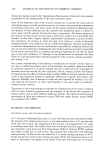
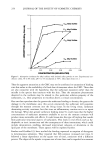
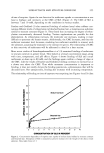
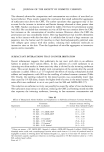
246 JOURNAL OF THE SOCIETY OF COSMETIC CHEMISTS Table II Transepidermal Water Loss at Skin Sites Treated With Petrolatum and Two Commercial Products Petrolatum Moisturizer 1 Moisturizer 2 Baseline 4.4 + 1.45 4.13 + 1.3 4.2 + 1.42 Removal 8.2* _+ 3.38 15.13' _+ 4.58 19.2' _+ 7.35 15 min 5.4* _+ 1.72 6.53* _+ 2.1 7.27* _+ 2.25 30 min 4.4 + 1.64 4.8* + 1.61 4.87* + 1.3 60 min 4.27 + 1.79 4.4 + 1.59 4.67 + 1.59 120 min 3.8 _+ 1.57 4.2 _+ 1.57 4.07 _+ 1.49 180 rain 4.33 + 1.59 4.67 + 1.4 4.53 + 1.46 * Significant in respect to baseline. 0-30 pixels 3000 2800 - 2600 - 2400 - 2200 - 2000 - 1800 - 1600 - 1400 - 1200 - 1000 baseline removal 15' 30' lh 2h 3h • petrolatum • moisturizer 1 • moisturizer 2 Figure 1. Image analysis on echographic pictures. Variation of the extension of dermal areas reflecting within the 0-30 interval. *Significant in respect to baseline values. dermis was observable, for petrolatum, at all assessment times, for moisturizer 1, from 30 to 180 minutes after application, and for moisturizer 2, immediately after patch test removal and from 60 to 180 minutes after application (Figure 4). The correlation coefficient r between superficial 201-255 values and capacitance values was = -0.3519 (p 0.001). DISCUSSION In a study on 12 healthy females, Blichman eta/. studied the effects of a single appli-

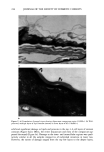
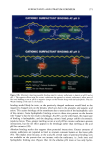
20 MHz B-SCANNING 247 Figure 2. Image representing the echographic aspect of normal skin of the volar forearm. It is characterized by two hyper-reflecting areas, the first, represented by the entry echo, corresponding to the epidermis, and the second in the lower dermis. cation of an oil-in-water emulsion by performing instrumental measurements for up to 360 minutes (7). They observed an immediate rise in TEWL values, which in 15 minutes returned to the original level, and a slight increase in hydration values, as measured by capacitance and conductance, which persisted throughout the whole study. According to these results, they supposed that the biophysical changes in the skin following a single application of an oil-in-water emulsion can be divided into two distinct phases, an initial evaporation phase, which lasts less than 15 minutes, dominated by evaporation of emulsion water and increased hydration, and a lipidization phase lasting for at least 360 minutes and dominated by the oil phase of the emulsion, associated with minor improvements of hydration parameters (7). These observations were confirmed by Lod•n, who hypothesized that emollients can increase the water content of the stratum
Purchased for the exclusive use of nofirst nolast (unknown)
From: SCC Media Library & Resource Center (library.scconline.org)