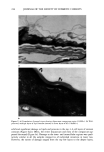
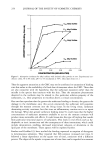
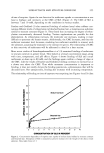
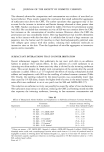
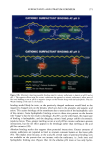
250 JOURNAL OF THE SOCIETY OF COSMETIC CHEMISTS pictures revealed a decrease in the echogenicity of the dermis, which was significant for all three products for echographic values assessing deep edema (201-255 pixel values). We can therefore presume that external factors influencing the skin barrier may induce modifications in dermal blood flow causing edema, which is particularly pronounced in the lower dermis. When evaluating an ultrasound scan of the skin, a strong band-like echo is seen at the boundary between the coupling medium and the skin, the so-called entry echo. Some authors equate this structure with the epidermis (22-25), whereas others regard it as a result of the impedence jump at the border between the epidermis and the coupling medium (26). The evaluation of epidermal changes by image analysis procedures has enabled the description of modifications of the reflectivity of the entrance echo, which vary according to the different irritation modalities of the test substances. Detergents, such as sodium lauryl sulfate, induce a decrease in the extension of the superficial hyper-refiecting band, which is invertly related to TEWL values (18, 19). On the contrary, nonanoic acid- induced irritation appears with an increase in the epidermal reflectivity (20). By applying moisturizers and petrolatum, we observed a reduction of superficial 201- 255 pixel areas, whose extension was inversely related to capacitance values. Thus, echographically, the higher the hydration state of the stratum corneum the lower the impedence jump and consequently the higher the attenuation of the epidermal band. This confirms previous observations on an analogous decrease in epidermal reflectivity, associated with an increase in capacitance values and TEWL, when saline solution was applied to the skin under occlusion (27). In conclusion, we suggest that data deriving from image analysis of 20 MHz B-scanning could be used as a support for the findings of other instrumental techniques in the assessment of skin hydration. REFERENCES (1) J. K. Prall, R. F. Theiler, P.A. Bowser, and M. Walsh, The effectiveness of cosmetic products in alleviating a range of skin dryness conditions as determined by clinical and instrumental techniques, Int. J. Cosmet. Sci., 8, 159-174 (1986). (2) R.E. Dunlap, Clinical evaluation of a highly effective hand and body lotion, Curr. Ther. Res., 35, 72-77 (1984). (3) T. H. Cook and T. J. Craft, Topographics of dry skin, non-dry skin, and cosmetically treated dry skin as quantified by skin profilometry, J. Soc. Cosmet. Chem., 36, 143-152 (1985). (4) J. Serup, A. Winther, and C. W. Blichmann, Effects of repeated application of a moisturizer, Acta Derre. Venereol. (Stockh.), 69, 457-459 (1989). (5) S. Nicholls, C. S. King, and R. Marks, Short term effects of emollients and a bath oil on the stratum corneum, J. Soc. Cosmet. Chem., 29, 617-624 (1978). (6) D. Wilson, E. Berardesca, and H. I. Maibach, In vivo transepidermal water loss and skin surface hydration in assessment of moisturization and soap effects, Int. J. Cosmet. Sci., 10, 201-211 (1988). (7) C. W. Blichman, J. Serup, and A. Winther, Effects of single application of a moisturizer: Evaporation of emulsion water, skin surface temperature, electrical conductance, electrical capacitance, and skin surface (emulsion) lipids, Acta Derre. Venereol. (Stockh.), 69, 327-330 (1989). (8) M. Lod•n and M. Lindberg, The influence of a single application of different moisturizers on the skin capacitance, Acta Derre. Venereol. (Stockh.), 71, 79-82 (1991). (9) M. Lod•n, The increase in skin hydration after application of emollients with different amounts of lipids, Acta Derre. Venereol. (Stockh.), 72, 327-330 (1992).

20 MHz B-SCANNING 251 (10) J. Serup, A three-hour test for rapid comparison of effects of moisturizers and active constituents (urea), Acta Derre. Venereo/. (Stockh.), suppl. 177, 29-33 (1992). (11) L. Overgaard Olsen and G. B. E. Jemec, The influence of water, glycerin, paraffin oil and ethanol on skin mechanics, Acta Derre. Venereol. (Stockh.), 73, 404•406 (1993). (12) P. Treffel and B. Gabard, Stratum corneum dynamic function measurements after moisturizer or irritant application, Acta Derre. Venereol. (Stockh.), 287, 474•479 (1995). (13) J. Pinnagoda, R. A. Tupker, T. Agner, and J. Serup, Guidelines for transepidermal water loss (TEWL) measurement, Contact Dermatitis, 22, 164-178 (1990). (14) S. Seidenari, A. Di Nardo, P. Pepe, and A. Giannetti, Ultrasound B scanning with image analysis for assessment of allergic patch test reactions, Contact Dermatitis, 24, 216-222 (1991). (15) R. Ghadially, L. Halkier-Sorensen, and P.M. Elias, Effects of petrolatum on stratum corneum struc- ture and function, J. Am. Acad. Dermatol., 26, 387-396 (1992). (16) G. Marti-Mestres, J. Passer, H. Maillois, V. Van Sam, J.J. Guilhou, J.P. Mestres, and B. Guillot, Evaluation expErimentale de l'hydratation et du pouvoir occlusif in vivo et in vitro d'excipients lipophiles et de leurs Emulsions phase huile continue, Int. J. Cosmet. Sd., 16, 161-170 (1994). (17) S. Seidenari, and A. Di Nardo, B scanning evaluation of allergic reactions with binary transformation and image analysis, Acta Derm. Venereol. (Stockh.), suppl. 175, 3-7 (1992). (18) S. Seidenari, and A. Di Nardo, B scanning evaluation of irritant reactions with binary transformation and image analysis, Acta Derre. Venereol. (Stockh.), Suppl. 175, 9-13 (1992). (19) S. Seidenari, and B. Belletti, Instrumental evaluation of subclinical irritation induced by sodium lauryl sulfate, Contact Dermatitis, 30, 175 (1994). (20) S. Seidenari, Echographic evaluation with image analysis of irritant reactions induced by nonanoic acid and hydrochloric acid, Contact Dermatitis, 31, 146-150 (1994). (21) S. Seidenari, C. Turnaturi, A. Motolese, and P. Pepe, Echographic evaluation of edema induced by patch test chambers, Contact Dermatitis, 27, 331-332 (1992). (22) K.A. Dines, P. W. Sheets, J. A. Brink, C. W. Hanke, K. A. Condra, J. L. Clendenon, S. A. Gross, D. J. Smith, and T. D. Franklin, High frequency ultrasonic imaging of the skin: Experimental results, Ultrasonic Imaging, 6, 408•434 (1984). (23) P. Payne, Medical and industrial applications of high resolution ultrasound, J. Phys. Sci. Instrum., 18, 465-472 (1985). (24) P. Payne, Ultrasound in dermatology--Non-invasive skin measurement by ultrasound, RNM, 13, 24-26 (1985). (25) P. Payne, G. L. Grove, H. Alexander, R. M. QuillJam, and D. L. Miller, Cross sectional ultrasonic scanning of skin using plastic fihn transducers, Bioeng. Skin, 3, 241-246 (1982). (26) P. Airmeyer, H. Hoffmann, M. Stticker, S. Goertz, and S. el-Gammal, "General Phenomena of Ultrasound in Dermatology," in Ultrasound in Dermatology, P. Airmeyer, S. el-Gammal, and H. Hoffmann, Eds. (Springer-Verlag, Berlin, Heidelberg, 1992), pp. 55-79. (27) S. Seidenari, B. Belletti, and G. Pellacani, Time course of skin changes induced by short-term occlusion with water: Evaluation by TEWL, capacitance and B-scanning echography, Skin Res. Technol., 2, 52-53 (1996).
Purchased for the exclusive use of nofirst nolast (unknown)
From: SCC Media Library & Resource Center (library.scconline.org)