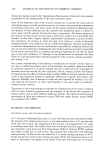
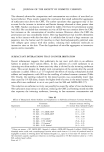
226 JOURNAL OF THE SOCIETY OF COSMETIC CHEMISTS - -L Figure 2. (a) Formulation A-treated tissue showing disjunctum--compactum region (24,000x). (b) Well- preserved, multiple layers of lipid lamellae (arrows) in lower layers of SC (128,000x). exhibited significant damage to lipids and proteins in the top 4-6 cell layers of stratum corneum (Figure 6a,b). Often, the entire disjunctum and most of the compacturn ap- peared destroyed (Figure 6c). Damage to the inter- and intracellular regions was quali- tatively similar in all the samples irrespective of individual variations in water loss. However, the extent of damage ranged from the top few layers to the deeper layers,

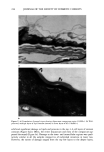
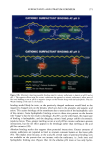
SURFACTANT-SKIN INTERACTIONS 227 Figure 3. (a) Formulation B-treated tissue showing desmosomes (arrowheads) and disjunctum-compactum region of the SC (24,000x). (b) Multiple layers of lipid lamellae (arrows) surrounding the outer layers of SC (128,000x). depending upon TEWL. ESEM micrographs showed that the surface of formulation C-treated skin resembled the surface features of dry skin, i.e. a large number of corneo- cytes displayed uplifted morphology (marked regions, Figure 7d). DISCUSSION This study provided an opportunity to examine the correlation between surfactant-
Purchased for the exclusive use of nofirst nolast (unknown)
From: SCC Media Library & Resource Center (library.scconline.org)