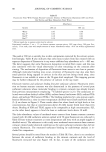
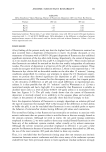
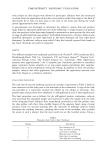
TIME-INTENSITY "SOOTHING" EVALUATION 117 with calluses on their fingers were allowed to participate. Subjects were also instructed to refrain from the application of any skin-care products (other than soap) to the back of their hands for at least ten days prior to the start of the study and during the study period (approximately three weeks). A questionnaire was developed to determine the subject's current skin-care product usage behavior. Questions addressed each of the following: 1) usage frequency of general skin-care products (other than soap) designed to moisturize or treat/prevent dry skin and 2) usage of additional bath soap product with added moisturizers or lotions. Subjects also identified themselves as either right-hand or left-hand dominant (all were right-hand dominant). In addition, subjects were asked if they had recently exposed their hands to any harsh chemicals (no positive responses). SAMPLES Two different samples were employed: petroleum jelly (Vasdine ©, 100% petroleum jelly, Chesebrough-Ponds USA Co., Greenwich, CT) and lotion (Jergen's © "Original Scent" Advanced Therapy Lotion, The Andrew .Jergens Co., Cincinnati, OH). Application amounts were approximately 5 ml (1 teaspoon) per evaluation, provided in unmarked paper containers (lotion samples) or on wax paper squares (petroleum jelly samples). Samples were at room temperature during the testing. In addition to these two product samples, subjects and other applicators also performed the application motions with their bare fingers as a reference condition. EVALUATION PROCEDURE The scale used to rate the soothing intensity of a product is presented in Table I. Subjects were instructed in this scale prior to the initiation of the evaluations. A copy of the scale was provided in a convenient location for referral by the subject as necessary. Two general types of procedures were employed: 1) self-application and 2) other-application. The basic procedure was as follows: for the self-applied product evaluations, subjects were presented the unmarked sample and instructed to place the sample onto the back of the designated hand. Subjects then immediately proceeded to rub the product onto the skin surface with their three middle fingers of the opposite hand, using circular motions. Every ten seconds (starting after the initiation of rubbing) subjects would determine the soothing intensity, reporting their score to the attendant, who recorded the scores in such a manner that the rarer could not see the recorded scores. Using a Table I Evaluation Scale Used to Rate "Soothing" Rating Description 0 Not soothing at all 1 Very low level of soothing 2 Low level of soothing 3 Moderate level of soothing 4 High level of soothing 5 Very high level of soothing

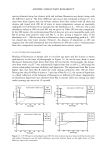
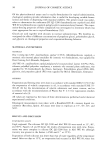
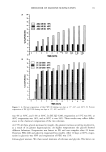
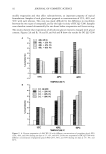
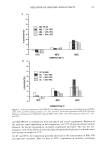
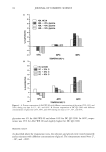
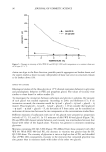
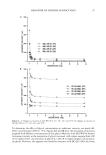
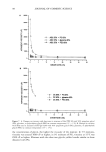
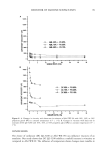
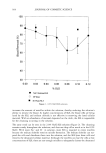
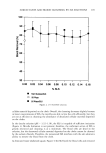
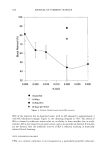
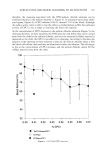
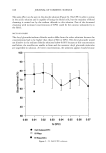
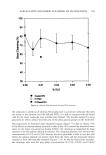
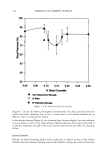
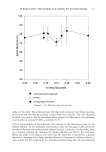
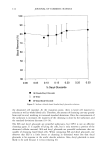
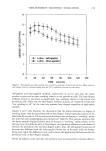
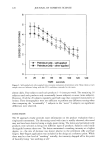
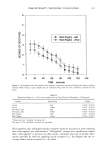
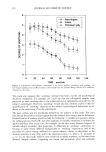
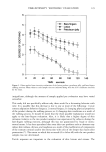
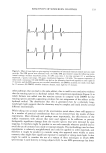
118 JOURNAL OF COSMETIC SCIENCE stopwatch, the attendant also provided the audible cues for the ten-second evaluation times during the 120-second evaluation period. For the other-applied evaluations, the rubbing process was performed by another person using their middle three fingers. Otherwise, the procedure was identical. For the bare-fingers evaluations, either subjects used their bare middle three fingers to rub the back of the opposite hand, or the subject's hand was rubbed by the designated "other" person. Otherwise, the procedure was identical. The same "other" applier was used in all cases. Subjects evaluated two samples per session, one sample per hand. Sessions were separated by a one-week period. A random- ized presentation order was employed all subjects evaluated a total of six samples (self-applied or other-applied lotion or petroleum jelly, by the subject or by other bare fingers). STATISTICAL ANALYSIS The responses were analyzed using repeated measures ANOVA techniques. For a given sample, means differences between the two application methods were explored at 0, 60, and 120 seconds. For presentation purposes, the means of the pooled subject data were calculated for all samples at each ten-second interval and plotted against time 95% confidence intervals were indicated for all means. The data were also examined for any order effects no order effects were observed. Linear regression analysis was performed for each sample/application method for the time period 20 to 120 seconds to determine if any significant temporal trends (for example, a decrease with time) were present. INSTITUTIONAL REVIEW BOARD APPROVAL This study was approved by the Institutional Review Board prior to initiation. RESULTS Figures 1-3 present the results for the lotion, petroleum jelly, and bare-fingers evalu- ations, respectively. Several observations can be made. First, statistical analysis (repeated measures ANOVA) indicated that significant differences were present within any given sample/application method (p 0.05). For a given product sample, significant differ- ences were present between the two application methods at 0, 60, and 120 seconds (p 0.05). The self-applied "soothing" ratings were typically higher than the correspond- ing "other-applied" ratings for a given sample. Second, all three samples displayed a consistent decreasing rating with time for both the self-applied and other-applied ap- plication methods. Linear regression analysis for each sample/application method (sum- marized in Table II) indicated that the negative slope for each response curve was significant (p 0.05). The highest ratings were seen during the first 20 seconds. The ratings then proceeded to decrease with time. Third, the "soothing" ratings for the lotion sample showed the least decrease with time both the petroleum jelly and bare- fingers ratings showed a more rapid decrease with time. Figures 4 and 5 present plots of all three product evaluations versus time for the
Purchased for the exclusive use of nofirst nolast (unknown)
From: SCC Media Library & Resource Center (library.scconline.org)