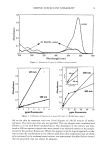
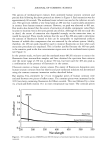
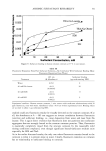
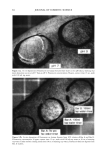
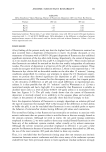
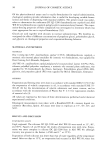
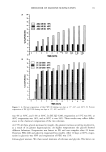
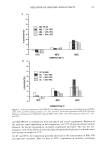
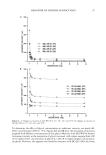
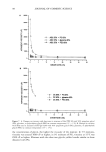
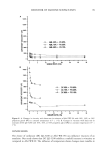
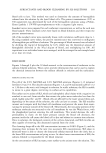
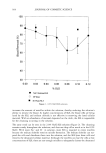
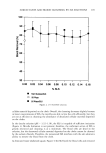
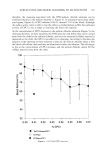
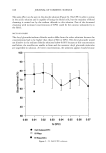
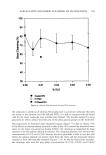
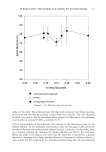
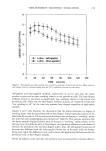
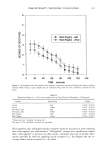
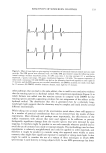
TIME-INTENSITY "SOOTHING" EVALUATION 121 i i i o o Bare fingers - self Bare fingers - other 20 40 60 80 100 120 140 TIME seconds Figure 3. Self-applied and other-applied time-intensity evaluations produced during bare-fingers rubbing motions. Mean values at each sample time are indicated along with the 95% confidence intervals for the mean. Table II Regression Slopes (n = 20 for each sample) for the Time Period 30 Seconds to 120 Seconds Sample Application Slope Lotion Self -0.018 + 0.0019 Lotion Other -0.013 + 0.0022 Petroleum jelly Self -0.026 + 0.0024 Petroleum jelly Other -0.024 + 0.0023 Bare fingers Self -0.027 + 0.0029 Bare fingers Other -0.024 + 0.0027 • Slope units are "soothing" rating/second The mean +95% confidence intervals are presented. The hypothesis that self-applied product samples would be perceived as more soothing than other-applied was substantiated. "Self-applied" ratings were significantly higher than "other-applied" in all cases. In other words, consumers may rely on sensory infor- mation provided by both the applying tactile receptors (i.e., the fingers) and the re- ceiving surface tactile receptors (i.e., the skin).

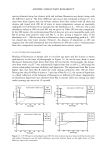
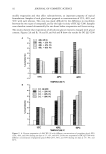
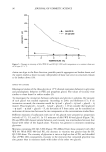
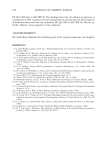
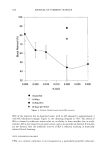
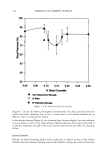
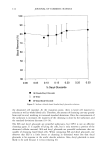
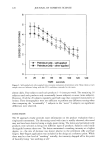
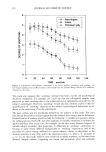
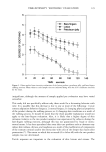
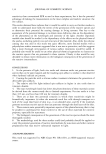
122 JOURNAL OF COSMETIC SCIENCE i i _ Bare fingers Lpøet•3or•eu m jelly 0 20 40 60 80 100 120 140 TIME seconds Figure 4. Self-applied time-intensity evaluations of the lotion product, petroleum jelly product, and bare-fingers rubbing motions. Mean values at each sample time are indicated along with the 95 % confidence intervals for the mean. This study also suggests that "soothing" intensity has both a tactile and psychological (hedonic) component. For example, one could say that the self-applied samples were perceived as more soothing due to the additional tactile information provided by the subject's own fingers. However, "soothing" overall also has a hedonic aspect in that the quantification of "soothing" depends on the subject's psychological assessment in ad- dition to the processing of tactile information. The term soothing was not specifically defined for the subjects in this study. The error bars around the product ratings suggest that the subjects were using a similar definition. General sources of variance would include the following: 1) variable skin pressure during the rubbing process (both self- and other-applied) 2) variable conditions as to where the applied products were at any time (for example, on the skin versus between fingers) 3) variable subject-to-subject skin properties 4) differences in "soothing" calibration, re- flecting to some extent different backgrounds in "soothing" experiences and 5) the precision of a given rating, reflected in a given subject's ability to determine: a) the absolute intensity at any time, and b) the transition points, i.e., when a "4" decreases to a "3," etc. In this study, subjects were restricted to whole numbers no fractions were allowed. Sample variance (regarding the lotion and petroleum jelly) was probably
Purchased for the exclusive use of nofirst nolast (unknown)
From: SCC Media Library & Resource Center (library.scconline.org)