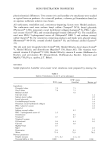
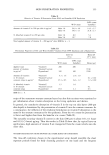
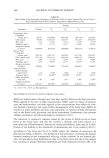
SKIN PENETRATION PROPERTIES 149 physicochemical differences. Two creams (w/o and lameliar o/w emulsions) were studied as typical leave-on products. As a rinse-off product, a shower gel formulation based on an aqueous surfactant solution was chosen. All surfactants, emulsifiers and, consistency-imparting factors were Henkel products. The surfactants used were sodium lauryl sulfate (Texapon © N70), lauryl glucoside (Plantacare © 1200), potassium cocoyl hydrolyzed collagen (Lamepon © S), PEG-7 glyc- eryl cocoate (Cetiol © HE), and cocoamidopropyl betaine (Dehyton © K). The emulsifiers used were PEG-7 hydrogenated castor oil (Dehymuls © HRE 7) and sodium cetearyl sulfate (Lanette © E) the consistency-imparting products and iipids were glyceryl oleate (Monomuls © 90-O-18), cetearyl alcohol (Lanette © O), and behenyl alcohol (Lanette © 22). The oils used were dicaprylyl ether (Cetiol © OE, Henkel KGaA), decyl oleate (Cetiol © V, Henkel KGaA), and dimethicone (Bayslion © 350, Bayer AG). The vitamins were natural vitamin E (Copherol © F1300, Henkel KGaA), vitamin E acetate (Hoffmann-La Roche), and provitamin B5 (D-panthenol, Hoffmann-La Roche). Glycerol and MgSO4*7H20 (p.a. quality, J.T. Baker). METHODS Sample preparation. Lameliar oil-in-water (o/w) emulsions were prepared by mixing the Table I Galenic Formulations (in wt.% active substance) O/W cream W/O cream (lameliar) Shower gel Ingredients Dicaprylyl ether 7.0 7.5 Decyl oleate 7.0 7.5 Behenyl alcohol 7.0 Glyceryl oleate 1.2 Sodium lauryl sulfate 9.5 Lauryl glucoside 5.4 Cocoamidopropyl betaine 1.0 Potassium cocoyl hydrolyzed collagen 1.0 PEG-7 glyceryl cocoate 1.0 Laureth-2 0.5 Sodium cetearyl sulfate 0.2 PEG-7 hydrogenated castor oil 3.5 Dimethicone 0.5 Vitamin E 0.7 0.7 Vitamin E acetate 0.1 D-Panthenol 0.4 0.4 0.2 Glycerol 5.0 5.0 MgSO4*H20 0.7 NaC1 0.5 Preservative 0.3 0.3 1.4 Water 75.4 71.9 78.2 Physical parameters Droplet size/pm 0.7 _+ 0.2 2.4 _+ 2.2 Viscosity/mPas at 30/s 1000 1000 1160

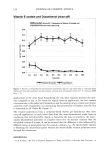
150 JOURNAL OF COSMETIC SCIENCE components with an Ikavisc MR-D1 mixer (Janke & Kunkel) for 30 minutes during a heating and cooling cycle between 25 øC and 95 øC. The emulsions were homogenized for five minutes at 40øC. The w/o cream was made by heating the oil/emulsifier mixture to 80øC and stirring in the hot water phase. The mixture was stirred for five minutes at 80øC and then cooled to room temperature while being stirred. The shower gel was prepared by mixing the components for 30 minutes at room temperature. Phase behavior of the emu/siom. Liquid crystalline phases were identified by polarization microscopy (Zeiss, K61n, Germany). The emulsion type (o/w or w/o) was determined by conductivity measurements (Radiometer, Copenhagen, Denmark). Viscosity measureme, t. Flow and viscosity curves in the shear rate range from 0 to 100/s were studied with a thermosrated, shear-rate-controlled rotation rheometer RFS 2 (Rheometrics, Piscataway, NJ) with a plate-plate measuring system (2 mm gap) at 25 øC. Partide sizes. The particle size distribution in the undiluted emulsions was determined with an optical microscope with the help of the Optimetrix digital image analyser (Stemmer, Meerbusch, Germany). Bovine udder skin (B US) model. The in vitro "isolated perfused bovine udder skin" model makes use of material from slaughterhouses. Immediately after an animal has been slaughtered, the udder skin is perfused with heated and oxygen-enriched Tyrode's solution (80-100 mm Hg pressure approx. 120 ml/minute) under laboratory condi- tions. The viability of the skin is monitored biochemically in the perfusate by deter- mining the pH, the lactate-dehydrogenase activity, and the lactate and glucose concen- trations. The skin surface temperature (approx. 32øC) and skin fold thickness 3mm are measured physically (9). The skin of the udder is thin and exhibits all the morphological characteristics of mammalian skin, including the cutaneous appendages such as seba- ceous glands and hair follicles. The skin of the udder functionally resembles human skin (9). The experimental procedures such as preparation, perfusion, viability checks, the topical application of the coded test substances, and sampling were performed at SIMRED GmbH (Gro[3burgwedel, Germany). Skin penetration. The penetration of oil- and water-soluble vitamins from the different formulations into perfused bovine udder skin was studied in two ways. Leave-on application. Fifteen minutes after perfusion started, 3 g of each different vita- min-containing cream formulation were applied topically to skin areas measuring 75 cm 2. This high dosage was intended to prevent any depletion of the vitamin concen- tration in the vehicle during the penetration experiment (infinite dose). After one hour and five hours, respectively, the residual cream was carefully removed with a paper towel, and then adhesive tape strips and samples for preparing dermatome sections were taken. The adhesive strips and skin samples were kept deep-frozen at -20øC. Rinse-off application. Fifteen minutes after perfusion started, 3 g of each different vi- tamin-containing shower gel formulation were applied topically to skin areas measuring 75 cm 2. After two minutes the shower gel was rinsed off with a surplus of warm water (40øC). The skin was carefully dried with a paper towel. This washing-rinsing procedure was repeated three times, and then adhesive tape strips were taken.
Purchased for the exclusive use of nofirst nolast (unknown)
From: SCC Media Library & Resource Center (library.scconline.org)