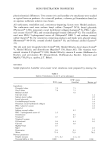
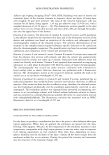
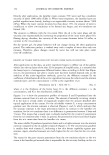
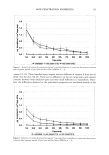
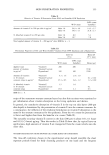
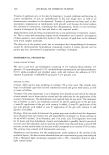
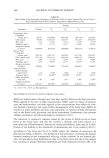
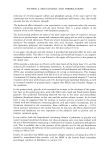
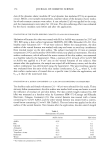
SKIN PENETRATION PROPERTIES 155 Table II Kinetics of Vitamin E Penetration From W/O and Lameliar O/W Emulsions O/W cream W/O cream (lameliar) Amount of vitamin E in 200 lain skin in pg/cm 2 % Absorbed vitamin E in 200 pm skin After 1 h 24.9 + 4.6 14.5 + 2.7 After 5 h 30.0 + 5.1 21.8 + 2.7 After 1 h 8.9 5.1 After 5 h 10.7 7.8 Total applied amount of vitamin E = 280 pg/cm 2 skin SEM for n = 4. Table III Penetration Properties of Oil- and Water-Soluble Vitamins From O/W Emulsions and a Shower Gel Leave-on Rinse-off (5 h) (3* 2 min) O/W cream W/O cream (lameliar) Shower gel Applied total Vitamin E 280 280 amount of vitamins Vitamin E acetate 3'40 in pg/cm 2 D-panthenol 160 160 3*80 Amount of vitamins Vitamin E 4.3 + 1.4 2.9 + 1.0 in 10 stratum Vitamin E acetate 0.1 + 0.02 corneum strips in ].lg/cm 2 D-panthenol 25.3 + 8.5 6.6 _+ 1.2 1.2 + 0.09 % Absorbed vitamin Vitamin E 1.5 1.0 in 10 stratum Vitamin E acetate 0.1 corneum strips D-panthenol 15.8 4.1 0.5 SEMforn = 4. strips of the outermost stratum corneum layers but also skin sections were examined to get information about vitamin absorption in the living epidermis and dermis. In general, the cumulative absorption of vitamin E in the top ten skin layers (200 pm skin depth) is determined by the penetration of vitamin E into the stratum corneum. As a consequence, the influence of the emulsion formulation on vitamin E absorption is the same for the stratum corneum as for the epidermis. From the w/o cream the penetration is faster and higher than from the lameliar o/w cream (Table II). The naturally occuring vitamin E content in the skin (200 pm) is about 0.312 (1 hour) and 0.191 (5 hours) i•g/mg. Thus the results in Table II show that, by typical leave-on applications, high amounts of vitamin E are transported from the cream vehicle into the outer skin. VITAMIN PENETRATION FROM SHOWER GEL UNDER RINSE-OFF CONDITIONS The rinse-off conditions chosen in the experimental setup should resemble the short exposure periods found for body cleansing products on one hand and the frequent

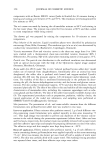
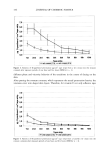
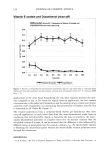
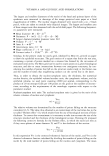
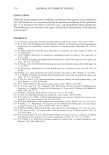
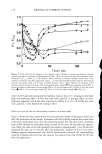
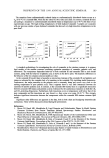
156 JOURNAL OF COSMETIC SCIENCE Vitamin E acetate and D-panthenol (rinse-off) BUS-model (rinse off): Penetration of Vitamin E Acetate and D-panthenol into the horny layer (n=4) 0,16 0,14 0,10 0,08 0,06 ........................................................................................ 0,04 I ...................... 0,02 0,001 , 1st 2rid 3rd 4th 5th 6th 7th 8th 9th 10th tape strip •Vitamin E acetate •D-panthenol 1 Figure 5. Kinetics of D-panthenol and vitamin E penetration (tlg/cm 2 tape strip) from a surfactant-based shower gel (rinse-off condition) into the stratum corneum after an exposure period of 3 * 2 minutes (SEM for n = 4). applications on the other hand. Considering the very short exposure periods (two min- utes compared to one or five hours for topical leave-on application), the low vitamin concentrations in the surfactant formulation, and the missing of any vitamin enrichment caused by water evaporation, it is astonishing that penetration of vitamins into the skin is achievable at all (Table III, Figure 5). The vitamin penetration from a surfactant-based shower gel formulation after three rinse-off applications is much lower than from the cream formulations under leave-on conditions, but still detectable. Again, as found for the leave-on products, the water- soluble D-panthenol penetrates to a higher extent into the stratum corneum than the oil-soluble vitamin E acetate. It can be assumed that the difference is also influenced by different routes of penetration into the stratum corneum, e.g., the lipid-soluble vitamin is following the intercellular spaces whereas the water-soluble vitamin penetrates more through the corneocytes. REFERENCES (1) K. B. Sloan, "The Use of Solubility Parameters of Drug and Vehicle to Describe Skin Transport," in
Purchased for the exclusive use of nofirst nolast (unknown)
From: SCC Media Library & Resource Center (library.scconline.org)