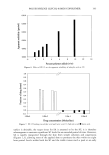
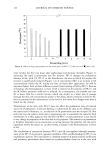
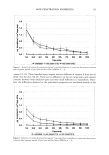
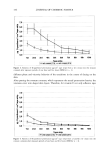
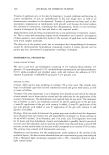
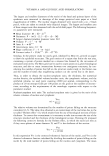
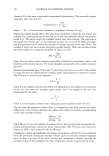
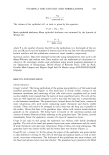
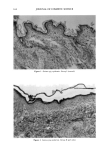
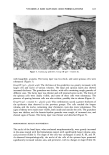
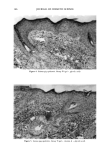
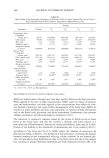
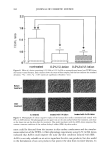
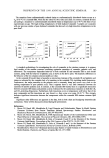
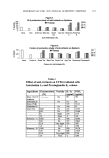
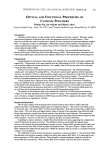
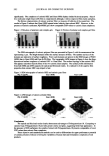
202 JOURNAL OF COSMETIC SCIENCE significantly. The complexes of cationic HEC and Guar (H/H) display similar frictional property. Slip of low molecular weight Guar (L/H) film is compromised although, it shows improved film clarity and gloss. The friction characteristics of cationic polymer film is a measure of lubricity of the coated hair. The results in Figure 2 indicate that Guar (H/H) imparts better lubricity than cationic HEC. However, in the presence of anionic surfactant, PQ10/SDS gels show comparable COF values to cationic Guar complexes. Figure 1. Film gloss of polymers and complex gels Figure 2. Friction of polymer and complex gel films The SEM micrographs of cationic polymer films are presented in Figure 3 with the measurement bar representing I [tm. The bright domains reflect the surface textures of films. The number and size of the domains are indicative of surface roughness. Fewer such domains are present in the SEM images of PQ 10 (M/H) than in Guar (H/H) and Guar (L/H) films. The topographic AFM images in Figure 4 show the three- dimensional surface roughness of cationic HEC vs. Guar films. The surface topology of the cationic HEC film appears smoother than the films of the two cationic Guar samples. The surface profile information from both SEM and AFM supports the optical and frictional results. It is indicative of the superior film properties that cationic HEC may impart to hair. Figure 3. SEM micrographs of cationic HEC and cationic guar films P e - 10 (M/H) Guar (H/H) Guar (L/H) Figure 4. AFM images of cationic polymer films PQ-10 (M/H) Guar (H/H) Guar (L/H) Condusions The optical and frictional results clearly demonstrate advantages of Polyquaternium-10. Comparing to cationic Guar, Polyquaternium-10 provides greater clarity and gloss, suggesting better hair appearance. In the presence of SDS surfactant, the complex formed with Polyquaternium-10 presents comparable or lower COF values than cationic Guar complexes. These objective and standardized methods can be used to differentiate the upper performance potential of cationic polymers without involving the variability of human hair and formulation complexity of end products.
Purchased for the exclusive use of nofirst nolast (unknown)
From: SCC Media Library & Resource Center (library.scconline.org)